

The honest version first: Boise has one full national park within reach, and it is Yellowstone, nearly six hours away. Closer to home, the Park Service runs a scatter of monuments, a fossil bed, a reserve, and one of the most important Japanese American incarceration sites in the country. None of them is a quick errand, so this is a list you plan a day or a weekend around.
The thing to understand about Boise is that the interesting country is spread thin across a big, empty state. The Snake River Plain to the south and east holds lava fields, fossil cliffs, and high-desert towers, and the drives between them are long. The payoff is that almost none of it is crowded.
A note on designations, because “national parks near Boise” is a loose phrase. Of the six sites below, one is a full national park, one is a national monument and preserve, one is a national monument, one is a national historic site, one is a national reserve co-managed with the state, and one is a national historical park spread across several states. I have labeled each correctly. For the state overview, see our guide to Idaho national parks.
Park Sites Near Boise Compared
| Site | Designation | Drive from Boise | The Draw |
|---|---|---|---|
| Hagerman Fossil Beds | National Monument | 1 hr 30 min | Famous horse fossils, river-bluff overlooks |
| Minidoka | National Historic Site | 2 hr | WWII Japanese American incarceration camp |
| Craters of the Moon | National Monument & Preserve | 3 hr | A vast lava-flow landscape you can hike into |
| City of Rocks | National Reserve | 3 hr 15 min | Granite spires, world-class rock climbing |
| Nez Perce | National Historical Park | 4 hr+ | 38 sites telling the Nez Perce story |
| Yellowstone | National Park | 5 hr 40 min | Geysers, wildlife, the original national park |
The ranking below weighs drive cost against payoff. Hagerman and Minidoka are the realistic day trips. Craters of the Moon is the one unmissable landscape and the trip I would build a weekend around. Yellowstone sits last not because it is lesser, it is the headliner of the whole system, but because at almost six hours it is really an Idaho-to-Wyoming road trip, not a park near Boise.
117 public lands destinations are under threat. Get the free briefing that 27,000+ people use to stay informed and take action.
1. Hagerman Fossil Beds National Monument
Drive from Boise: About 1 hour 30 minutes (98 miles) east via I-84.
The closest site, and a quiet one. Hagerman protects bluffs above the Snake River that hold one of the richest deposits of late Pliocene fossils in the world, most famously the Hagerman horse, an early relative of the modern horse and the Idaho state fossil.
Set expectations honestly. You do not dig here, and you will not see fossils lying in the open. What you get is a visitor center in the town of Hagerman with real specimens, and overlook trails along the bluffs with long views over the river. Combine it with the nearby Thousand Springs and Hagerman is an easy half-day from Boise. Entry is free.
2. Minidoka National Historic Site
Drive from Boise: About 2 hours (132 miles) east via I-84.
The most important history on this list. Minidoka is where the United States imprisoned more than 9,000 Japanese Americans during World War II, most of them US citizens, behind barbed wire on the high desert. The Park Service preserves the entrance area, a reconstructed guard tower and barrack, and the original root cellar.
It is a stark, windswept place, and that is the point. A walking trail with interpretive signs traces the camp, and the visitor center tells the story without softening it. This is not a scenery stop. It is a stop you make because the history matters, and it pairs naturally with a Hagerman or Craters drive on the same eastward route. Entry is free. See our roundup of historic sites in Idaho for more context.
3. Craters of the Moon National Monument & Preserve
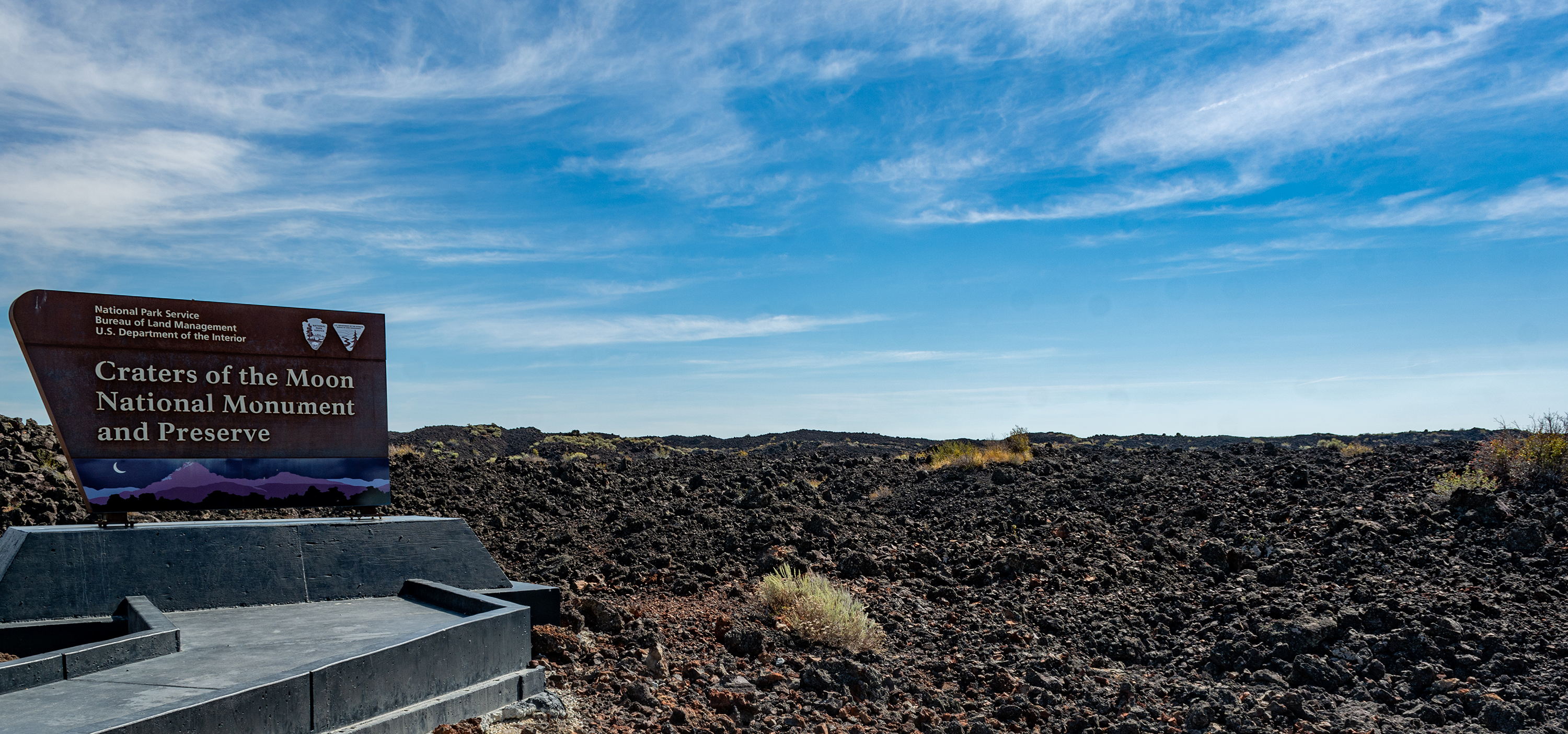
The headliner, and the one landscape near Boise that stops you cold. Craters of the Moon is a vast expanse of lava flows, cinder cones, and spatter cones laid down over thousands of years, so otherworldly that NASA sent Apollo astronauts here to study volcanic geology before the Moon landings.
A seven-mile loop drive gets you into the heart of it, with short trails up Inferno Cone, across the Spatter Cones, and down into lava-tube caves. Bring a flashlight for the caves, and note that a free cave permit is required to protect bats from white-nose syndrome, available at the visitor center. The entrance fee is $20 per vehicle. Summer is hot and shadeless out on the black rock, so go early or in the shoulder seasons. This is the trip to build a weekend around.
4. City of Rocks National Reserve
Drive from Boise: About 3 hours 15 minutes (207 miles) east via I-84.
A climber’s destination first, a sightseer’s second. City of Rocks is a national reserve, co-managed by the Park Service and the State of Idaho, where granite spires and domes up to 60 stories tall rise out of the high desert near the Utah line. California Trail emigrants passed through here in the 1840s and 1850s and signed the rock in axle grease.
The reserve is famous among rock climbers for hundreds of routes on excellent granite. If you do not climb, there are scenic drives, hiking, and the emigrant history, but the long drive is most worth it for climbers and campers. Entry is free, with fees for camping. It is remote, so come prepared and fueled up.
5. Nez Perce National Historical Park

Not one place, but 38 sites across four states. Nez Perce National Historical Park tells the story of the Nimiipuu, the Nez Perce people, including the 1877 flight of Chief Joseph’s band on a 1,170-mile fighting retreat toward Canada. The sites stretch from Oregon through Idaho into Montana and Wyoming.
The hub for a Boise visit is the main visitor center at Spalding, near Lewiston, with a museum and trails along the Clearwater River. Be clear-eyed about the drive, four hours or more, and the dispersed layout. This is a heritage trip for travelers who want to follow the history across the landscape, not a single-stop park. Entry is free.
6. Yellowstone National Park

The only full national park within reach, and a serious haul to get there. Yellowstone is the world’s first national park, a supervolcano caldera packed with geysers, hot springs, canyons, and the densest concentration of wildlife in the Lower 48.
From Boise the practical entrance is the West Entrance at West Yellowstone, about five and a half hours out, which puts you near Old Faithful and the geyser basins. The entrance fee is $35 per vehicle for seven days. Treat this as an overnight or multi-day trip, not a day drive, and book lodging far in advance for summer. For a full plan, see our guide to the best things to do in Yellowstone.
More Things to Do and How to Plan
The smart way to do this is by direction. Everything except Yellowstone and Nez Perce lines up along I-84 to the southeast, so you can string Hagerman, Minidoka, Craters, and City of Rocks into a one-to-two-day loop out of Boise. Nez Perce sits to the north toward Lewiston, and Yellowstone is its own trip to the east.
Late spring through early fall is the window. Craters bakes in midsummer and the high-desert sites get cold and snowy in winter. Closer to the city, Boise itself has the foothills and the Boise River Greenbelt, and the enormous Frank Church River of No Return Wilderness sits north of town for anyone wanting true backcountry. For the bigger picture, our guide to Idaho national parks ties it together.
The bottom line
Boise rewards drivers willing to cover distance. Hagerman and Minidoka are the easy days, Craters of the Moon is the landscape worth a weekend, and Yellowstone is the big one if you have the time to do it right. Plan by direction, go in the warm months, and Idaho’s spread-out parks add up to more than the map suggests.