

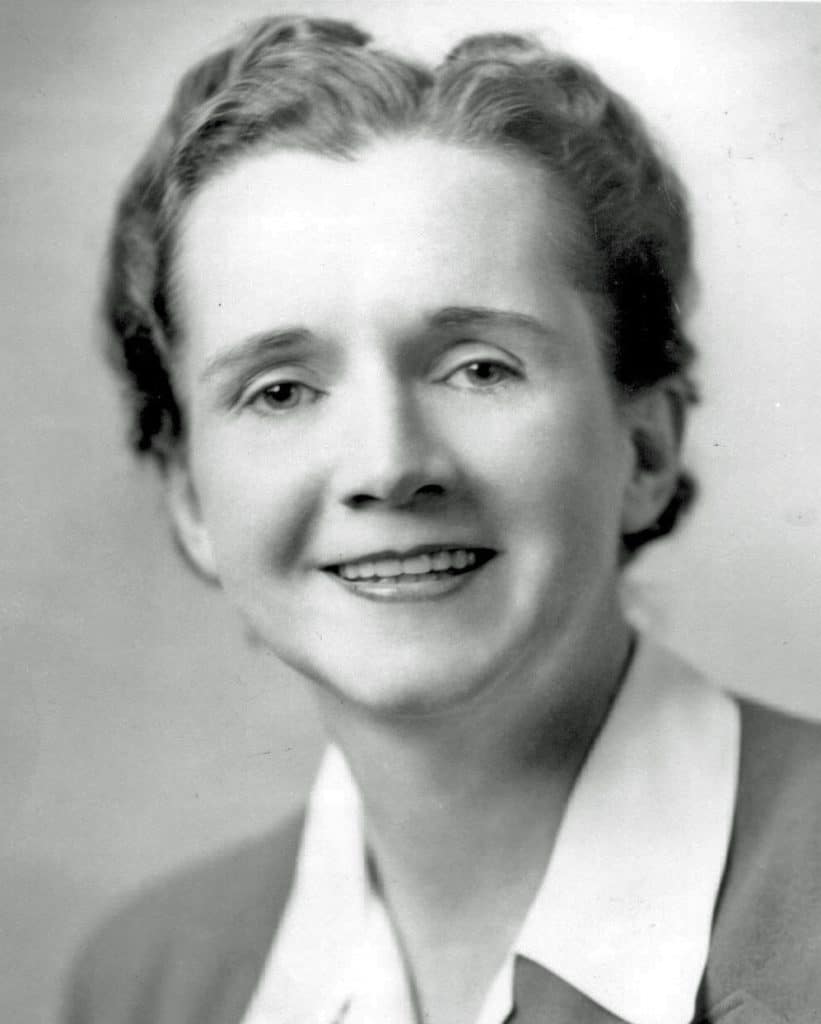
In the summer of 1962, a sixty-year-old marine biologist who was quietly dying of cancer set off one of the most consequential public arguments in American history. Her name was Rachel Carson, and her weapon was a book. Silent Spring did not look like a revolution. It read like careful, almost lyrical science. But within a decade it had banned a chemical, helped birth a federal agency, and turned a nation of consumers into a movement. It is not an exaggeration to say that the modern environmental movement begins with this one woman and this one book.
What makes Carson’s story sting today is not only what she accomplished but how she did it, and against whom. She took on the chemical industry at the height of its postwar prestige, she did it as a woman in a field that did not welcome women, and she won the public to her side with bipartisan support that would be almost unimaginable now. To understand how we got an Environmental Protection Agency and a Clean Air Act under a Republican president, you have to start here.
From the Sea to the Spotlight
Rachel Carson was born on May 27, 1907, on a small farm in Springdale, Pennsylvania, along the Allegheny River. She came to public life not as an activist but as a scientist and a writer, an unusual combination that turned out to be exactly the right one. After studying biology and earning a master’s degree, she joined the U.S. Bureau of Fisheries, which became the Fish and Wildlife Service, where she eventually rose to chief editor of publications. She was that rare government scientist who could write a sentence people wanted to read aloud.
Before she ever picked a fight, she was already one of America’s most beloved nature writers. Her trilogy about the ocean, Under the Sea-Wind in 1941, The Sea Around Us in 1951, and The Edge of the Sea in 1955, made her famous. The Sea Around Us won the National Book Award and sat on the bestseller list for months. That reputation matters, because when Carson finally turned her attention to pesticides, she was not an outsider lobbing accusations. She was a trusted naturalist whom millions of readers already loved, and that trust was a large part of why Silent Spring could not be dismissed.
117 public lands destinations are under threat. Get the free briefing that 27,000+ people use to stay informed and take action.
Silent Spring and the Case Against DDT
Carson’s target was the new class of synthetic pesticides that had spread across American farms, suburbs, and forests after World War II, above all DDT. To a public dazzled by chemistry, these compounds looked like pure progress, killing mosquitoes, boosting crops, conquering pests. Carson asked the question almost no one was asking: where do these poisons go after they do their job, and what do they do to everything else?
Her answer, laid out in Silent Spring, which was published on September 27, 1962, was that they did not simply vanish. They accumulated in soil and water, climbed the food chain, thinned the eggshells of birds of prey, and concentrated in the bodies of animals and people far from any sprayed field. The book’s haunting title imagines a spring morning with no birdsong, a countryside silenced by its own chemicals. Carson did not call for banning all pesticides. Her argument was more disciplined than that. She called for caution, for understanding consequences before unleashing poisons at scale, and for the public’s right to know what was being sprayed into their world.

The Industry Strikes Back
The chemical industry understood exactly how dangerous Carson’s book was, and it responded with a campaign to destroy her credibility. She was dismissed as hysterical, as a spinster, as an alarmist amateur meddling in matters beyond a woman’s competence. One critic suggested that without DDT we would return to the Dark Ages of insect-borne disease. The attacks were personal because the science was hard to refute, and they have a familiar ring to anyone who has watched later fights over tobacco, lead, or climate.
Carson held her ground. Already seriously ill with breast cancer, she defended her work in interviews and, in 1963, testified before a Senate subcommittee, calmly making the case for what would become a foundational idea of environmental policy: that citizens have a right to be secure in their own homes against poisons they did not choose. President John F. Kennedy ordered his Science Advisory Committee to examine the issues she raised, and the resulting report largely vindicated her.
A Movement Born From a Book
Carson did not live to see most of what she set in motion. She died on April 14, 1964, less than two years after Silent Spring reached readers. But the wave she started kept building. The book is widely credited with helping inspire the first Earth Day in 1970 and the creation of the Environmental Protection Agency that same year. In 1972, the EPA banned most uses of DDT in the United States, and in the decades that followed, species like the bald eagle and the peregrine falcon clawed their way back from the edge of extinction.
The most striking part of this story, viewed from today, is how broad the coalition was. The EPA was established under President Richard Nixon, a Republican. The landmark environmental laws of that era passed with votes from both parties. Carson had made the protection of air, water, and wildlife feel less like a partisan cause and more like common sense, the kind of thing any responsible nation would do. That spirit of shared purpose did not last, and its unraveling is a story worth telling on its own. We trace how environmental protection became a bipartisan project and then stopped being one in our look at the bipartisan era of environmental activism.
Why Rachel Carson Still Matters
Carson belongs in the front rank of American conservationists, alongside figures like Aldo Leopold, whose land ethic she echoed, and the earlier thinkers who first warned that human action has limits. What set her apart was the bridge she built between rigorous science and ordinary readers. She did not ask people to choose between facts and feeling. She gave them both, and she trusted them to act.
More than sixty years after Silent Spring, the questions she forced into the open are still the ones that matter. What do our conveniences cost the living world? Who gets to decide what we are exposed to? And do we have the patience to understand consequences before we set them loose? Rachel Carson did not have all the answers, and she never claimed to. What she had was the nerve to ask, in public, with the evidence in hand, and that is why the movement she started is still going.