


Indiana Dunes National Park stretches for about 15 miles along the southern shore of Lake Michigan, an hour from downtown Chicago. Behind its beaches rise wind-sculpted sand dunes, and behind those lies one of the most biologically diverse parks in the country: bogs, marshes, prairies, oak savannas, and forests packed into a narrow strip between the lake and the steel mills of northwest Indiana. That mix of rare habitats helped launch the modern science of ecology more than a century ago.
This is a park of contrasts. You can sunbathe on a Great Lakes beach with the Chicago skyline on the horizon, then walk into a quaking bog minutes later. It became a national park in 2019 after decades as a national lakeshore, and it remains one of the easiest big-nature escapes for the Chicago region. Here are 20 things worth doing, plus everything you need to know about camping at the dunes.
20 Things to Do in Indiana Dunes National Park
1. Relax on the Lake Michigan beaches
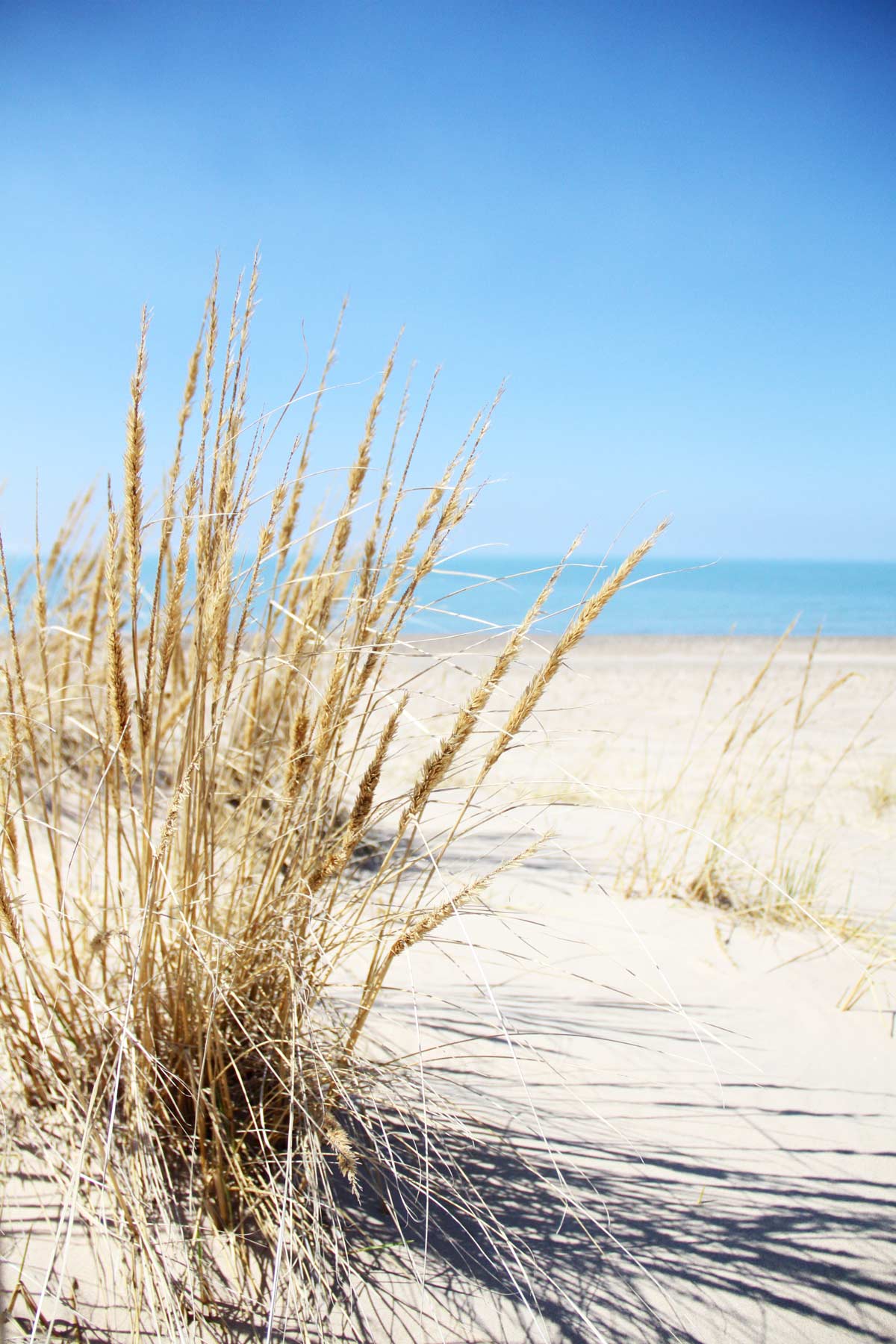
The beaches are the heart of the park. About 15 miles of Lake Michigan shoreline are split across several access points, from popular West Beach with its bathhouse and lifeguards in summer to quieter spots like Central Avenue and Kemil Beach. The sand is soft, the water is fresh and swimmable in warm months, and the dunes rise right behind you. On a clear day you can see the Chicago skyline shimmering across the water.
2. Hike the Dune Succession Trail

The Dune Succession Trail at West Beach is the single best short hike for understanding the park. The roughly one-mile loop climbs from beach to forest on boardwalks and a long flight of dune stairs, walking you through the stages of how a bare beach turns into a wooded dune over centuries. The climb is a workout, but the payoff is a panoramic view over the lake. This is the trail that shows why ecologists fell in love with this place.
Love Indiana Dunes? It's one of 117 threatened public lands destinations we're tracking. Get the free briefing.
3. Explore Cowles Bog Trail

Cowles Bog is a National Natural Landmark named for Henry Chandler Cowles, the University of Chicago botanist whose studies here in the early 1900s founded the modern science of ecology. The 4.7-mile loop is the park’s most rewarding longer hike, crossing wetlands, oak savanna, and wooded dunes before reaching a remote, quiet stretch of beach. It is moderately strenuous with some steep dune sections. Spring and fall are especially good for wildflowers and color.
4. Tour the 1933 World’s Fair Homes

Tucked into the lakefront at Beverly Shores are five experimental houses from the 1933 Chicago World’s Fair, the Century of Progress homes, barged across the lake after the fair ended. They include the bright pink Florida Tropical House and the futuristic House of Tomorrow. The homes are leased to private residents who maintain them, so the interiors open to the public only one weekend a year on a special tour, but you can admire the exteriors and their unusual designs any time from the road.
5. Step back in time at Chellberg Farm

Chellberg Farm preserves the homestead of a Swedish immigrant family who farmed this land for three generations starting in the 1870s. The brick farmhouse, barn, and outbuildings sit in a peaceful clearing connected to the Bailly Homestead and a network of easy trails. Rangers and volunteers run living-history events through the year. It is a gentle, family-friendly window into the immigrant farming life that shaped the dunes country before it became a park.
6. Tap the maple trees in late winter

Every late winter, usually around March, the park hosts its Maple Sugar Time event at Chellberg Farm. Rangers demonstrate how Native Americans, pioneers, and modern producers each tapped maple trees and boiled the sap into syrup, often with samples to taste. It is one of the park’s signature seasonal traditions and a great reason to visit in the quiet off-season. Check the park calendar for the exact dates, which shift with the weather.
7. Paddle the park’s waterways

Beyond the lake, the park and its surroundings offer gentle paddling on the Little Calumet River and through marshes and the Great Marsh restoration area. These slow, sheltered waters are good for spotting herons, turtles, beavers, and waterfowl from a kayak or canoe. Bring your own boat, as there are no in-park rentals at most launches. It is a peaceful, low-effort way to see the wetland side of the dunes ecosystem.
8. Watch for wildlife

Despite its small size and industrial neighbors, the park’s variety of habitats supports a remarkable range of wildlife. White-tailed deer, beavers, foxes, coyotes, and many reptiles and amphibians live here, and the bogs and marshes are nurseries for frogs and turtles. Patient, quiet observation on the Cowles Bog or Miller Woods trails turns up the most. Dawn and dusk are the best times to look.
9. Go birdwatching on a global flyway

Indiana Dunes is one of the premier birding spots in the Midwest. More than 350 species have been recorded, because the lakeshore funnels migrating birds along its edge each spring and fall. Sandhill cranes, herons, waterfowl, warblers, and raptors all pass through, and the park hosts an annual birding festival. The Great Marsh and Miller Woods areas are top spots. Bring binoculars and go early in migration season for the biggest numbers.
10. See the black oak savanna
The park protects one of the largest remaining stretches of black oak savanna in the world, a globally rare habitat of widely spaced oaks over a sunny floor of prairie grasses and wildflowers. It once covered much of the region but has nearly vanished elsewhere. The Miller Woods and West Beach areas show it well. Walking through this open, sun-dappled woodland gives you a glimpse of a landscape almost lost to development and fire suppression.
11. Wander among the wildflowers
With so many habitats packed together, the park has an extraordinary wildflower show that shifts through the seasons. Spring brings woodland ephemerals like trillium and lupine, summer fills the prairies and savannas with blooms, and fall paints the marsh edges. The variety is part of what gives Indiana Dunes its sky-high biodiversity ranking among national parks. Carry a field guide or a plant ID app and pick a trail through prairie or savanna at peak bloom.
12. Go horseback riding

Indiana Dunes is one of the few national parks where you can ride a horse on a designated trail near a Great Lakes beach. The Glenwood Dunes Trail system includes equestrian-friendly routes through wooded dunes. You need to bring your own horse, as there are no in-park rentals, and a permit may be required, so check current rules. It is a distinctive way to cover ground through the back-country dunes away from the beach crowds.
13. Bike through the ecosystems

The park and surrounding area have a growing network of paved bike trails, including segments of the regional Marquette Greenway, that link beaches, prairies, and towns. Riding lets you string together several habitats and access points in a day without fighting for parking. Rentals are available in nearby towns. The flat terrain makes for easy family riding, with the option to lock up and walk a dune trail along the way.
14. Listen for the singing sand
The dunes here are famous for “singing” or “barking” sand, a squeaking sound the dry quartz grains make when you scuff your feet across them in the right conditions. It does not happen every day, since the sand needs to be clean and dry, but on a warm afternoon you can often coax a squeak out of the upper beach. It is a small, free, delightful trick of physics that kids especially love to chase.
15. Stargaze over the lake
This close to Chicago you will not get true dark skies, but the open Lake Michigan horizon still makes for fine stargazing and moonrises over the water, with city light glowing to the west. The park occasionally runs night programs and the beach after dark is a peaceful place to watch the sky. Check whether the access point you choose allows after-hours visits, since some beaches and lots close at dusk.
16. Take the Three Dune Challenge
Right next door in Indiana Dunes State Park, which sits inside the national park’s boundary, the Three Dune Challenge is a popular 1.5-mile trek up and down the three tallest dunes, including Mount Tom at about 192 feet. It is short but genuinely tough in the loose sand, and finishers feel like they earned the lake view from the top. Note that the state park charges its own separate entrance fee from the national park.
17. Explore Miller Woods

At the park’s western end near Gary, the Paul H. Douglas Center anchors Miller Woods, a classic example of the dune-and-swale landscape where parallel ridges of sand alternate with wet valleys. The trail to the beach passes ponds, savanna, and marsh thick with birds and beaver sign. The nature center has hands-on exhibits and is a great rainy-day or family stop. It is one of the quieter, more wildlife-rich corners of the park.
18. Cool off with a swim in summer
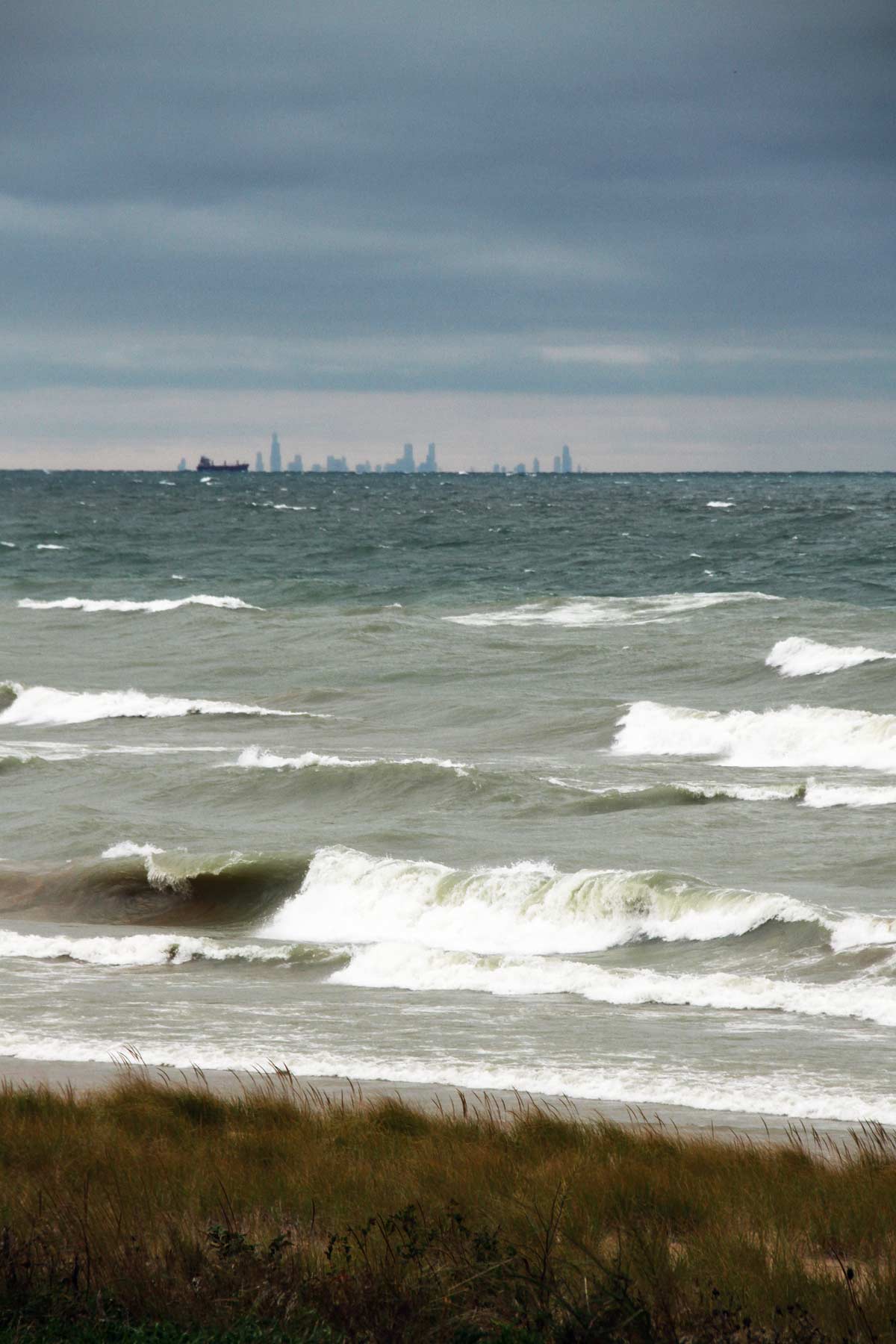
In summer, Lake Michigan warms enough for swimming, and a dip with the Chicago skyline on the horizon is a quintessential dunes experience. West Beach has a bathhouse and seasonal lifeguards, the safest choice for families. Always check posted conditions, because the lake can develop dangerous rip currents and high waves, especially on windy days. Swim near lifeguards when they are on duty and never underestimate the water.
19. Join a ranger tour to the top of Mount Baldy
Mount Baldy is the park’s famous “living” dune, a giant moving mountain of sand that creeps inland a few feet a year, burying the forest behind it. After a child was briefly trapped in a sudden sand hole in 2013, the park discovered hidden voids from decaying buried trees beneath the surface. As of 2026, the summit is open only on ranger-led tours, never to independent hikers, and the access site itself closes for periods of sand-management work. Check the park calendar, book a ranger program, and never try to climb it on your own.
20. Take the Diana of the Dunes Dare
The park’s self-guided Diana of the Dunes Dare, named for the early-1900s woman who famously lived alone in the dunes, challenges you to hike three of the park’s harder trails: the Cowles Bog, Dune Succession, and Devil’s Slide or similar routes. Complete them and you can claim a sticker at a visitor center. It is a fun way to push beyond the beach and see the park’s range, and it makes a good goal for an active weekend.
Camping at Indiana Dunes National Park
Camping inside the national park is centered on the Dunewood Campground, the park’s only developed campground, set in a wooded area a short distance from the beach near Beverly Shores. It has tent and RV sites (no hookups), restrooms with showers, and easy access to the Dunewood trails and the South Shore Line train. Reservations are required through Recreation.gov on a rolling six-month window, with the typical nightly fee around $25, and summer weekends book up fast, so plan ahead. Be aware that the campground closes for short maintenance windows in spring, so confirm your dates.
If Dunewood is full or you want more amenities, the adjacent Indiana Dunes State Park has its own large campground with electric sites, and several county and private campgrounds sit nearby. For a tent-only, walk-in experience, the park also offers a small number of walk-in sites and a group site by reservation. Wherever you stay, pack for changeable lakeshore weather and bring insect repellent for the marshy areas in summer.
Indiana Dunes at a Glance
| Detail | What to know |
|---|---|
| Entrance fee | $25 per vehicle, valid 7 days, collected mainly at West Beach in summer. Covered by the America the Beautiful pass. |
| Camping | Dunewood Campground (reserve on Recreation.gov, about $25/night, no hookups). State park and private options nearby. |
| Mount Baldy | Summit open only on ranger-led tours due to subsurface hazards. Access site closes periodically for sand work. Never climb it alone. |
| Two parks, one place | Indiana Dunes State Park sits inside the national park and charges a separate fee, including for the Three Dune Challenge. |
| Getting there | About an hour from Chicago by car, or via the South Shore Line train, which stops near several park access points. |
| Best season | Summer for swimming, spring and fall for birding, wildflowers, and color, late winter for maple sugar time. |
Planning Your Indiana Dunes Visit in 2026
Indiana Dunes works beautifully as a day trip from Chicago or as a weekend base camp. With one summer day, hit a beach, climb the Dune Succession Trail, and cool off with a swim. With more time, add the longer Cowles Bog loop, the history at Chellberg Farm and the World’s Fair homes, and the wildlife of Miller Woods. Birders and wildflower fans should aim for spring or fall, when the lakeshore migration and the blooms are at their best.
The most important 2026 reality to plan around is Mount Baldy: the summit is reachable only on a ranger-led tour, and the access site closes for stretches of sand-management work, so do not build a trip around climbing it freely. Beyond that, remember that the state park inside the boundary charges its own fee, that Lake Michigan can turn dangerous on windy days, and that summer beach parking fills early. Check the park website for current trail and beach conditions, the ranger program schedule, and any campground closures before you go.
For more, see our guide to the national parks in Indiana, other national parks near Chicago, and the best Indiana landmarks to round out a trip.
What to Bring to Indiana Dunes
Gear we recommend for Indiana Dunes. Affiliate links support our work at no cost to you.
More Than Just Parks may earn a small commission from purchases made through these links, at no extra cost to you. We only recommend gear we would actually use.
Affiliate disclosure: Some links on this page earn us a small commission at no extra cost to you. We only recommend gear we actually use.


