

Article Summary: Badlands National Park Facts
Badlands National Park Facts! In this article, we’ll look at 10 amazing facts about one of America’s most magnificent national parks.
More Than Just Parks is your one-stop-shop for learning everything you’ll need to know about America’s national parks. We’ve got expert guides, beautiful photos, helpful tips, breathtaking films and so much more.
I’ve been to so many of these amazing places since retiring from teaching in 2018. Did I mention that I taught history? I spent a lifetime teaching about the history behind some of these natural wonders. Then I got to see them firsthand. And now I’m sharing some of the incredible stories about these beautiful places with you. It doesn’t get any better than that!
More Than Just Parks takes a deeper dive with its national park facts. We’ve done our homework so that you’ll get more than you bargained for.
let’s get started.

Table Of Contents: Badlands National Park Facts
Badlands National Park Facts
- Facts About Badlands National Park
- Top 5 Badlands National Park Facts
- Top 10 Badlands National Park Facts
- 6. Badlands Is Home To Some Of the Most Endangered Species In North America
- 7. Peter Norbeck Helped To Make Badlands National Park Possible
- 8. Badlands Has Played A Cameo Role In Some Hollywood Films
- 9. Badlands National Park Protects One Of The Largest Expanses Of Mixed-Grass Prairie In The U.S.
- 10. The Badlands Was Used As A Practice Bombing Range During World War Two
- Check Out Our Award-Winning Badlands Film
- Why Trust Us About Badlands National Park?
- Meet The Parks Brothers
- Map Of Badlands National Park
- We Hope You’ll Follow Our Journey
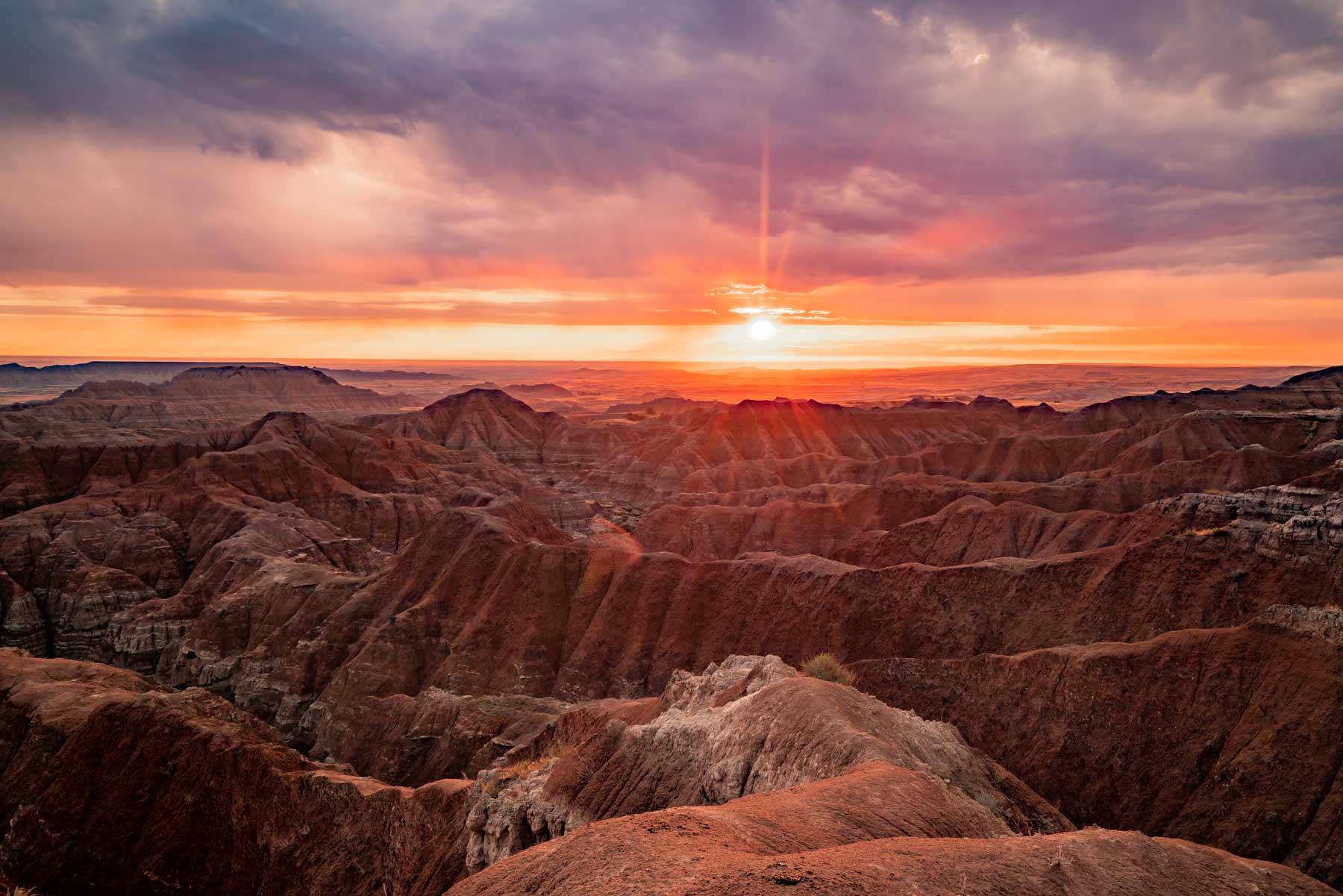
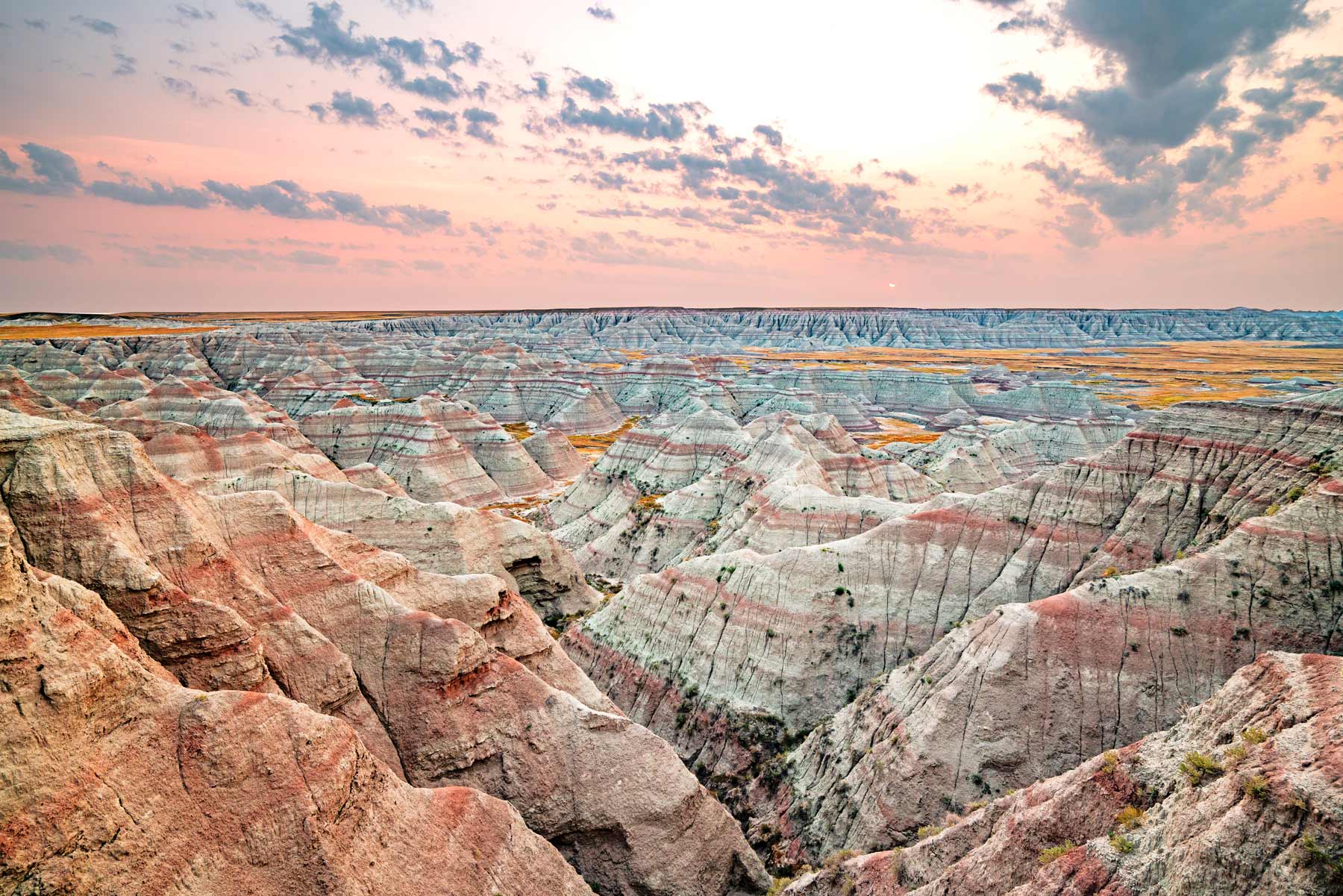
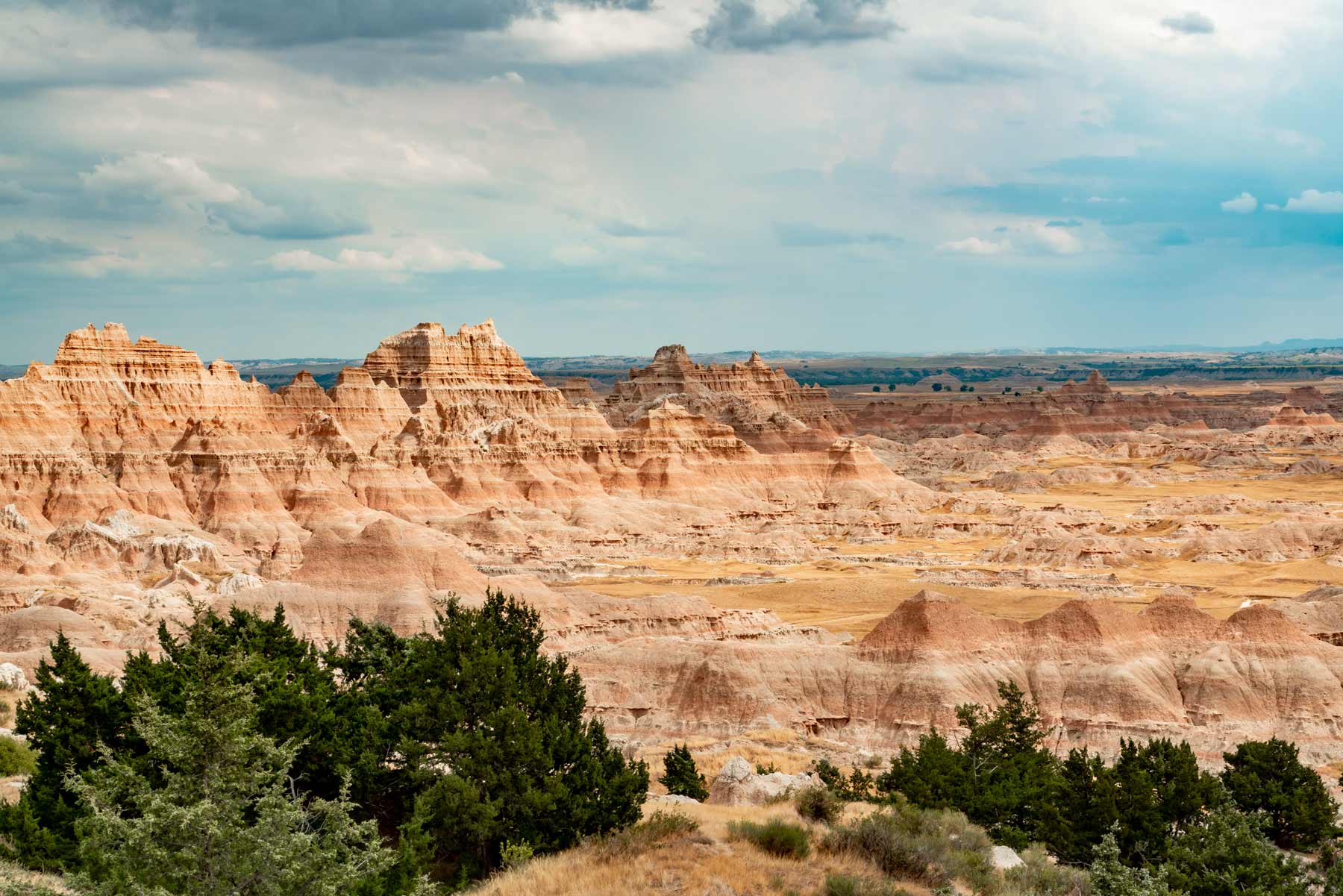
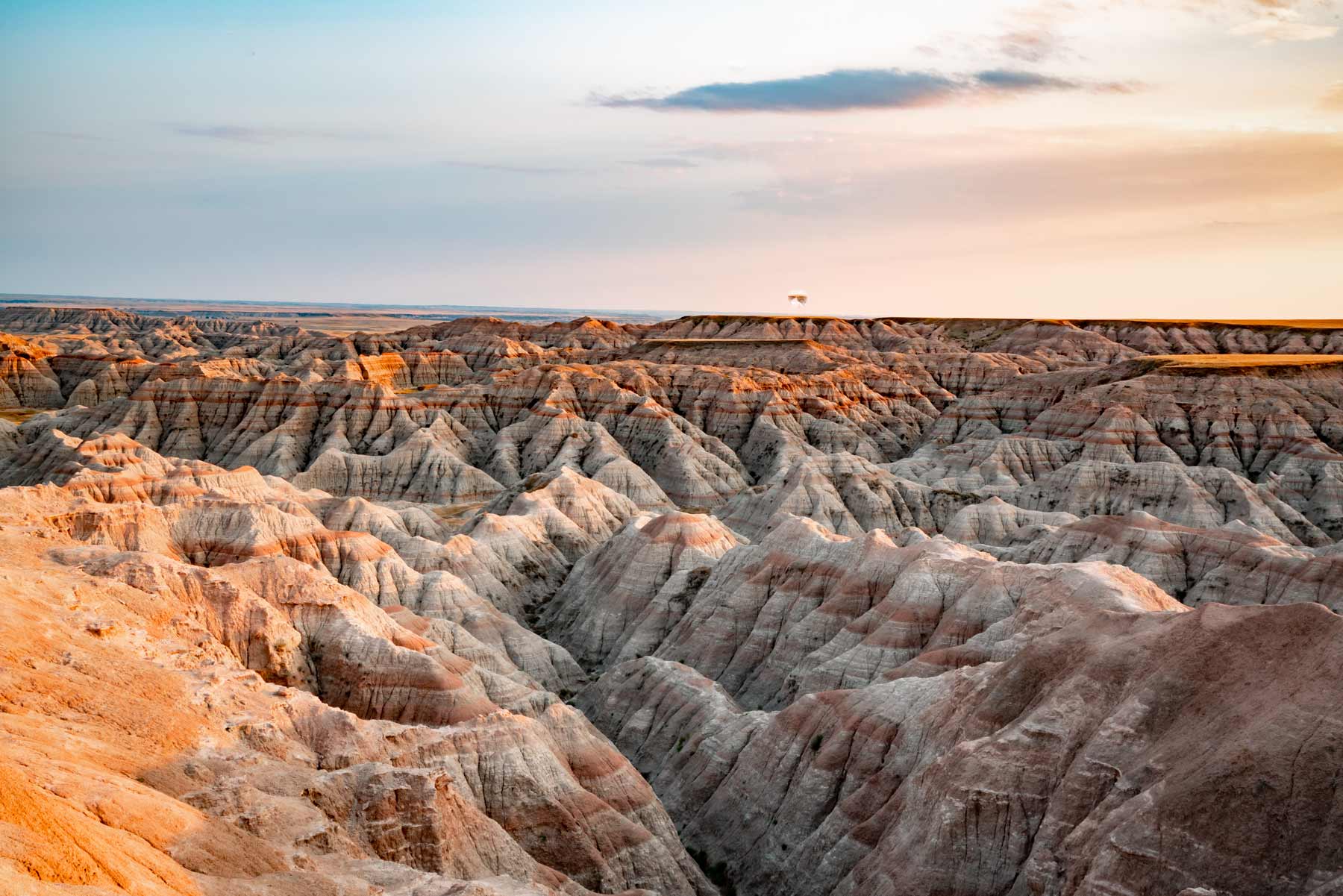
Badlands National Park is a national park located in the U.S. state of South Dakota. The park covers an area of more than 240,000 acres and is known for its rugged terrain, stunning views, and rich fossil history.
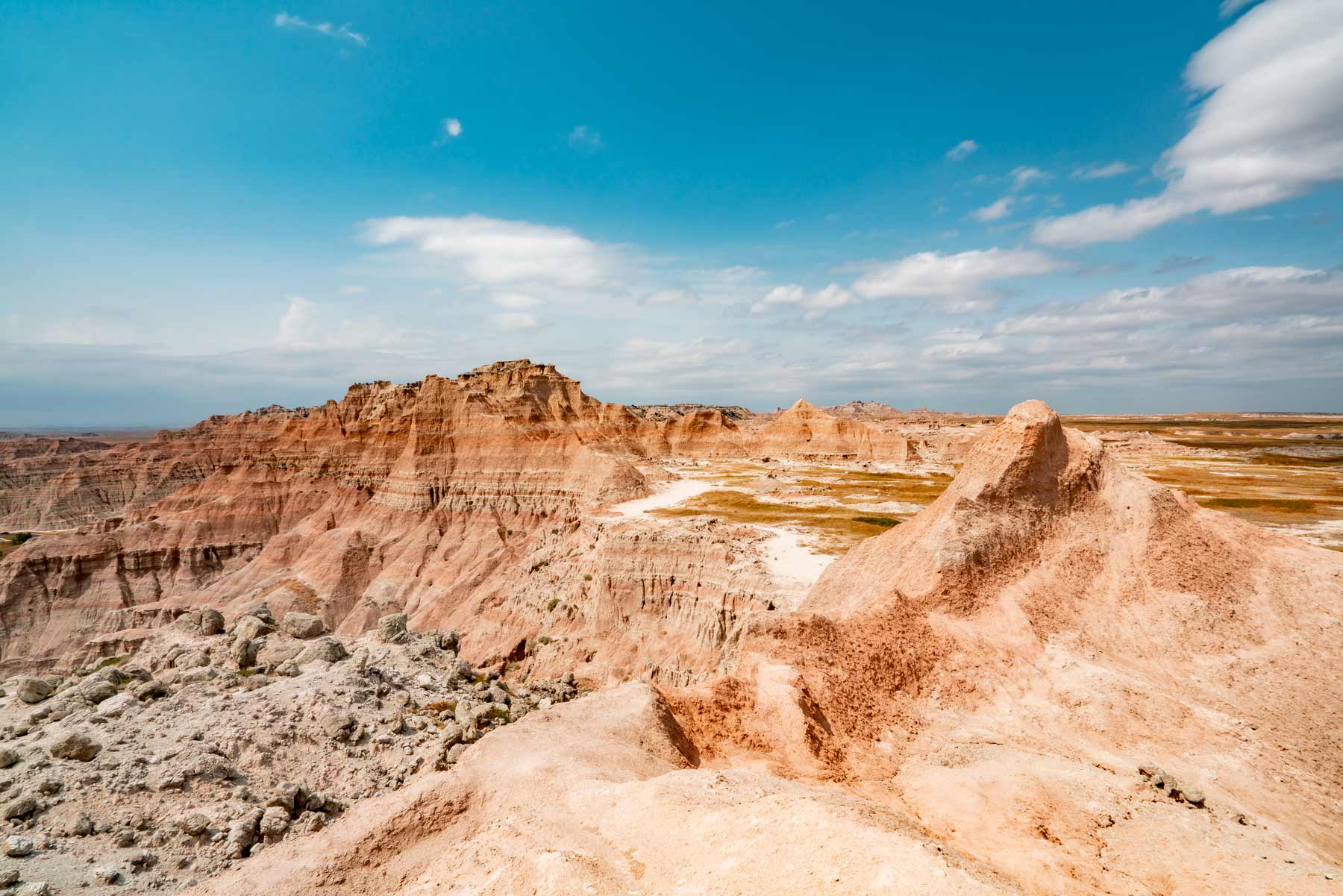
One of the main attractions of Badlands National Park is its rugged and dramatic landscape, with towering cliffs, deep canyons, and a variety of geological formations. The park is also home to a number of hiking trails, offering the opportunity to explore the park’s unique and varied terrain.
In addition to its natural beauty, Badlands National Park is also home to a number of cultural and historical sites, including the historic Minuteman Missile National Historic Site and the visitor center, which offers exhibits and programs about the park’s natural and cultural history.
Badlands National Park is worth the trip for nature lovers and park lovers, offering a unique and experience you won’t forget in one of the most stunning and rugged landscapes in the United States.
Here Are Some Basic Facts About Badlands National Park
- Location: South Dakota
- Acreage: 244,000 acres
- Visitation: 970,998 in 2019
- Highest Elevation: 3,247 feet at Sheep Mountain
- Lowest Elevation: 2460 feet along Sage Creek
- Average annual precipitation: 16 inches annually, most of which falls during the warmer months
- When Did It Become A National Park? Badlands was established as a national monument in 1939 and designated a national park in 1978.

Things To Do In Badlands National Park
Badlands National Park Facts
Top 5 Badlands National Park Facts
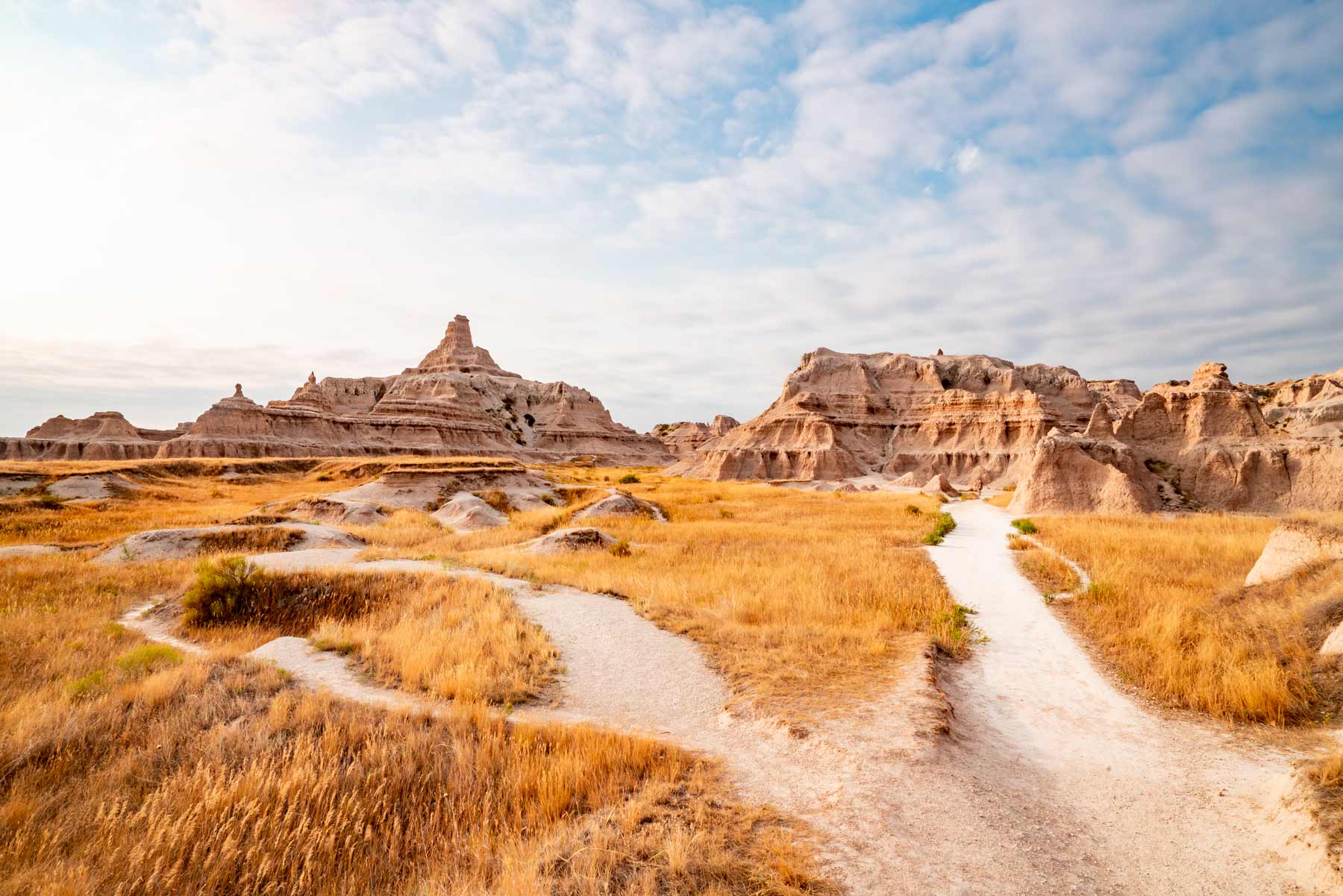
1. Eighty Million Years Ago, Badlands Was An Inland Sea
One of the most fascinating Badlands National Parks Facts is that geologists estimate the history of Badlands National Park can be traced back some 77 to 80 millions years ago. Now that’s old!
At that time, the area was an inland sea. This was during what is called the Late Cretaceous Epoch.
The water started receding approximately 75 million years ago. The sediments of sand, clay, and silt, which were left behind, are what formed the landscape that visitors enjoy today.
2. Native Americans Once Used The Badlands Area As Their Hunting Grounds
For eleven thousand years, Native Americans used what is today Badlands National Park for their hunting grounds.
The first known hunters were the Paleo-Indians who were then followed by the Arikara. Today, the descendants of these two groups still live in the area and are known as the Three Affiliated Tribes.
Archaeological records combined with oral traditions indicate that these people camped in secluded valleys where fresh water and game were available year round. Eroding out of the stream banks today are the rocks and the charcoal of their campfires, as well as the arrowheads and tools they used to butcher bison, rabbits, and other game.
From the top of the Badlands Wall, they could scan the area for enemies as well as wandering herds. If the hunting was good then they might stay into winter before retracing their way back to their villages along the Missouri River.
Since 1000 A.D., the Black Hills area has been occupied by a number of nomadic Indian tribes including the Caddoan, Athabascan, Kiowa, and Shoshonean. Some subsisted primarily by hunting, while others lived on local food plants.
Fast forward to one hundred and fifty years ago. The Sioux Nation displaced the other tribes from the northern prairie. As the result of acquiring guns from the whites and horses from other tribes, the Sioux became primarily a nomadic people, dependent on the buffalo for sustenance.
Just another example of amazing Badlands National Park Facts.

3. Badlands National Park Was Purchased From France
In the 18th century, the upper Missouri Valley, including what is today Badlands National Park, was under French control.
As a retired World History teacher, I can remember discussing the 1763 Treaty of Paris with my students. It was under the terms of this treaty that French possessions west of the Mississippi River were granted to Spain.
You may remember from your own World History class that the Treaty of Paris ended the French and Indian War/Seven Years’ War between Great Britain and France, as well as their respective allies. France gave up all its territories in mainland North America, effectively ending any foreign military threat to the British colonies there.
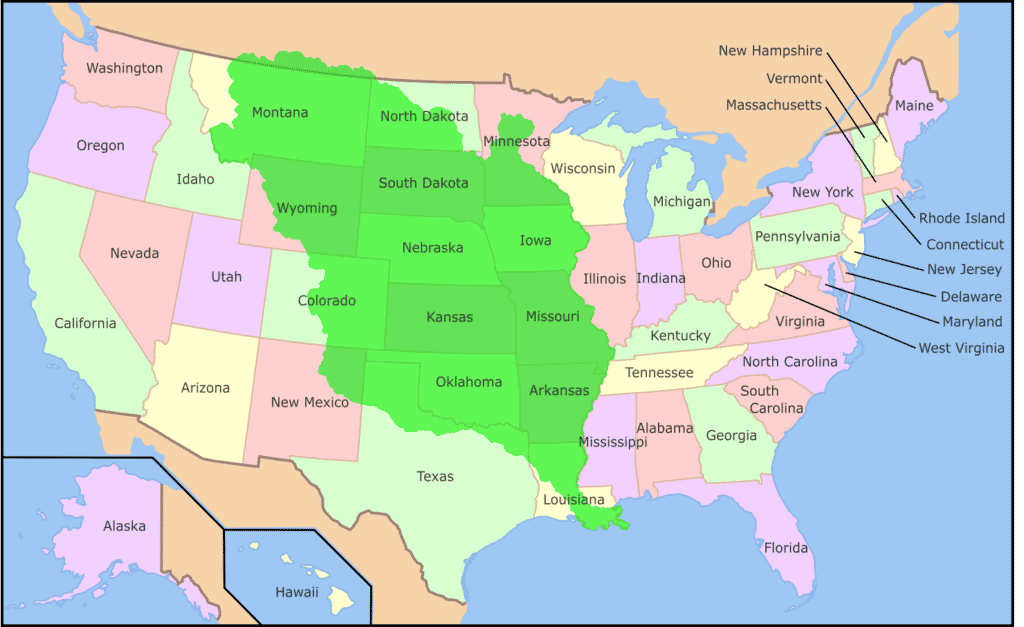
Spain then returned the area known as Louisiana to France. In 1803, the entire region, which included all of the present states of Arkansas, Missouri, Iowa, Nebraska, and South Dakota, plus parts of eight other states, was purchased by the United States from France for the paltry sum of $11,250,000
One Of The Greatest Land Deals In American History
The Louisiana Purchase, as it is known, is considered one of the greatest land deals in American history, not only because it was a bargain, costing about 3 cents an acre, but also because it more than doubled America’s size, giving the United States the middle third of the continental nation it would eventually become.
Why did Emperor Napoleon Bonaparte sell the land? He agreed to sell in order to concentrate on his European empire, which he knew would mean future wars, so he would need money to wage those wars. In 1803, $11,250,000 was a nice sum of money.
Kudos to President Thomas Jefferson for making such a shrewd real estate investment in the future of the United States.
4. Badlands National Park Has An Extensive Set Of Museum Collections
One of the Badlands National Parks Facts I found most interesting is that Badlands National Park’s museum collections stores over 360,000 objects which tell the story of the park’s past and present. The objects housed in these collections relate to art, history, ethnology, biology, paleontology, and more.
The diverse set of collections to be found there include archeological finds, historic photographs, and archives. Archives include photos, letters, manuscripts, and documents related to the exploration, settlement, and establishment of Badlands National Park.
There’s also a comprehensive herbarium. Its purpose is to document the many plants and fungi of the park’s unique ecosystem of mixed-grass and prairie.
If you prefer geology to horticulture, however, you’ll find rocks and minerals galore. Among these are specimens which include the many fossils which park paleontologists excavate, prepare, and study every year.
CHECK OUT: A Brief (And Informative) History Of America’s National Park Rangers
5. At Badlands, You Can See Over 7,000 Stars
Here’s another amazing one of the Badlands National Park Facts. If you live in a major city then the best way to see the stars at night is by attending a Hollywood Premiere. At Badlands National Park, however, the stars come out every night.
The skies over the Badlands are exceptionally dark. This means visitors can see the stars and the constellations. They can also see the Milky Way with its galaxies, nebulae, planets and moons.
Just how many stars you might ask? Over 7,500 stars fill the park’s skies nightly.
As a matter of fact, from Memorial Day through Labor Day, you can take in spectacular views from the Cedar Pass Campground Amphitheater.

Hiking The Notch Trail In Badlands National Park
Top 10 Badlands National Park Facts
6. Badlands Is Home To Some Of the Most Endangered Species In North America
Badlands National Park is home to many resilient creatures, including some of the most endangered species in North America.
These species include the following:
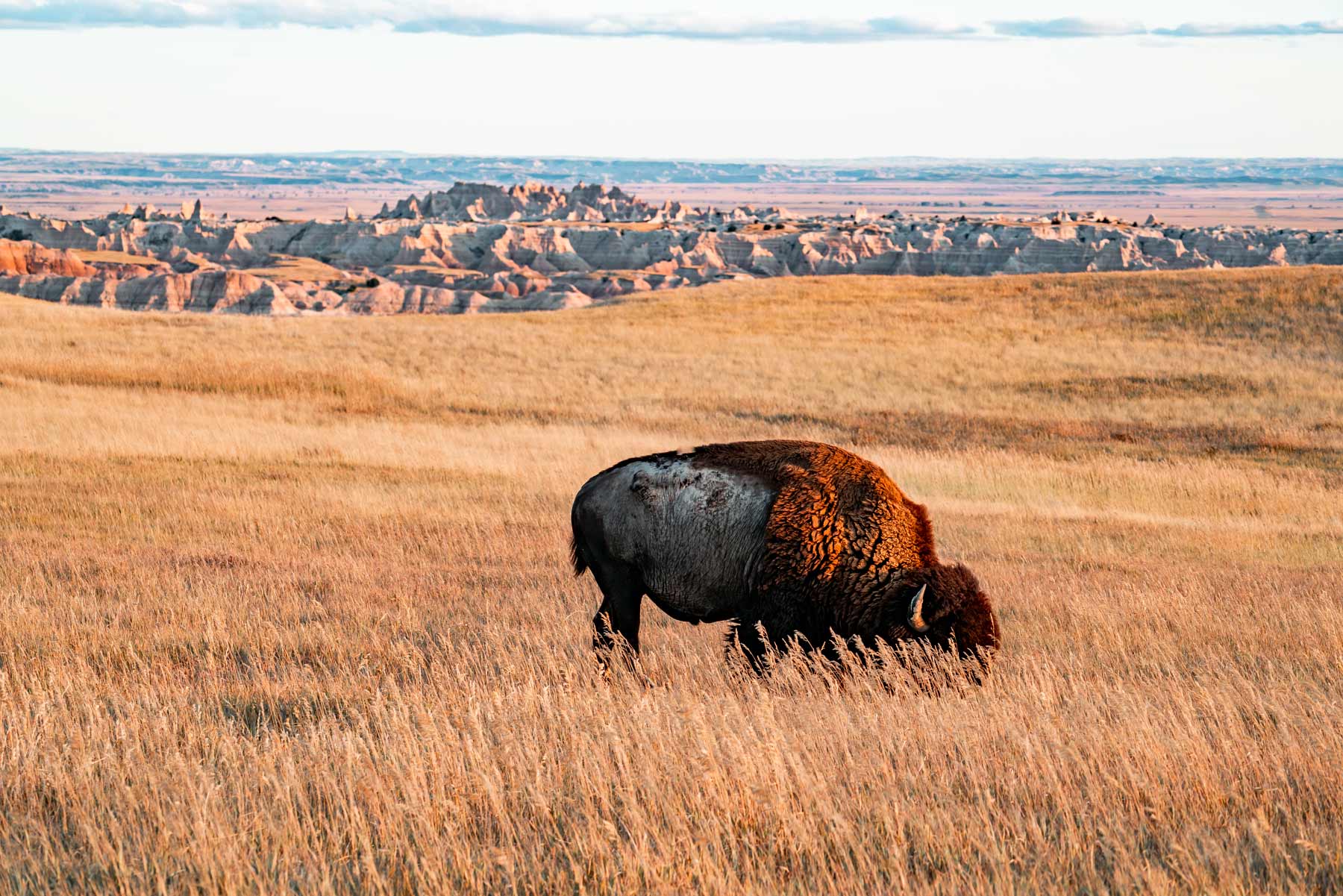
- The American Bison: The Bison once roamed freely and their population was estimated to be 30 million before the arrival of Native Americans and Indo-Europeans. In 1884, there were only 325 left in America. Today, however, they are alive and well in Badlands National Park.
- Black Footed Ferrets: They were another endangered species. Ferrets live in abandoned prairie dog burrows to maximize their proximity to food sources, raise their young, and escape harsh weather and predators.
- Bighorn Sheep: Their population went from 2,000,000 to just 20,000 in 1940. Today visitors will see them on the cliffs and hillsides of the Badlands.
- Prairie Dogs: They are an abundant species at the Badlands. Prairie dogs tend to be around 14-17 inches in length and weigh 1-3 pounds each. They’re fun to watch and can be seen at Roberts Prairie Dog Town.
Helpful List of NATIONAL PARKS By State
7. Peter Norbeck Helped To Make Badlands National Park Possible
Just when you thought we couldn’t come up with any more unbelievable Badlands National Park Facts we’ve come up with another one. If there is a name that is synonymous with the creation of Badlands National Park it’s Peter Norbeck.
Norbeck was a South Dakotan legislator who pushed for the development and conservation of many public lands in the state. He served two terms as governor and three terms as a senator for the state.
Peter Norbeck was also an outdoorsman and conservationist who worked tirelessly as an advocate for the great outdoors. He supported the Migratory Bird Act of 1929, advocated for the accessibility of wilderness by building highways in the Black Hills and helped to establish many of South Dakota’s public lands.
Norbeck introduced the first bill to make the Badlands into a National Park. By the end of his term as a U.S. senator, he had successfully secured its National Monument status.
Norbeck died in 1936. He did not live to see Badlands become a national park in 1978. Nevertheless, his efforts were instrumental in making this happen.
Peter Norbeck & Mount Rushmore
It’s also worth noting that Peter Norbeck was an important figure in the building of Mount Rushmore. He secured federal funds for the carving of the memorial.
Peter Norbeck also worked directly with Gutzon Borglum, the sculptor of the memorial, to ensure its completion.
He was also involved in the establishment of Wind Cave National Park and Custer State Park.

South Dakota National Parks Worth Visiting
8. Badlands Has Played A Cameo Role In Some Hollywood Films
Some of my favorites fun facts for Badlands National Park Facts or any park for that matter has to do with what I call their “Hollywood Connection.” In the case of the Badlands, with its otherworldly landscape, it has played a cameo role in science fiction films such as Armageddon, Starship Troopers and Dust of War.
One of the most popular films to have been shot at Badlands was the 1990 Kevin Costner movie titled: Dancers with Wolves. It’s a film adaptation of a 1988 book of the same name.
Costner’s movie was filmed on location in South Dakota, mainly on private ranches near Pierre and Rapid City, with a few scenes filmed in Wyoming.
Specific locations included the Badlands National Park, the Black Hills, the Sage Creek Wilderness Area, and the Belle Fourche River area.
RELATED: Look Familiar? 25+ CLASSIC Movies Filmed In The National Parks
9. Badlands National Park Protects One Of The Largest Expanses Of Mixed-Grass Prairie In The U.S.
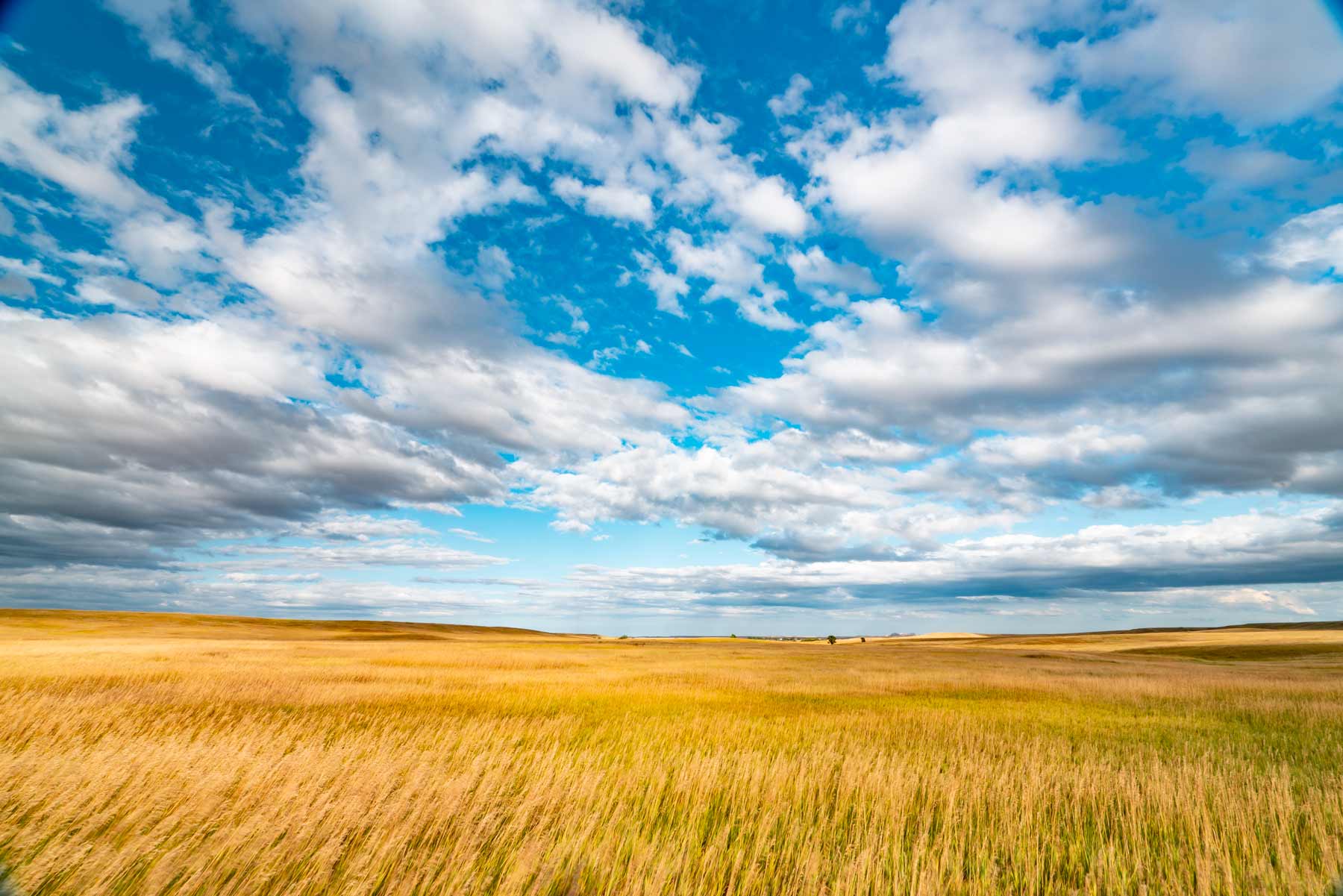
Here’s another of my favorite Badlands National Park Facts. One of the best known and best loved features of this park is its mixed-grass prairie. Roughly half of this park is covered with ankle-high and waist-high grasses.
Trees and shrubs grow here too, but grasses dominate the magnificent landscape. At the park, visitors may encounter researchers who are a part of the Northern Great Plains Inventory & Monitoring Network.
Their job is to conduct long-term monitoring of plant communities at Badlands National Park. They do it because it helps us to better understand the current health of ecosystems. It can also provide an early warning system of undesirable changes.
25 Bucket List Famous Landmarks In America (MUST-SEE)
10. The Badlands Was Used As A Practice Bombing Range During World War Two
Believe it or not, during World War II, a large portion of the Pine Ridge Reservation was seized by the Department of the Army for use as a practice bombing range. Now how’s that for another of those fascinating Badlands National Park Facts.
From 1942 to 1945, this area was used for air-to-air and air-to-ground firing practice as well as precision and demolition bombing exercises.
After the war, the South Dakota National Guard used portions of the bombing range as an artillery range.
According to the National Park Service, in 1968, the United States Air Force declared most of the range as excess property. 2,500 of the original 341,726 acres are retained by the Air Force, but are no longer used.
Check Out Our Award-Winning Badlands Film
More Than Just Parks is the only place you can go to find expert guides, beautiful photos, helpful tips, breathtaking films and so much more.
BADLANDS 8K is the culmination of several weeks spent filming in the rugged Badlands of South Dakota. Situated in the heart of the Northern Great Plains, Badlands National Park spans 244,000 acres of spectacular landscapes, diverse wildlife, and the largest undisturbed mixed grass prairie in the United States.
Journey with More Than Just Parks to discover the land where bison still roam and towers rise from the prairie in dazzling formations. This is the Badlands. Filmed in stunning UHD 8K.
We chose to film Badlands National Park in May to capture the park in an off season before temperatures and crowd sizes rise.
The Badlands features a surprising amount of wildlife including bison, pronghorn antelope, bighorn sheep, coyotes, prairie dogs, western meadowlarks, burrowing owls, and more.
Why Trust Us About Badlands National Park?
We’re Jim Pattiz and Will Pattiz, collectively known as the Pattiz Brothers (and sometimes the Parks Brothers) and we absolutely LOVE the national parks.
You should probably know that we don’t just make this stuff up out of thin air. We’ve spent our entire adult lives exploring and filming America’s national parks and public lands.
We’ve worked with the National Park Service, the Department of Interior, USDA, and the U.S. Forest Service for years creating films on important places and issues. Our work has been featured in leading publications all over the world and even some people outside of our immediate family call us experts on the national parks.


Meet The Parks Brothers
Map Of Badlands National Park
List Of Badlands National Park Facts
- Eighty Million Years Ago, Badlands Was An Inland Sea
- Native Americans Used The Badlands Area As Their Hunting Grounds
- Badlands Was Under French Control
- The Badlands Has An Extensive Set Of Museum Collections
- At Badlands, You Can See Over 7,000 Stars
- Badlands Is Home To Some Of the Most Endangered Species In North America
- Peter Norbeck Helped To Make Badlands National Park Possible
- Badlands Has Played A Cameo Role In Some Hollywood Films
- Badlands National Park Protects One Of The Largest Expanses Of Mixed-Grass Prairie In The U.S.
- The Badlands Was Used As A Practice Bombing Range During World War Two
We Hope You’ll Follow Our Journey

Our goal here at More Than Just Parks is to share the beauty of America’s national parks and public lands through stunning short films in an effort to get Americans and the world to see the true value in land conservation.
We hope you’ll follow our journey through the parks and help us to keep them the incredible places that they are. If you’re interested in joining the adventure then please sign up below!
Related Links:
Best Hikes in Badlands: 15 Best Hikes in Badlands National Park
Visiting Mount Rushmore: 15 Helpful Tips for Visiting Mount Rushmore
Things to Do Near Rushmore: Things to Do Near Mount Rushmore
Black Hills National Forest: Comprehensive Guide to the Black Hills National Forest
Mount Rushmore to Yellowstone: Driving Mount Rushmore to Yellowstone National Park Road Trip
Things to Do Yellowstone: 15 BEST Things to Do Yellowstone National Park
Yellowstone Facts: Yellowstone National Park Facts
Best Airports Near Yellowstone: The BEST Airports Near Yellowstone National Park
The Wyoming National Parks: 10 EPIC Wyoming National Parks: The Complete Guide (+ Photos)
Hiking the Castle Trail: Castle Trail: Epic Hikes in Badlands National Park (Photos + Guide)
Hiking the Notch Trail: Hiking the Notch Trail in Badlands National Park (Photos + Guide)
Badlands NP Guide: Helpful Guide to Badlands National Park
Things to Do in Badlands: 20 Incredible Things to Do in Badlands National Park
Things to Do Wind Cave: 10 Epic Things to Do at Wind Cave National Park
South Dakota National Parks: South Dakota National Parks Worth Visiting
South Dakota Landmarks: South Dakota Landmarks to See
South Dakota Historical Sites: 15 Incredible South Dakota Historical Sites