

This guide walks through all seven principles as the Leave No Trace Center for Outdoor Ethics defines them, with real examples and the gray areas that trip people up.
Some of these principles are plain courtesy. Others take a little learning. A few spark real debate, like how to handle a dog on the trail or an orange peel at lunch. We get into all of it.
Some links below are affiliate links. If you buy gear or a recommended book through them, we may earn a small commission at no extra cost to you.
The 7 Principles of Leave No Trace
Here are the seven principles in order. We cover each one in detail below.
117 public lands destinations are under threat. Get the free briefing that 27,000+ people use to stay informed and take action.
- Plan Ahead and Prepare
- Travel and Camp on Durable Surfaces
- Dispose of Waste Properly
- Leave What You Find
- Minimize Campfire Impacts
- Respect Wildlife
- Be Considerate of Others
A Brief History of Leave No Trace
Managing federal public lands is a fairly young idea, going back only about 120 years. Early on, the focus was on building trails, roads, and lodges so people could enjoy these places. It took decades to recognize what all that enjoyment was doing to the land.
It helps to remember that national parks and national forests answer to different agencies with different missions. The National Park Service manages parks primarily for preservation, while the U.S. Forest Service manages forests for multiple uses including logging and grazing. That difference is one reason the rules can vary so much from place to place.
Through years of growing crowds, missteps added up: rangers once let tourists feed bears by the roadside, and Carlsbad Caverns ran a full underground lunchroom. As people walked off trail without a second thought, land managers began to ask whether we were loving these places to death.
How Leave No Trace Became Official
In the 1980s, the U.S. Forest Service, National Park Service, and Bureau of Land Management began building a shared Leave No Trace land-ethics program focused on wilderness and backcountry travel.
In 1994, the independent nonprofit now known as the Leave No Trace Center for Outdoor Ethics formed to educate visitors in partnership with those agencies and, later, state lands. Over the past three decades, the guidance was reviewed, debated, and refined down to the seven principles we use today.
One thing to keep in mind: the way each principle applies depends on where you are. Leave No Trace generally discourages building rock cairns, yet some parks rely on them to mark trails over bare rock. Campfire guidance means nothing during a burn ban. The principles are a framework, not a fixed rulebook.
NOTE: Many people and groups pushed for better wilderness ethics long before the 1990s. The formal program built on decades of earlier work, and none of that effort should be overlooked.
Principle 1: Plan Ahead and Prepare
This one means being ready for your trip, whether it’s a two-hour walk or months on the Appalachian Trail. It covers far more than the right shoes and sunscreen.

Know the regulations and special concerns for the area
It’s on you to never have to say, “I didn’t know that wasn’t allowed.” That matters more than ever as permits, timed entry, and reservations spread across the busiest sites, like Half Dome at Yosemite and Angels Landing at Zion. A few examples of how much the rules differ:
- Yosemite prohibits bear spray, while Yellowstone encourages it and sells it in the park.
- Dogs are tightly restricted in most national parks but allowed far more freely in national forests. Bring a dog, and now you’re responsible for two creatures following the principles.
Use visitor centers, official park websites, and ranger phone lines. In many wilderness areas, you have to pick up a permit in person anyway, which is a good moment to ask last-minute questions.
Prepare for weather, hazards, and emergencies
Did you know spring is the snowiest season in Rocky Mountain National Park? Or that summer monsoons can hit Death Valley, Joshua Tree, and Utah’s parks nearly every afternoon?
Preparation also means matching gear to the risk. Tackling the Harding Icefield Trail at Kenai Fjords during avalanche season calls for a probe, transceiver, and shovel, plus the skill to use them. (If you have to look up what mountaineering is, you aren’t ready for it.)
Download the NPS app for park alerts and check the National Weather Service forecast for your exact location. A weather radio and a downloaded offline map are cheap insurance. You can browse weather radios here if you don’t already carry one.
Schedule your trip to avoid times of high use
The best time to visit is when the fewest people are there. That doesn’t mean skipping Zion in summer; it can mean choosing a weekday over the Fourth of July weekend.

It can also mean swapping a crowded classic for a quieter alternative, like trading Half Dome for Clouds Rest, or heading to Zion’s Kolob Canyons section, which sees a fraction of the traffic of the main canyon. Many parks now use timed entry or vehicle reservations to spread out the busiest hours.
Travel in small groups
Smaller groups put less strain on trails and campsites. What counts as “small” depends on the place. A good rule of thumb is two to six people for hiking and backpacking, and four or fewer in sensitive or heavily used areas. Check the specific group-size limits where you’re headed; group campsites and group permits often have their own rules.
Repackage food to minimize waste
Repackaging meals into reusable containers cuts down on the trash you have to carry out, and lightens your pack in the process. When you’re expected to haul out everything you bring in, less packaging is simply less to carry.
Principle 2: Travel and Camp on Durable Surfaces
Pick surfaces that can take the wear. Rock, gravel, sand, and dry, compacted soil hold up to repeated use without losing vegetation or eroding. Choosing them keeps new trails and bare patches from forming.

On the trail
Staying on established trails concentrates the impact and keeps paths from widening. Walk single-file, even through mud, rather than skirting the edges and trampling new ground. Many trails are routed deliberately to protect fragile plants and habitat, and the damage from a shortcut can take years to heal.
When you camp
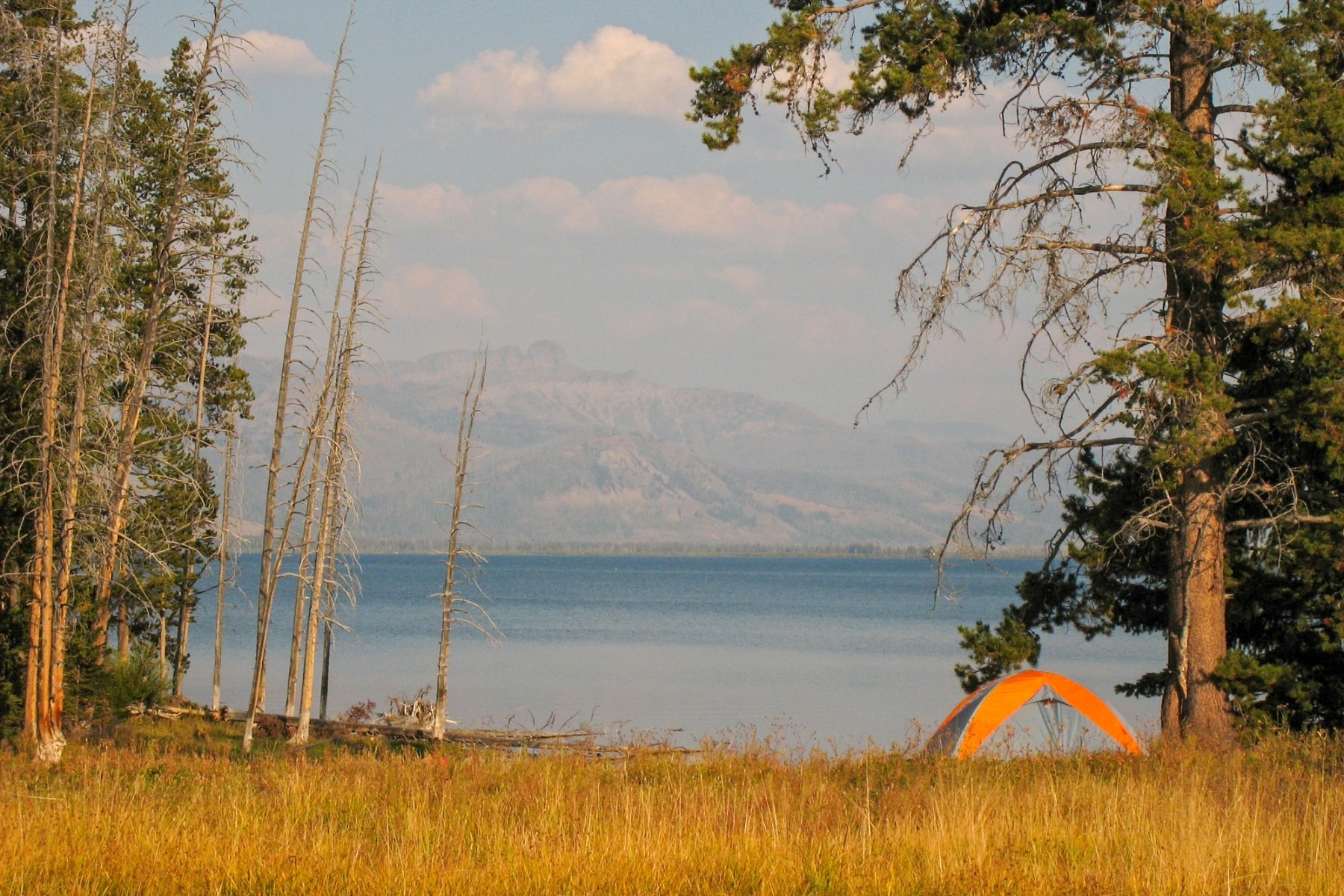
Developed campgrounds set group and family sites at specific sizes for exactly this reason. In the backcountry, a key rule is camping at least 200 feet from water, meaning lakes, rivers, shorelines, and streams.

Camping too close fouls the water with food scraps, human waste, or soap runoff. These riparian zones hold some of the richest plant and animal life around, and foot traffic along the banks strips vegetation and triggers erosion. When you disperse camp, keep the site small and choose ground that already shows light use rather than carving out something new.
Principle 3: Dispose of Waste Properly
This may be the most-violated principle, especially among people who hate the idea of carrying out trash or waste. Nobody enjoys it. We just do it for the land.

The core guidance from Leave No Trace:
- Pack it in, pack it out. Check your campsite and rest stops for trash and spilled food, and carry out everything, including food scraps. Don’t burn trash.
- Bury solid human waste in catholes 6 to 8 inches deep, at least 200 feet from water, camp, and trails. Cover and disguise the hole when you’re done.
- Pack out toilet paper and hygiene products unless the area specifically allows burying paper in the cathole.
- To wash up or clean dishes, carry water 200 feet from any stream or lake and use a little biodegradable soap. Strain and scatter the dishwater.
“Properly” Depends on Where You Are
“Properly” means different things in different places. Before you go, find out whether burying human waste is allowed or whether you must pack it out. A few examples:
- Guadalupe Mountains National Park requires you to pack out human waste in an approved bag and prohibits burying it.
- White Sands National Park asks you to pack it out but allows burying, at least 30 yards off the trail.
- Great Smoky Mountains National Park asks you to bury waste at least 100 feet from the trail.
For pack-it-out areas, carry a kit like these portable toilet bags. And if a restroom, outhouse, or pit toilet is within about a quarter mile, use it.
Waste Disposal: Common Questions
This is where the arguments get heated: orange peels, apple cores, and the endless dog-poop-versus-wildlife-poop debate. Let’s run through the most common myths.
“It’s an orange peel. It’s biodegradable.”
Fruit waste breaks down slowly, attracts animals, and can spread non-native seeds, so Leave No Trace says to pack it out like any other food. If a squirrel has ever marched up to you at the Grand Canyon demanding a handout, someone trained it that way. Feeding wildlife, even by accident, puts both animals and people at risk. Rodent bites are among the most common visitor injuries at Grand Canyon National Park.
“My dog is an animal. Animals poop in the woods. What’s the big deal?”
Leave No Trace treats pet waste the same as human waste, and pet waste should be carried out. Wildlife droppings belong to that ecosystem and cycle nutrients back into it. Dog waste can carry pathogens and parasites that linger in the soil, threaten other visitors, and contaminate water. Even buried, it draws wildlife.
Dog Waste Note: Removing pet waste does not mean bagging it and dropping it by the trail or at the trailhead. Carry it all the way out. As a friend of ours likes to say, “There is no magic poop fairy that comes to clean up those bags.” A smell-proof waste bag makes it bearable on dog-friendly trails.
Principle 4: Leave What You Find
The short version: “finders keepers” does not apply in nature. Look at cultural and historic sites, but don’t touch or take anything. Leave the place as you found it for the next person to discover.
That includes admiring the wildflowers of Death Valley National Park through your camera rather than your hands. A few Forest Service areas do allow limited picking of berries, plants, or rocks with a permit, so the rule, again, is location-specific.
It also rules out:
- Rearranging logs or rocks to build a seat.
- Hammering nails into a tree for a hammock.
- Pocketing “just one” shell, rock, or fossil. Picture every one of the more than 325 million annual NPS visitors taking just one thing.
Taking Things: Common Questions
The Park Service says wildflowers, rocks, gems, artifacts, fossils, and wood are the items most often taken from parks. Two common rationalizations:
“The shell is empty, so it’s fine to take.”
Empty shells still do work. They shelter marine life, stabilize sediment, and return nutrients to the food chain as they break down. Removing them, even a few, chips away at the coastal ecosystem and normalizes overharvesting. That said, several national seashores allow shell collecting up to a set limit, usually on barrier islands with shells to spare. Check the local rule.
“Nobody will notice. It’s just a rock.”
The Park Service runs an entire Investigative Services Branch to track down thieves and vandals, with a tip line at 888-653-0009. Cell service may be spotty in the backcountry, but cameras are not. At Death Valley’s Devil’s Hole, home to the endangered pupfish, a 2016 vandalism case ended with charges after the group tried to shoot out the surveillance cameras.
Beyond the law, that rock might be an artifact. Many of these lands were home to Indigenous peoples who consider removing items a desecration. Think of the most sacred place in your own life, and how you’d feel if someone helped themselves to a piece of it.
Principle 5: Minimize Campfire Impacts
Campfires scar the ground and consume deadwood that wildlife depends on, and an escaped fire can level a forest. Leave No Trace asks you to weigh whether you need a fire at all.
- Use a stove for cooking and a lantern or headlamp for light. A lightweight backpacking stove is faster and far gentler on the land than a fire.
- If fires are allowed, use existing fire rings, pans, or mound fires. Never build a new ring.
- Keep fires small and burn only down-and-dead wood you can break by hand. Don’t snap branches off trees, living or dead.
- Burn it to ash, drown it, stir it, and feel for heat before you leave. Always check for fire bans and red-flag conditions first.
Principle 6: Respect Wildlife
Watch animals from a distance and never feed them. A bison may look calm, but a man who tried to help a struggling bison calf cross the river at Yellowstone caused the herd to reject it, and the calf was later euthanized. Good intentions are not a substitute for keeping your distance.

- Keep your distance. A common standard is at least 25 yards from most wildlife and 100 yards from bears and wolves, but check each park’s rule.
- Never feed wildlife. It harms their health, alters natural behavior, and can lead to animals being killed once they grow bold around people.
- Store food and scented items securely in bear canisters, lockers, or a proper hang.
- Give animals extra space during sensitive times like mating, nesting, and raising young.

Principle 7: Be Considerate of Others
Most people come outdoors for quiet and a sense of space. A little courtesy protects that for everyone.
- Keep noise down. Skip the speaker; let natural sound be the soundtrack.
- Yield on the trail. Uphill hikers generally have the right of way, and everyone yields to horses and stock.
- Take breaks off the trail so you don’t block the path, and step to the downhill side when passing stock.
- Manage your dog. Leash it where required and don’t let it rush other people or wildlife.
Where Leave No Trace Meets the Law
The principles themselves are not laws, but they line up closely with real regulations. On federal land, the Wilderness Act of 1964 shapes how designated wilderness is managed, down to debates like whether climbers may leave fixed anchors.
Because parks and forests sit on federal land, violations are federal matters. Actor Pierce Brosnan was charged in late 2023 for walking off-trail in a thermal area at Yellowstone’s Mammoth Hot Springs and later resolved the case in court. Beyond the legal trouble, stepping on a thermal crust is both a serious Leave No Trace violation and genuinely dangerous.
Collecting is another overlap. Theft and vandalism are so persistent at Petrified Forest National Park that the park keeps tight hours, and hauling off petrified wood breaks both the principles and federal law.
The “Curse” of Taking Things
Some people swear a force stronger than any agency enforces Leave No Trace. Hundreds of stories tie souvenirs taken from parks to bad luck that follows.
At Haleakala National Park, the “Curse of Pele” is said to dog anyone who carries off a rock or sand from Hawaii’s parks. Petrified Forest National Park keeps a “conscience pile” of wood mailed back by guilty visitors, often with apology letters attached.
To read those apology letters, funny and heartfelt by turns, look up Bad Luck, Hot Rocks by Ryan Thompson and Phil Orr.
How to Teach Kids Leave No Trace
Teaching Leave No Trace starts the moment you take a child outside. Scouting and 4-H both build it into their programs, and the Girl Scouts have a good primer. A few tips:
- Lead by example. Pack out your trash, stay on the trail, and don’t feed wildlife. Kids copy what they see.
- Make it fun. Use games, songs, and the Leave No Trace hand signs.
- Keep it simple. Focus on one or two principles at a time, framed as protecting animals’ homes.
- Let them teach. Kids who explain a principle to a sibling or friend remember it better.
- Give gentle reminders. A quick “stay on the trail” keeps an excited kid on track.
Final Thoughts
The seven principles are a strong starting point, and they keep evolving. The Leave No Trace center has even had to address how we use social media, both in the field and after we get home, since geotagged photos can flood fragile places overnight.
“Remember that everyone’s experience in the outdoors is unique and personal. Online shaming and bullying in the name of ‘Leave No Trace’ is never endorsed by Leave No Trace, nor is it an effective, long-term tool to influence choices in the outdoors. Instead, spread Leave No Trace awareness by engaging in respectful and meaningful conversations on and offline about protecting the outdoors.”
Leave No Trace Center for Outdoor Ethics
The principles aren’t perfect or absolute, but they get at the heart of what it takes to protect wild places. Next time you post a trail video, ask yourself whether it models good practice, or just sends more people to a spot that can’t handle them.
More National Park Guides
- All 63 parks ranked: National Parks Ranked by Experts
- Most visited: Most Visited US National Parks
- Least visited: Least Visited National Parks
- East Coast: Best East Coast National Parks
Affiliate disclosure: Some links on this page earn us a small commission at no extra cost to you. We only recommend gear we actually use.