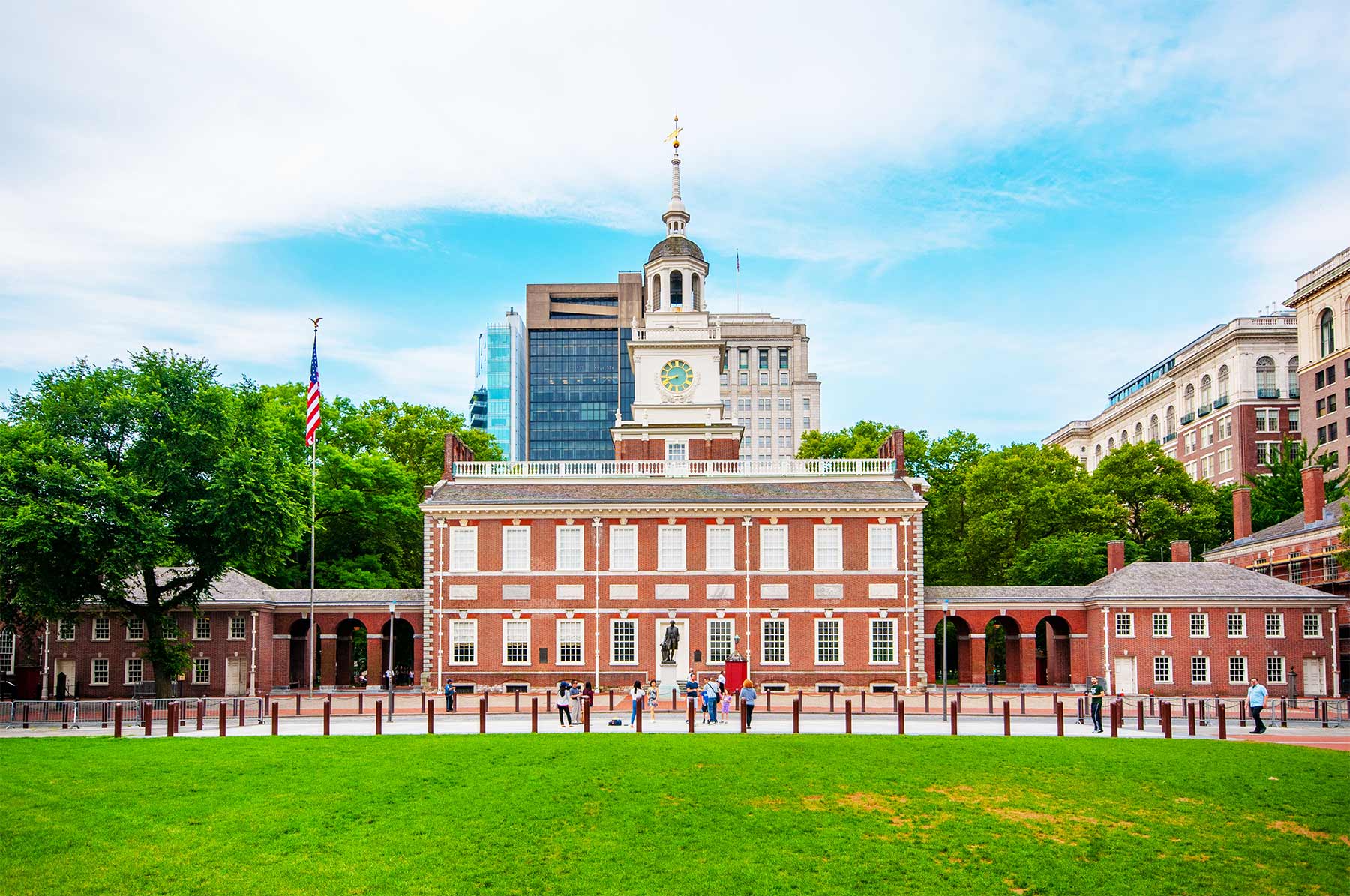


The first time I walked into Independence Hall, I stopped in the doorway and just stood there. After teaching American history for twenty-five years, I was finally in the room where the Declaration of Independence was signed. I thought about what those men risked by putting their names on that document. A signature was a death warrant if the war went the other way.
I am a retired history teacher who now researches and writes for the Pattiz Brothers, who happen to be my sons. What follows is my guide to the ten best Revolutionary War sites in America, ranked, with the real history behind each one and what you will actually see when you visit.
Most of these places are run by the National Park Service. A few are state parks. I have noted the correct designation and managing agency for each, because the details matter when you are standing on the ground where the country was decided.
The 10 Best Revolutionary War Sites at a Glance
| Rank | Site | Designation & Agency | Location | Key Event |
|---|---|---|---|---|
| 1 | Independence National Historical Park | National Historical Park (NPS) | Philadelphia, PA | Declaration of Independence signed, 1776 |
| 2 | Minute Man National Historical Park | National Historical Park (NPS) | Concord, Lincoln & Lexington, MA | First shots of the war, April 19, 1775 |
| 3 | Colonial National Historical Park (Yorktown) | National Historical Park (NPS) | Yorktown, VA | Cornwallis surrenders, Oct 19, 1781 |
| 4 | Valley Forge National Historical Park | National Historical Park (NPS) | King of Prussia, PA | Continental Army winter encampment, 1777-78 |
| 5 | Saratoga National Historical Park | National Historical Park (NPS) | Stillwater, NY | British surrender, October 1777 |
| 6 | Bunker Hill Monument | Part of Boston National Historical Park (NPS) | Charlestown, MA | Battle of Bunker Hill, June 17, 1775 |
| 7 | Washington Crossing Historic Park | Pennsylvania state historic park | Washington Crossing, PA | Crossing of the Delaware, Dec 25, 1776 |
| 8 | Kings Mountain National Military Park | National Military Park (NPS) | Blacksburg, SC | Patriot victory, Oct 7, 1780 |
| 9 | Guilford Courthouse National Military Park | National Military Park (NPS) | Greensboro, NC | Costly British win, March 15, 1781 |
| 10 | Cowpens National Battlefield | National Battlefield (NPS) | Cowpens, SC | Patriot victory, Jan 17, 1781 |
10. Cowpens National Battlefield
Location: Cowpens, South Carolina | Managed by: National Park Service
117 public lands destinations are under threat. Get the free briefing that 27,000+ people use to stay informed and take action.
We begin at number ten with Cowpens National Battlefield, a small grazing pasture in the South Carolina backcountry where one of the most tactically perfect victories of the war took place.
The Battle of Cowpens was fought on January 17, 1781. Brigadier General Daniel Morgan, pursued by roughly 1,100 British troops under Lieutenant Colonel Banastre Tarleton, chose his ground carefully and set a trap. He placed militia in front with orders to fire two volleys and fall back, drawing the British into a charge that ran straight into his disciplined Continental line. The result was a near-total defeat for Tarleton and a turning point in the southern campaign.
The victory at Cowpens was a serious morale boost for the Continental Army and a crucial step in wearing down British strength in the South.
What to See at Cowpens
Start at the visitor center, where a short live-action film, “Cowpens: A Battle Remembered,” sets the scene. The museum pairs exhibits with colonial-period weaponry, and the bookstore carries a deep selection on the battle and the war. Depending on the season, rangers lead guided battlefield walks and weapons demonstrations. You can also walk the field on your own and trace the Green River Road, the route the armies traveled and fought along.
For deeper reading, three of my favorites are A Devil of a Whipping by Lawrence E. Babits, Battle of Cowpens: Primary and Contemporary Accounts by Andrew Waters, and Cowpens: Our Victory Was Complete by Robert W. Brown Jr.
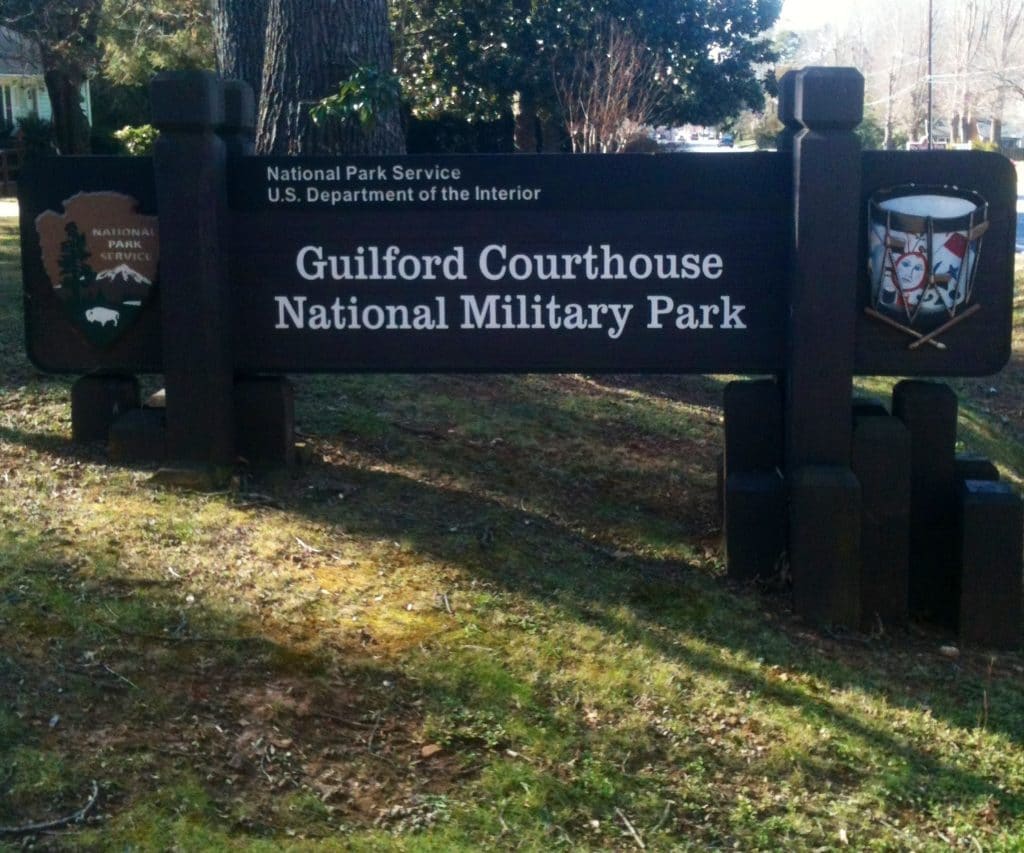
9. Guilford Courthouse National Military Park
Location: Greensboro, North Carolina | Managed by: National Park Service
At number nine is the Battle of Guilford Courthouse, fought on March 15, 1781. It is often called a victory within a defeat. British troops under Lieutenant General Charles Cornwallis (1738-1805) held the field against American forces under Major General Nathanael Greene (1742-1786), but the British paid for it with heavy losses they could not replace.
Afterward, Cornwallis gave up his Carolina campaign and marched into Virginia. That October, at Yorktown, he surrendered to General George Washington. The road to Yorktown ran straight through Guilford Courthouse.
For more on the battle, I recommend another Lawrence Babits book, Long, Obstinate, and Bloody, which reconstructs the fight almost foot by foot across the wooded plateau that is now part of Greensboro.
“I never saw such fighting since God made me. The Americans fought like demons.”
Lieutenant General Charles, Earl Cornwallis
What to See at Guilford Courthouse
Begin at the visitor center and pick up a map. There are self-guided cell phone walking and driving tours, and the inner trails let you follow the fighting of March 15, 1781 step by step. The main walking tour starts at the Hoskins Farm parking area, runs about 1.75 miles, and takes roughly an hour and a half. While you are there, visit the Hoskins Farmstead, a restored late 18th and early 19th century farm that tells the story of Joseph and Hannah Hoskins, colonists who fled the war and settled in the Carolina backcountry.

8. Kings Mountain National Military Park
Location: Blacksburg, South Carolina | Managed by: National Park Service
Thomas Jefferson called it “the turn of the tide of success.” The Battle of Kings Mountain, fought on October 7, 1780, was the first major Patriot victory after the British captured Charleston, South Carolina, that May. Kings Mountain National Military Park preserves the ground where it happened.

The Patriots Against the Loyalists at Kings Mountain
A force of roughly 900 backcountry militia, the so-called Overmountain Men, surrounded and destroyed a Loyalist force of about 1,000 under British Major Patrick Ferguson. The fight lasted about an hour and ended with Ferguson dead and his command broken. British commander Henry Clinton later wrote that the American victory “proved the first link of a chain of evils” that ended in the loss of America. The battle halted the British advance into North Carolina and set the stage for Cowpens three months later.
For more on this often overlooked battle, see Kings Mountain: America’s Most Forgotten Battle That Changed the Course of the American Revolution by Phillip Thomas Tucker.

What to See at Kings Mountain
A large share of the war’s battles and skirmishes were fought in South Carolina, and Kings Mountain is one of the most important. Start at the visitor center, where a film provides a historical overview of the battle, then walk through the exhibits to learn who the Overmountain Men were and why this hour-long fight mattered so much. When you are ready for fresh air, the 1.5-mile battlefield trail loops the field and passes markers for the key figures of the battle.

Hiking at Kings Mountain
If the battlefield trail leaves you wanting more, the backcountry offers another 16 miles of hiking. The Park Loop Trail is a 16-mile loop through both the national military park and the adjacent state park, an easy full day on foot. The Browns Mountain Trail runs 2.5 miles each way from the visitor center to the summit, and the Clarks Creek Trail covers 3 miles each way to Lake Crawford in the state park. (Source: NPS)

7. Washington Crossing Historic Park
Location: Washington Crossing, Pennsylvania | Managed by: Pennsylvania state historic park
One of my favorite moments of the war, and one worth getting the designation right on. Washington Crossing Historic Park is a Pennsylvania state park, not a national park unit, but its place in the story is hard to overstate.
On Christmas night in 1776, in a raging snowstorm, Washington crossed the Delaware River with his army. The next morning he won the Battle of Trenton. Henry Knox managed the crossing, the same officer who had hauled the captured artillery from Fort Ticonderoga to break the siege of Boston. Among the men handling the boats through the floating ice were the mariners of Colonel John Glover’s Massachusetts regiment, a unit that included Black men, Native Americans, and white New Englanders. The crossing is commemorated by parks on both sides of the river.
To relive it, read Washington’s Crossing by David Hackett Fischer, which lays out how the campaign turned on a sequence of hard choices by generals and civilians on both sides.

What to See at Washington Crossing
The Thompson-Neely House served as a temporary army hospital during Washington’s winter campaign of 1776-77. Bowman’s Hill Tower is a longtime favorite for visitors. On a clear day, the top offers a 14-mile view across the surrounding countryside and the Delaware River.

6. Bunker Hill Monument
Location: Charlestown, Massachusetts | Managed by: National Park Service (part of Boston National Historical Park)
At number six is the Bunker Hill Monument, the granite obelisk that marks one of the earliest and bloodiest fights of the war. It is a unit of Boston National Historical Park and a stop on the Freedom Trail.
On June 17, 1775, the British defeated the Americans at the Battle of Bunker Hill, though most of the fighting actually took place on neighboring Breed’s Hill. The inexperienced colonial militia inflicted staggering casualties before running low on powder and giving ground. The British held the field, but the cost convinced them that subduing the colonies would be a long and expensive war. For the Americans, it was proof that they could stand against British regulars. (Source: History)
To learn more, I recommend Decisive Day: The Battle for Bunker Hill by Richard M. Ketchum.
What to See at Bunker Hill
Climb the 294 steps to the top of the monument for a view across Charlestown and Boston Harbor, then visit the Bunker Hill Museum across the street, where exhibits and a detailed diorama walk you through the battle and the building of the monument.

5. Saratoga National Historical Park
Location: Stillwater, New York | Managed by: National Park Service
The top five opens with the place where the tide of the war turned. At the Battles of Saratoga in the autumn of 1777, American forces defeated and then forced the surrender of a British invasion army under General John Burgoyne.
The victory was the diplomatic hinge of the Revolution. It convinced France to enter the war as a formal ally of the United States, bringing the money, ships, and troops that would eventually decide the conflict at Yorktown. Many historians call Saratoga one of the most consequential battles in world history for exactly that reason.
For more, see The Untold Story of the Battle of Saratoga by Michael Burgan.

What to See at Saratoga
Tour the Philip Schuyler estate, the home of the Continental general whose property the British burned during the campaign and which was rebuilt soon after. Then head outdoors. You can bike the Tour Road through the battlefield, climb the 188 steps of the Saratoga Monument for a wide view of the valley, walk the half-mile interpretive path through Victory Woods, and follow the Wilkinson Trail across the ground where Patriots and British regulars fought.

4. Valley Forge National Historical Park
Location: King of Prussia, Pennsylvania | Managed by: National Park Service
No battle was fought at Valley Forge, yet few places shaped the war more. On December 19, 1777, some 12,000 soldiers marched into the encampment and built what amounted to one of the largest settlements in the colonies, with around 1,500 log huts and two miles of fortifications.
Through the brutal winter of 1777-78, the Continental Army endured hunger, cold, and disease, and came out the other side a real fighting force. Valley Forge is often called the birthplace of the American Army. Much of that transformation came from Baron von Steuben, the Prussian officer who drilled the troops into a disciplined unit. His story is told in The Drillmaster of Valley Forge by Paul Lockhart.
What to See at Valley Forge
Begin at the visitor center, where the museum exhibits tell the story of the men, women, and children who survived the encampment together. From there, drive the 10-mile Encampment Tour route, a loop of nine major stops that links the reconstructed huts, Washington’s headquarters, monuments, and some of the best views in the park.

3. Colonial National Historical Park (Yorktown)
Location: Yorktown, Virginia | Managed by: National Park Service
At number three is Colonial National Historical Park, which protects the Yorktown Battlefield where the war was effectively won.
In May 1781, General Cornwallis took command of British forces in Virginia and waited at Yorktown for reinforcements from General Henry Clinton in New York. Washington and the Comte de Rochambeau, leading the French army in America, marched south after learning the French fleet was sailing for the Chesapeake. On September 5, the French navy defeated the British fleet off the bay, cutting Cornwallis off from rescue. By late September the combined American and French armies, roughly 18,000 strong, had Cornwallis and his 8,000 men under siege.
On October 19, 1781, Cornwallis surrendered. It was the last major land battle of the Revolution. The park also includes Historic Jamestowne, the site of the first permanent English settlement in North America.
One of my favorite authors is Nathaniel Philbrick. His In the Hurricane’s Eye: The Genius of George Washington and the Victory at Yorktown is a gripping account of how the siege ended the war.

What to See at Yorktown
The park spans an enormous sweep of American history, from the founding of Jamestown through the Revolution and into the Civil War. Birdwatchers will find more than 200 species, and the woods hold deer, fox, bald eagles, and wild turkey. You can jog or bike the battlefield tour roads and the Jamestown loop, or drive the scenic Colonial Parkway that connects Yorktown, Williamsburg, and Jamestown.

2. Minute Man National Historical Park
Location: Concord, Lincoln, and Lexington, Massachusetts | Managed by: National Park Service
At number two is Minute Man National Historical Park, where the war began. I promise to keep the history lesson short, and there is no homework.
Militia were ordinary townsmen called up to defend their communities. The minutemen were a hand-picked subset, younger and fitter, chosen to assemble at a minute’s notice. By 1775 the militia tradition was generations deep in Massachusetts. As historian David Hackett Fischer notes, “The muster of the Minutemen in 1775 was the product of many years of institutional development.”
On April 19, 1775, British regulars marching to seize colonial arms met armed colonists at Lexington and Concord. The “shot heard round the world” was fired at the North Bridge in Concord, and the running fight back to Boston opened the Revolutionary War.

What to See at Minute Man
The Minute Man Visitor Center features a 40-foot mural of the fighting between colonists and British regulars, along with artifacts from the Parker’s Revenge archaeological investigation. Rangers are on hand to answer questions, and you can pick up a map, a program schedule, and a junior ranger booklet for the kids before watching the multimedia presentation on the opening of the war.

Hike the Battle Road Trail
The five-mile Battle Road Trail traces the colonial militia’s pursuit of the retreating British column, linking historic sites from Meriam’s Corner in Concord to the eastern edge of the park in Lexington. Walking it is the best way to understand how the first day of the war unfolded across the landscape.
1. Independence National Historical Park
Location: Philadelphia, Pennsylvania | Managed by: National Park Service
At number one is the birthplace of American liberty, Independence National Historical Park. The Park Service describes it as the place that preserves the national and international symbols of freedom and democracy, including Independence Hall and the Liberty Bell.
The Declaration of Independence and the U.S. Constitution were both debated and signed inside Independence Hall, now a UNESCO World Heritage Site. Entrance to the hall is by guided tour. From March through December, timed entry tickets are required and can be reserved in advance for a small handling fee, so check the park website before you go.

For Anyone Who Loves History
For anyone who loves history, and even for those who think they do not, this is one of the most moving sites in the country. At Independence Hall, visitors learn the stories of the people and events that shaped America. There is an old saying, “If this place could only talk.” At Independence Hall, in a sense, it does. Standing in the Assembly Room, you are in the space where a small group of men produced two of the most important documents in modern history.

“We hold these truths to be self-evident, that all men are created equal.”
The Declaration of Independence, 1776
Further Reading on the Revolution
If you love the American Revolution as much as I do, here are ten books worth your time:
- Bunker Hill: A City, A Siege, A Revolution by Nathaniel Philbrick
- 1776 by David McCullough
- Beat the Last Drum: The Siege of Yorktown by Thomas Fleming
- Founding Brothers: The Revolutionary Generation by Joseph Ellis
- The Radicalism of the American Revolution by Gordon S. Wood
- A Narrative of a Revolutionary Soldier by Joseph Plumb Martin
- Almost a Miracle: The American Victory in the War of Independence by John Ferling
- The Great Divide: The Conflict between Washington and Jefferson by Thomas Fleming
- John Adams by David McCullough
- Washington by Douglas Southall Freeman
Jim Pattiz and Will Pattiz, collectively known as the Pattiz Brothers, are my sons, and they love the national parks. I wrote this guide as their father, a retired history teacher who has spent years walking these battlefields and reading their stories.
Helpful Articles
- Historic Sites in Virginia
- Historic Sites in Pennsylvania
- Historic Sites in South Carolina
- Historic Sites in New York
- Massachusetts National Parks
- North Carolina National Parks
- Pennsylvania National Parks
- South Carolina National Parks
Affiliate disclosure: Some links on this page earn us a small commission at no extra cost to you. We only recommend gear we actually use.