

The National Park Service counts 16 park units in Massachusetts, more than any state in New England. One is 40 miles of Atlantic beach, one is the most famous walking tour in America, and one is the field where the Revolution started. If you only have a day, walk the Freedom Trail. If you only have a summer weekend, drive to the Outer Cape.
A word on the math before anyone gets out a calculator. The official NPS ledger says 16 units in Massachusetts. The Park Service’s own state list names 18 sites, because the long-distance trails that cross the state get listed alongside the parks they pass through. We cover all 18, ranked honestly, with 2026 fees and the practical details.
Fair warning. This list is history-heavy even by our standards, because Massachusetts is where an outsized share of American history happened. The state invented the Revolution, the factory, the presidential dynasty, and the landscape architect, and the Park Service kept the receipts.
Massachusetts’ Top Park Sites at a Glance
| Site | Type | The Draw | Base Town | 2026 Fee | Time Needed |
|---|---|---|---|---|---|
| Cape Cod | National Seashore | 40 miles of protected Atlantic beach | Eastham to Provincetown | $25/vehicle at swim beaches in season | 2-4 days |
| Boston | Historical Park | The Freedom Trail, Bunker Hill, USS Constitution | Boston | Free (a few partner sites charge) | 1-2 days |
| Minute Man | Historical Park | Where the Revolution started, April 19, 1775 | Concord | Free | Half day |
| Lowell | Historical Park | The factory city that industrialized America | Lowell | Free ($6 mill museum, $12 boat) | Half to full day |
| Adams | Historical Park | Two presidents, one farm, the Stone Library | Quincy | $15 home tours, under 16 free | Half day |
| Boston African American | Historic Site | Beacon Hill’s free Black community and the 54th | Boston | Free | 2-3 hours |
| New Bedford Whaling | Historical Park | The city that lit the world | New Bedford | Free (museum charges) | Half day |
| Salem Maritime | Historical Park | Derby Wharf and the tall ship Friendship | Salem | Free | 2-3 hours |
| Boston Harbor Islands | Recreation Area | Fort Warren and 34 islands in the harbor | Boston (Long Wharf ferry) | Free, pay the ferry | Half to full day |
| Springfield Armory | Historic Site | Two centuries of American arms making | Springfield | Free | 2 hours |
Worth a Dedicated Trip
1. Cape Cod National Seashore
In 1961, President Kennedy signed the bill that stopped the Outer Cape from becoming wall-to-wall beach houses, and every summer since has proven the point. The seashore protects 40 miles of beach, dune, marsh, and kettle pond from Chatham to Provincetown, backed by the great sand cliffs Thoreau walked in the 1850s.
117 public lands destinations are under threat. Get the free briefing that 27,000+ people use to stay informed and take action.
The marquee swimming beaches are Coast Guard and Nauset Light in Eastham, Marconi in Wellfleet, Head of the Meadow in Truro, and Race Point and Herring Cove in Provincetown. Coast Guard Beach makes national top-ten beach lists with a regularity that has stopped being news. Race Point at sunset, with the light going gold over the Atlantic on a beach that faces northwest, is the single best free show on the East Coast that isn’t free parking.
Beyond the towel, ride the Province Lands bike trail through the dunes, walk the Atlantic White Cedar Swamp boardwalk at Marconi, and climb Fort Hill in Eastham for the marsh view. October on the Outer Cape, empty beaches and seals in the lineup, is the local’s answer to July.
Access notes. Beach entrance fees run $25 per vehicle per day, $60 for an annual pass, $15 on foot or bike, collected at the six swim beaches from late spring into fall. Cashless, and passes sell only at the beach entrances, not the visitor centers. Start at Salt Pond Visitor Center in Eastham. One more honest note, the sharks are real; swim near lifeguards and respect the seal rules.
2. Boston National Historical Park
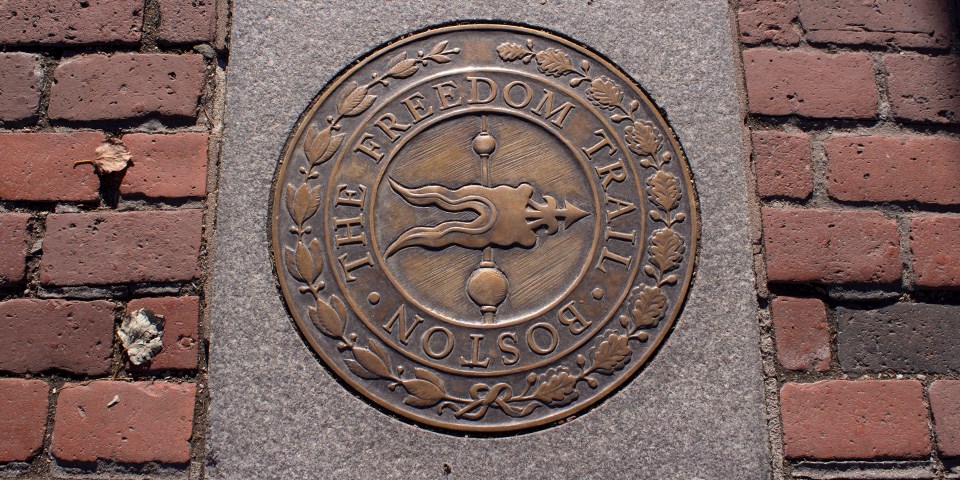
Let’s clear up the confusion everybody arrives with, because the Freedom Trail and Boston National Historical Park are not the same thing. The Trail is the city’s 2.5-mile red line on the sidewalk, run by the Freedom Trail Foundation, connecting 16 sites from Boston Common to Bunker Hill, and it remains the best urban history walk in America. The park is the federal operation that owns specific buildings on and off that line, Faneuil Hall, the Bunker Hill Monument, and the Charlestown Navy Yard, where the USS Constitution, launched 1797 and still a commissioned Navy ship, floats with active-duty sailors giving the tours. Everything the park service runs is free; the fees belong to the privately run partner sites along the line.
The dollar mechanics, then. Walking the trail is free, ranger programs are free, Faneuil Hall is free, climbing Bunker Hill’s 294 steps is free, and boarding the Constitution is free with photo ID for adults. At the partner sites, $15 gets adults into both the Old State House and Old South Meeting House, the Paul Revere House charges $6, and Old North Church runs $5.
Our advice after many laps is to walk it backward. Start at Bunker Hill in the morning, cross the harbor on the Charlestown ferry, and finish on the Common, which puts you ahead of every tour group in the city all day.
Access notes. Take the T, never drive. The NPS visitor center in Faneuil Hall sorts you out. More nearby options in our guide to the best national parks near Boston.
Worth a Detour
3. Minute Man National Historical Park
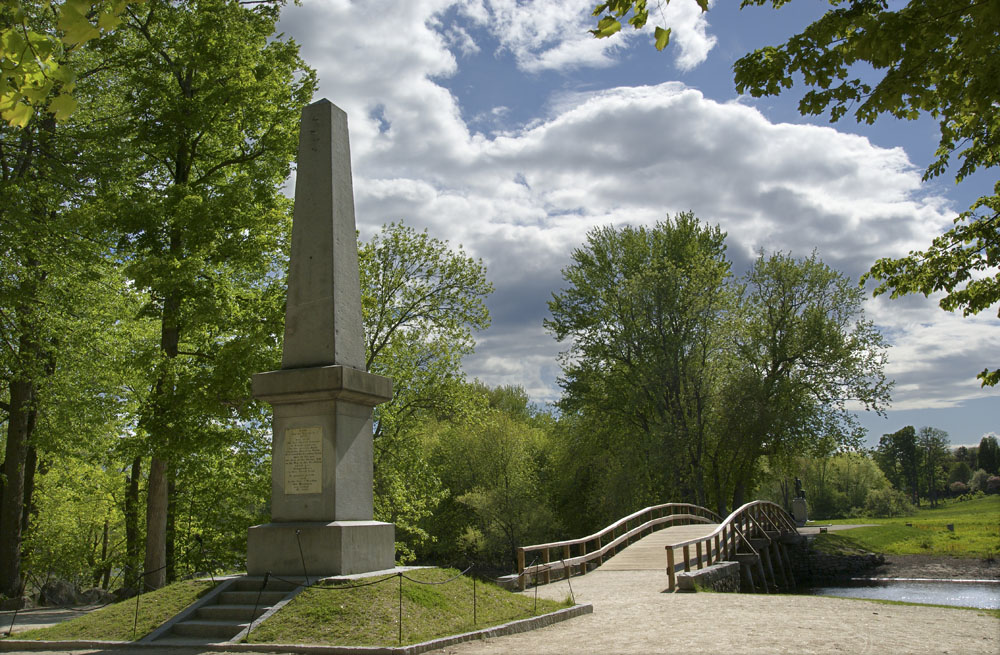
On April 19, 1775, the first day of the Revolution ran right through what is now this park, from Lexington Green to Concord’s North Bridge and back along the bloody road to Boston. The crowds from the 250th anniversary in April 2025 have gone home, and what’s left is the same quiet bridge over the same slow river where, as Emerson put it, farmers fired the shot heard round the world.
Walk the five-mile Battle Road Trail between Lexington and Concord, past Hartwell Tavern and the Paul Revere capture site, and the day stops being a school lesson and starts being terrain. The park also holds The Wayside, the only house lived in by Hawthorne, the Alcotts, and Margaret Sidney, which is the most literary address in America by volume.
Access notes. Free. 35 minutes from Boston. Start at the Minute Man Visitor Center in Lexington for the multimedia orientation, then drive Route 2A west to the North Bridge. More context in our guide to America’s best Revolutionary War sites.
4. Lowell National Historical Park
America’s Industrial Revolution has an address, and it’s a power loom floor in Lowell. The Boott Cotton Mills Museum runs a 1920s weave room at full clatter, and the noise is the exhibit, ninety seconds of it explaining factory life better than any placard. The park tells the whole story honestly, the mill girls, the immigrant waves, the strikes, the long decline.
Access notes. The park is free; the mill museum charges $6 for adults, and summer canal boat tours run $12 through Recreation.gov. 45 minutes from Boston, and better than it has any right to be on a rainy day.
5. Adams National Historical Park

Two presidents, John and John Quincy, born in saltbox houses 75 feet apart, plus Peacefield, the family seat for four generations, plus the Stone Library, the first presidential library building in America, holding the family’s books under a vaulted stone roof in the garden. No other park site compresses this much American government into one city block of Quincy.
The 2026 mechanics are old-fashioned on purpose. Tours run May 1 through October 31, Wednesday through Sunday, and there are no online reservations; you show up at the visitor center at 1250 Hancock Street, buy the $15 pass (under 16 free), pick a tour, and ride the free trolley between sites. Groups cap at 10, so summer Saturdays mean waiting. Go at opening.
Access notes. The Red Line drops you two blocks from the visitor center, which beats parking in downtown Quincy. Allow half a day for the full circuit.
6. Boston African American National Historic Site

Before the Civil War, the north slope of Beacon Hill held the most politically powerful free Black community in America, and the 1.6-mile Black Heritage Trail walks you through it, from the Shaw 54th Regiment Memorial to the African Meeting House, the oldest standing Black church building in the country. This is the other essential Boston walk, and most folks doing the red line fifty yards away have no idea it exists.
Access notes. Free, including ranger-led trail tours in season; the Museum of African American History, which operates the Meeting House, charges separate admission. Pairs naturally with the Freedom Trail for a full Boston day. More in our guide to America’s best civil rights sites.
7. New Bedford Whaling National Historical Park

In the 1850s, New Bedford was the richest city per capita in the world, because whale oil lit the lamps of the planet and this town owned the fleet. The park covers 13 cobblestoned blocks of the old whaling district, including the Seamen’s Bethel with its ship’s-bow pulpit, the chapel from Moby-Dick. Melville shipped out of this harbor in 1841 and so, on the Underground Railroad, did Frederick Douglass arrive, a fact the park tells well.
Access notes. The park and its visitor center are free; the New Bedford Whaling Museum next door charges admission and earns it, with the world’s largest whaling collection and a full skeleton hall. An hour south of Boston, an easy add to a Cape Cod run.
8. Salem Maritime National Historical Park

The first national historic site in America, designated 1938, and redesignated a national historical park in July 2025, a promotion 87 years in the making. It remains the antidote to Salem’s witch-kitsch economy. Derby Wharf and the Custom House, where Hawthorne actually worked, tell the story of the East Indies trade that made Salem one of the wealthiest ports on Earth. The tall ship Friendship of Salem is back at Derby Wharf after a years-long rebuild, with rigging work wrapping up around the city’s 400th anniversary in 2026; deck access depends on staffing, so check before you promise the kids.
Access notes. Free. Skip October unless you enjoy gridlock in costume; the entire city is a Halloween event, and the wharf is the only quiet place in town even then.
9. Boston Harbor Islands National Recreation Area
Thirty-four islands in the harbor, and the best of them, Georges, holds Fort Warren, the Civil War fortress where Confederate prisoners heard the legend of the Lady in Black. The 2026 news is good news. After a water main failure kept it quiet, ferry service to Georges Island resumed May 15, 2026, with Spectacle Island, the one with the skyline view from a 157-foot hill of reclaimed landfill, back on the summer schedule too.
Access notes. The park is free; the ferry from Long Wharf is the cost, run by Boston Harbor City Cruises. Summer weekdays beat weekends by a wide margin.
10. Springfield Armory National Historic Site
George Washington picked this hill above the Connecticut River for the new nation’s arsenal, and from 1794 to 1968 the Springfield Armory armed every American war, inventing interchangeable-parts manufacturing along the way, which is arguably the most consequential thing on this whole list. The museum holds the largest collection of historic American military firearms anywhere, including the rack of muskets that inspired Longfellow’s “Arsenal at Springfield.”
Access notes. Free. 90 minutes from Boston, and the natural pairing is the Basketball Hall of Fame ten minutes away, since Springfield also invented that.
11. Saugus Iron Works National Historic Site

American industry started here in 1646, a blast furnace, forge, and rolling mill on the Saugus River a full century before the Revolution. The reconstruction runs working waterwheels on a site archaeologists consider one of the best industrial digs in the country, and the seven-ton drop hammer thumping under waterpower is worth the trip alone. Free, seasonal, 25 minutes north of Boston, and the most underrated stop on this list.
Completist Territory
Five smaller sites and three trails. None of these anchors a trip, several reward an hour, and one of them contains Mount Greylock, so read to the end.
12. Longfellow House-Washington’s Headquarters National Historic Site

One yellow Georgian mansion in Cambridge with two unbeatable claims. George Washington ran the Siege of Boston from it in 1775 and 1776, and Henry Wadsworth Longfellow wrote in it for 45 years. Free guided tours run seasonally, the garden is open year round, and it sits ten minutes from Harvard Square.
13. Frederick Law Olmsted National Historic Site
Fairsted, in Brookline, was the world’s first full-scale landscape architecture office, where Olmsted and his successors designed Central Park’s heirs by the thousand. The archives here hold plans for nearly every great American park space you’ve walked. Free, with limited weekend tour hours, so check before driving over.
14. John Fitzgerald Kennedy National Historic Site
The president’s birthplace at 83 Beals Street in Brookline, reopened in 2025 after a years-long renovation, and in 2026 it runs Thursday through Sunday through late October. The audio tour is narrated by Rose Kennedy herself, recorded in 1969, which makes this the only presidential birthplace toured by the president’s mother. Free, and a 15-minute walk from the Olmsted site, so do both.
15. Blackstone River Valley National Historical Park
The valley where Slater Mill spun America’s first factory cotton in 1790, with sites scattered along the river from Pawtucket, Rhode Island up through the Massachusetts mill villages. One of the newest parks in the system and still building out its visitor footprint, so for now it’s a drive-and-wander unit best combined with Lowell for the full industrial arc.
16. Appalachian National Scenic Trail

About 90 of the AT’s 2,190-some miles cross the Berkshires, and the section worth a pilgrimage is Mount Greylock, at 3,489 feet the highest point in Massachusetts, where the trail passes the summit’s war memorial tower and the view reaches five states. Melville could see Greylock from his desk at Arrowhead and thought it looked like a whale. Decide for yourself, ideally in early October.
17. New England National Scenic Trail
A 215-mile ridge walk from Long Island Sound to the New Hampshire line, riding the old Metacomet-Monadnock route through Massachusetts. The day hike to take is the Mount Holyoke Range above the Connecticut River, with the Summit House view that made the “Oxbow” famous in American painting. Free, obviously.
18. Washington-Rochambeau Revolutionary Route National Historic Trail
The 680-mile route the French army marched to join Washington for the Yorktown campaign, with the Massachusetts chapter coming at the story’s end, when Rochambeau’s troops marched back to Boston and sailed home in late 1782. You experience it as roadside markers. Read them when you find them and keep driving.
Beyond the Park Service
For actual backcountry, Massachusetts keeps its best secret in the Berkshires. October Mountain State Forest, the largest state forest in Massachusetts at more than 16,000 acres, runs ponds, AT miles, and real solitude above Lee, and Mount Greylock State Reservation surrounds the state’s rooftop with 70 miles of trail. Out on the coast, the Cape Cod Rail Trail and the state beaches fill the gaps between seashore parking lots. The commonwealth’s state park system quietly does national-park-quality work, and nobody waits in line for any of it.
Planning a Massachusetts Parks Trip
When to Go
September is the cheat code. The ocean is at its warmest, the Cape crowds leave after Labor Day, the historic sites still run full schedules, and the Berkshires start turning by month’s end. July and August work if you’re beach-first and start your days at 8. Most of the historic homes, Adams included, close for the season November through April, so winter trips are Boston and the museums.
Two Logical Routes
The history week (4 to 5 days, no car until day three). Two Boston days, Freedom Trail backward and Black Heritage Trail, with a harbor island if the weather’s right. Red Line to Quincy for the Adams homes on day three. Then rent the car, Lexington and Concord in the morning, Lowell in the afternoon, and Salem on the way back.
The shore week (4 to 6 days). New Bedford for a half day, then over the bridge and out the Cape with a base in Wellfleet or Eastham. Beaches by morning, ponds and bike trails midday, Race Point at sunset. Give Provincetown an evening and ride the Province Lands dunes before the drive home.
Full List of Massachusetts National Park Sites
- Cape Cod National Seashore
- Boston National Historical Park
- Minute Man National Historical Park
- Lowell National Historical Park
- Adams National Historical Park
- Boston African American National Historic Site
- New Bedford Whaling National Historical Park
- Salem Maritime National Historical Park
- Boston Harbor Islands National Recreation Area
- Springfield Armory National Historic Site
- Saugus Iron Works National Historic Site
- Longfellow House-Washington’s Headquarters National Historic Site
- Frederick Law Olmsted National Historic Site
- John Fitzgerald Kennedy National Historic Site
- Blackstone River Valley National Historical Park
- Appalachian National Scenic Trail
- New England National Scenic Trail
- Washington-Rochambeau Revolutionary Route National Historic Trail
Helpful Related Articles
Parks Near Boston Best National Parks Near Boston
Massachusetts History Best Historic Sites in Massachusetts
Boston Landmarks The Best Boston Landmarks
Revolutionary War Sites America’s Best Revolutionary War Sites
New York’s Parks New York National Parks Guide
Pennsylvania’s Parks Pennsylvania National Parks Guide