

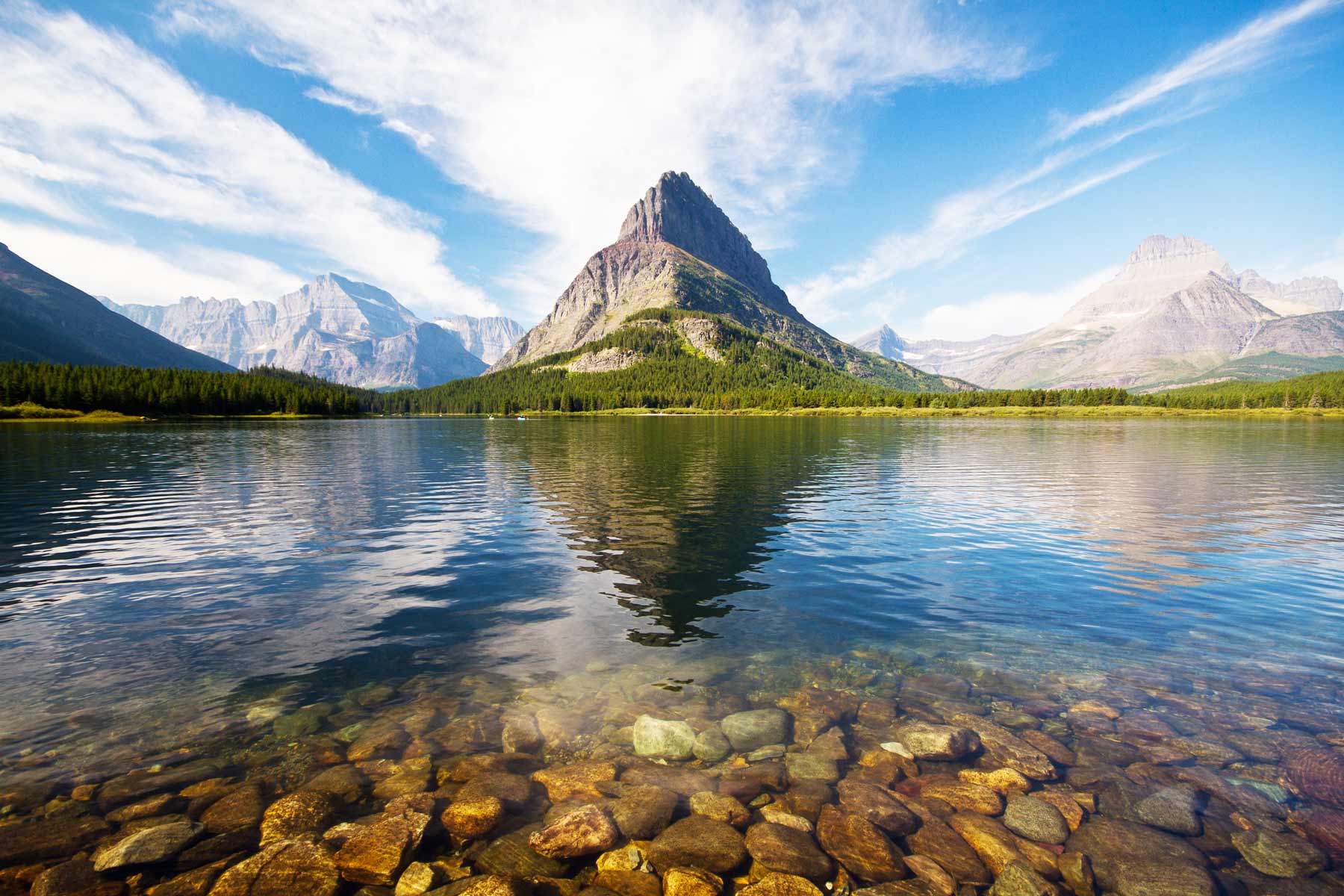

Glacier is one of the most spectacular places on the planet. Over a million acres of mountains, glaciers, and turquoise lakes that look fake until you’re standing in front of them.
Glacier National Park at a Glance
We’ve explored every major section of this park. Here are 15 things worth doing, organized by area so you can plan your days without burning half of them on windshield time.
Glacier National Park covers 1,013,322 acres in northwestern Montana. The entrance fee is $35 per vehicle ($25 from November through April), valid for 7 days. The park does not accept cash. No vehicle reservations or timed-entry permits are required in 2026.
- The entrance fee is $35 per vehicle ($25 Nov-Apr). The America the Beautiful pass ($80/year) gets you into all 2,000+ public lands.
- Mobile service is spotty at best. Bring a guidebook and a map. Download offline maps before you go.
- Best time to visit: July through September when Going-to-the-Sun Road is fully open, trails are mostly clear of snow, and wildflowers are in bloom.
- Drive times are deceptive. Distances that look short on a map can take hours on mountain roads. Many Glacier to Two Medicine is 90 minutes even though they look close.
- Bear spray is not optional. This is grizzly country. Carry it, know how to use it, and make noise on the trail. Rentals are available in West Glacier and St. Mary.
Where to Get Gas, Food, and Supplies
Services inside the park are limited and seasonal. Plan accordingly.
West Glacier / Apgar Village Small general store, cafe, and gift shop at Apgar. Gas available in West Glacier just outside the entrance. Open seasonally with limited hours.
St. Mary Small grocery, gas station, and a couple of restaurants at the east entrance. Seasonal.
Whitefish / Columbia Falls / Kalispell Full-service towns 25-45 minutes west of the park. Walmart, outdoor gear shops, restaurants, gas. Stock up here before entering.
East Glacier Park Small town on the east side with a gas station, a few restaurants, and the historic Glacier Park Lodge. Seasonal.
Shuttle system: The park operates a free shuttle along Going-to-the-Sun Road during peak season. It’s a great alternative to driving and eliminates the stress of finding parking at Logan Pass. Check the NPS shuttle page for schedules.
Parking reality: The Logan Pass lot fills by 8am in summer. Many Glacier lot fills by 9am. Avalanche Lake trailhead fills by mid-morning. Start early or take the shuttle.
Drive Going-to-the-Sun Road at dawn. Be on the road by 6:30 AM from West Glacier. You will have Logan Pass nearly to yourself before 8 AM, and the morning light on the Garden Wall is extraordinary. By 10 AM the parking lot is full and the experience changes completely.
Glacier Itineraries
One Day in Glacier
Drive Going-to-the-Sun Road west to east (or vice versa). Stop at Lake McDonald for 20 minutes. Pull over at Trail of the Cedars (1 mi loop, 30 min). Continue to Logan Pass and hike to Hidden Lake Overlook (3 mi RT, 1.5 hrs). Stop at Wild Goose Island Overlook on the east side for photos. That’s a full day and you’ll hit the essentials.
Two Days in Glacier
Day 1: Same as above but add Avalanche Lake (6 mi RT, 2-3 hrs) in the morning before heading to Logan Pass. Day 2: Many Glacier. Arrive by 8am. Hike to Grinnell Glacier (11.2 mi RT, 6-7 hrs) if you’re fit, or do the shorter Grinnell Lake trail (6.8 mi RT, 3 hrs) if you want something more moderate. End the day with the view from Many Glacier Hotel’s lobby.
Three Days in Glacier
Days 1-2 same as above. Day 3: Two Medicine for a quieter experience. Take the boat tour across Two Medicine Lake ($23/adult), then hike to Running Eagle Falls (0.6 mi RT) and Scenic Point (6.2 mi RT, 2,300 ft gain) for one of the best views in the park. If you have a fourth day, drive to Bowman Lake in the North Fork for the most remote lakeside camping in the park.
Visiting Glacier National Park? Here’s our favorite hotel for the park.
Going-to-the-Sun Road
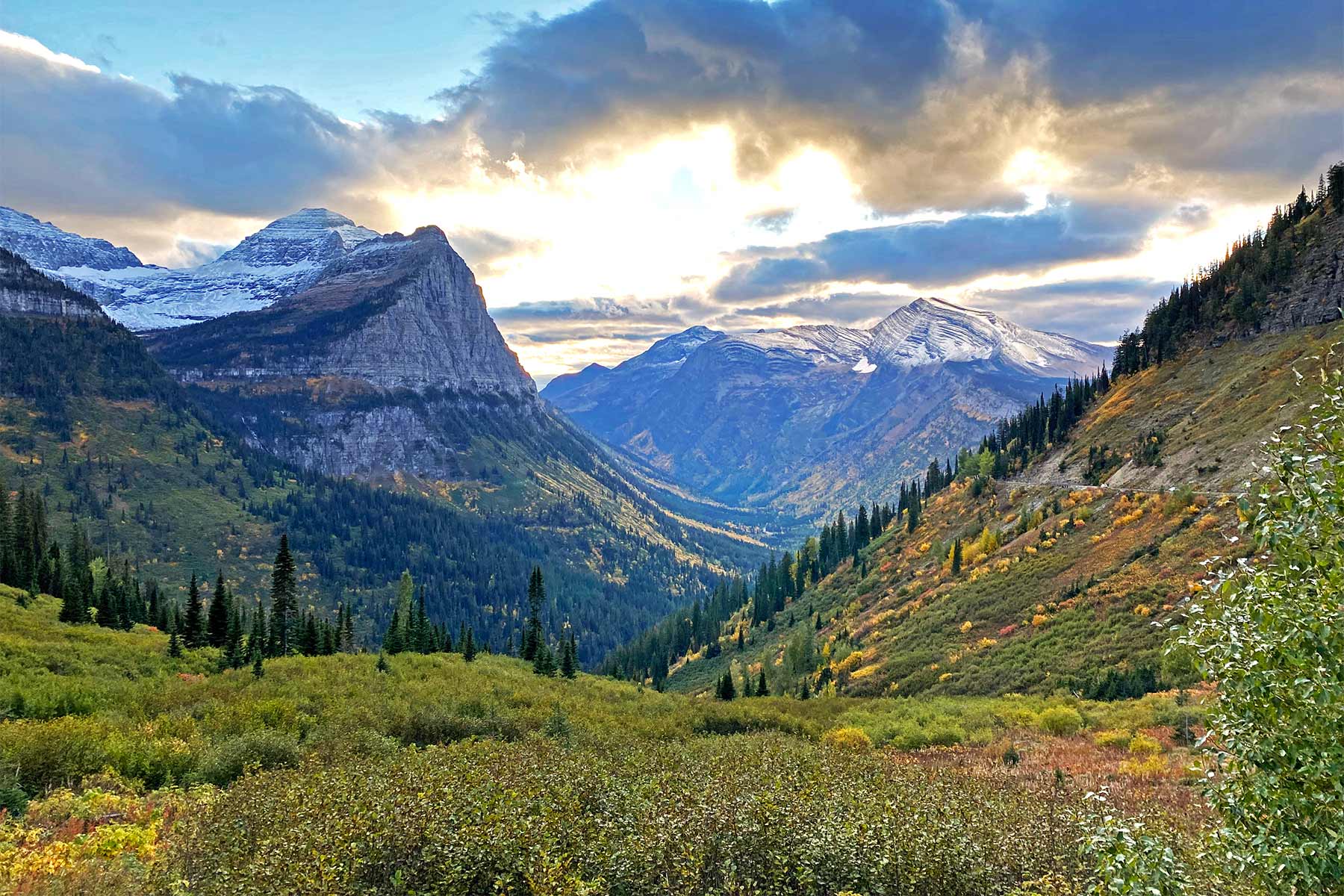
The spine of the park. This 50-mile road connects the west and east sides over Logan Pass at 6,646 feet. Most of Glacier’s marquee stops are along this corridor. Fully open typically mid-June through mid-October (weather dependent). The park runs a free shuttle along the road during peak season.


1. Drive Going-to-the-Sun Road
Distance 50 mi Time 2+ hrs (without stops) Difficulty Easy (driving) Vehicle Any car under 21 ft long, 8 ft wide
Widely considered one of the most beautiful drives in the world. The road spans the width of the park from the Apgar Visitor Center near the West Entrance up to Logan Pass (6,646 ft) before descending to the Saint Mary Visitor Center on the east side.
Construction took 11 years (1921-1932) and cost $2.5 million. Up to 80 feet of snow can accumulate on Logan Pass in winter, and plowing takes up to ten weeks each spring. The road is named for Going-to-the-Sun Mountain.
You basically have to drive it to reach most of the best things to do in the park, so this one is non-negotiable.
2. Lake McDonald and Apgar Village
Distance N/A (lakeshore access) Time 30 min-2 hrs Difficulty Easy Vehicle Any car Drive from West Entrance 4 min
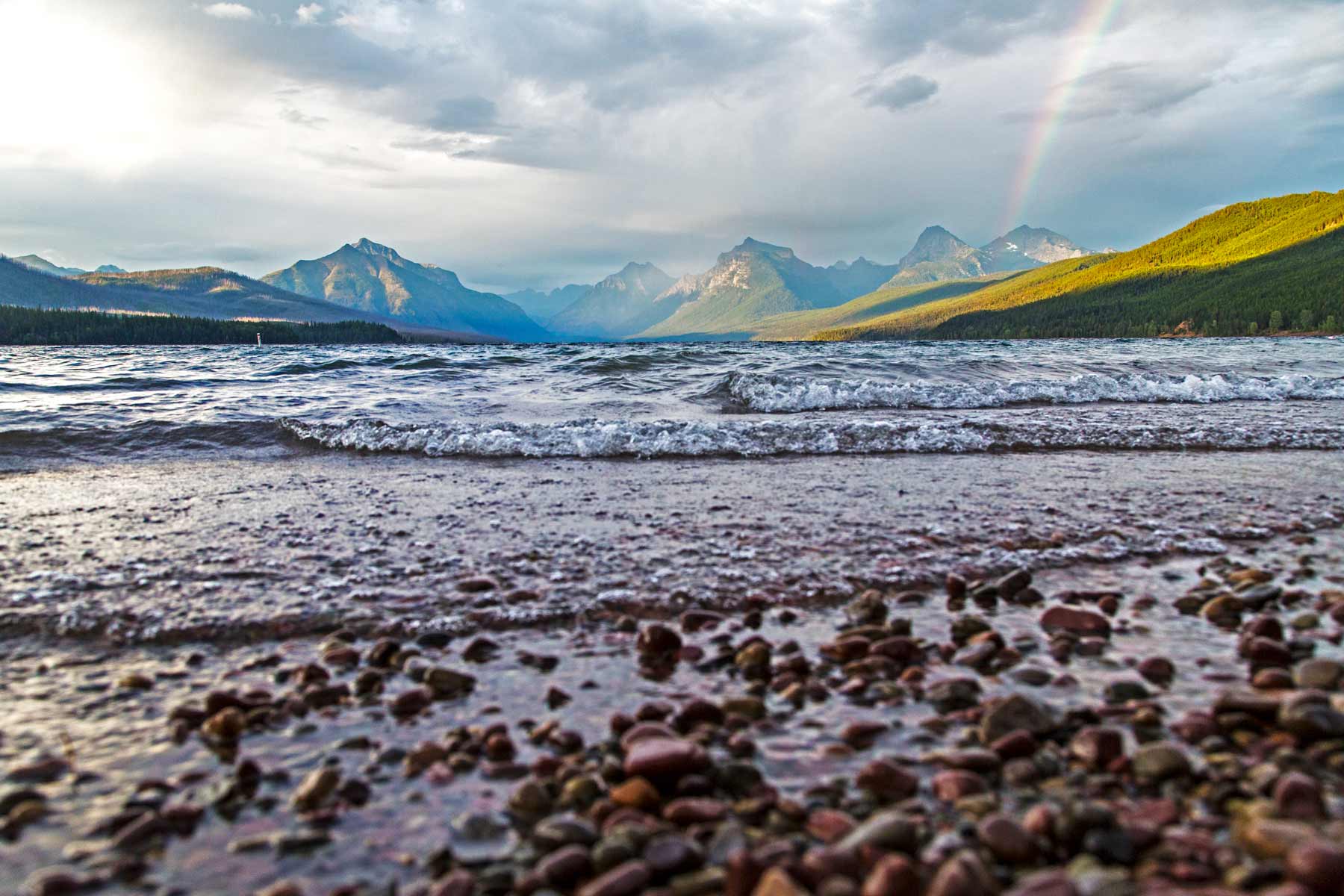
Lake McDonald is the largest lake in Glacier National Park at 10 miles long, more than a mile wide, and 472 feet deep. The multicolored rocks on the lakeshore are real and every bit as beautiful in person as they are in the photos.
Apgar Village on the southern end has a backcountry permit office, campground, a few hotels, visitor center, cafe, and gift shop. Boat tours ($23/adult) and kayak/paddleboard rentals ($15-30/hr) are available.

3. Walk the Trail of the Cedars
Distance 1 mi loop Time 30 min Difficulty Easy Vehicle Any car Trailhead Avalanche Creek area, Going-to-the-Sun Road
A short, wheelchair-accessible boardwalk through massive old-growth red cedars over 80 feet tall. Good for all age groups. Bears are occasionally seen from the trail, so keep your eyes peeled.
Parking: Limited at the trailhead. The trail is popular, so arrive early or plan it for the return drive.

4. Hike to Avalanche Lake
Distance 6 mi RT Time 2-3 hrs Difficulty Moderate Elevation Gain 750 ft Trailhead Trail of the Cedars parking area
Crystal blueish-green water surrounded by dramatic mountain walls. If you’re familiar with Maroon Bells in Colorado, Avalanche Lake is similar in grandeur. The trailhead shares the same start as Trail of the Cedars. After the boardwalk section, the trail climbs along Avalanche Creek with increasingly beautiful scenery all the way up.
Parking: Fills by mid-morning in summer. Wake up early and you’ll have it practically all to yourself.

5. Logan Pass and the Highline Trail
Elevation 6,646 ft Highline Trail 11.8 mi point-to-point (or go as far as you want) Hidden Lake Trail 5.3 mi RT Difficulty Moderate-Strenuous Parking Fills by 8am
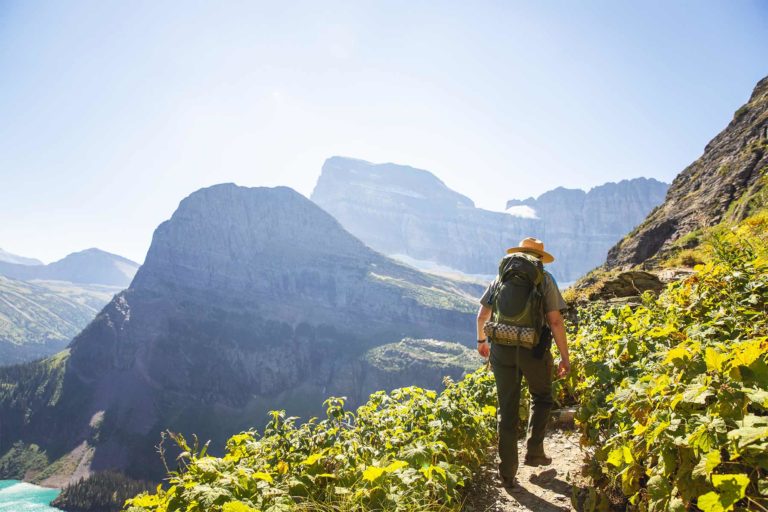
At 6,646 feet, Logan Pass is the highest point on Going-to-the-Sun Road. The wildflower displays alone are worth the stop. Endless carpets of yellow, pink, magenta, and purple blanket this area in summer.
Get to the Logan Pass Visitor Center parking lot close to sunrise. From here you can hike to Hidden Lake Overlook (the classic, 1.5 mi to the overlook) or hop on the Highline Trail for a world-class ridge walk above the road. Go as far as you want and turn around.
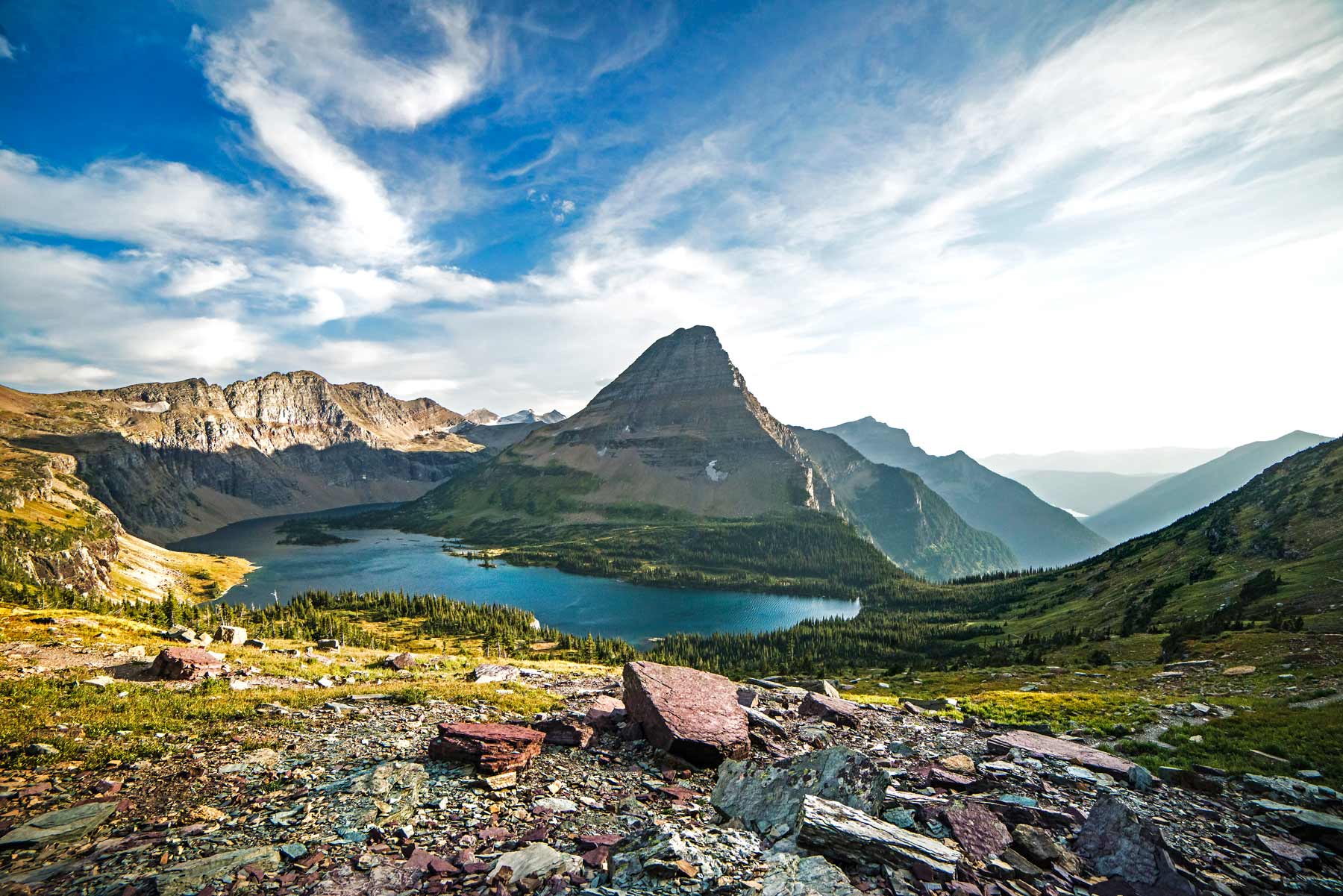
6. Hike to Hidden Lake
Distance 5.3 mi RT (or 3 mi RT to overlook only) Time 2.5-3.5 hrs Difficulty Moderate Elevation Gain 1,350 ft Trailhead Logan Pass Visitor Center

Some of the best photos in Glacier come from this trail. Starting at Logan Pass, hikers ascend through wildflower meadows. Most folks hike the 1.5 miles to Hidden Lake Overlook where the best views and photos are. From there you can decide if you want to descend another mile to the lakeshore.
Expect company on this one. Get there early in the morning for fewer folks and great chances to see mountain goats.

7. Saint Mary Lake
Distance Roadside viewing + optional boat tour Time 30 min-2 hrs Difficulty Easy Vehicle Any car Boat Tour $35/adult, $17/child
At 10 miles long covering nearly 4,000 acres, Saint Mary Lake is the park’s second largest. The Wild Goose Island Overlook is one of the most photographed spots in Glacier. Pull over, take the shot, and keep moving.
Camping: Rising Sun Campground on the lake has 84 sites at $20/night, first come first served.
Many Glacier is the best hiking valley in the park, but it is on the east side and not connected to the west by road. Getting there from West Glacier requires a 3.5-hour drive around the park. Plan to base at least one night on the east side, either in St. Mary or at the Many Glacier Hotel.
Many Glacier
Many Glacier is our favorite part of Glacier National Park. It’s on the east side, accessed via a separate road from Babb, MT (not connected to Going-to-the-Sun Road). The most dramatic mountain peaks, the most stunning lakes, and the best hiking in the park all live here. Budget a full day minimum.
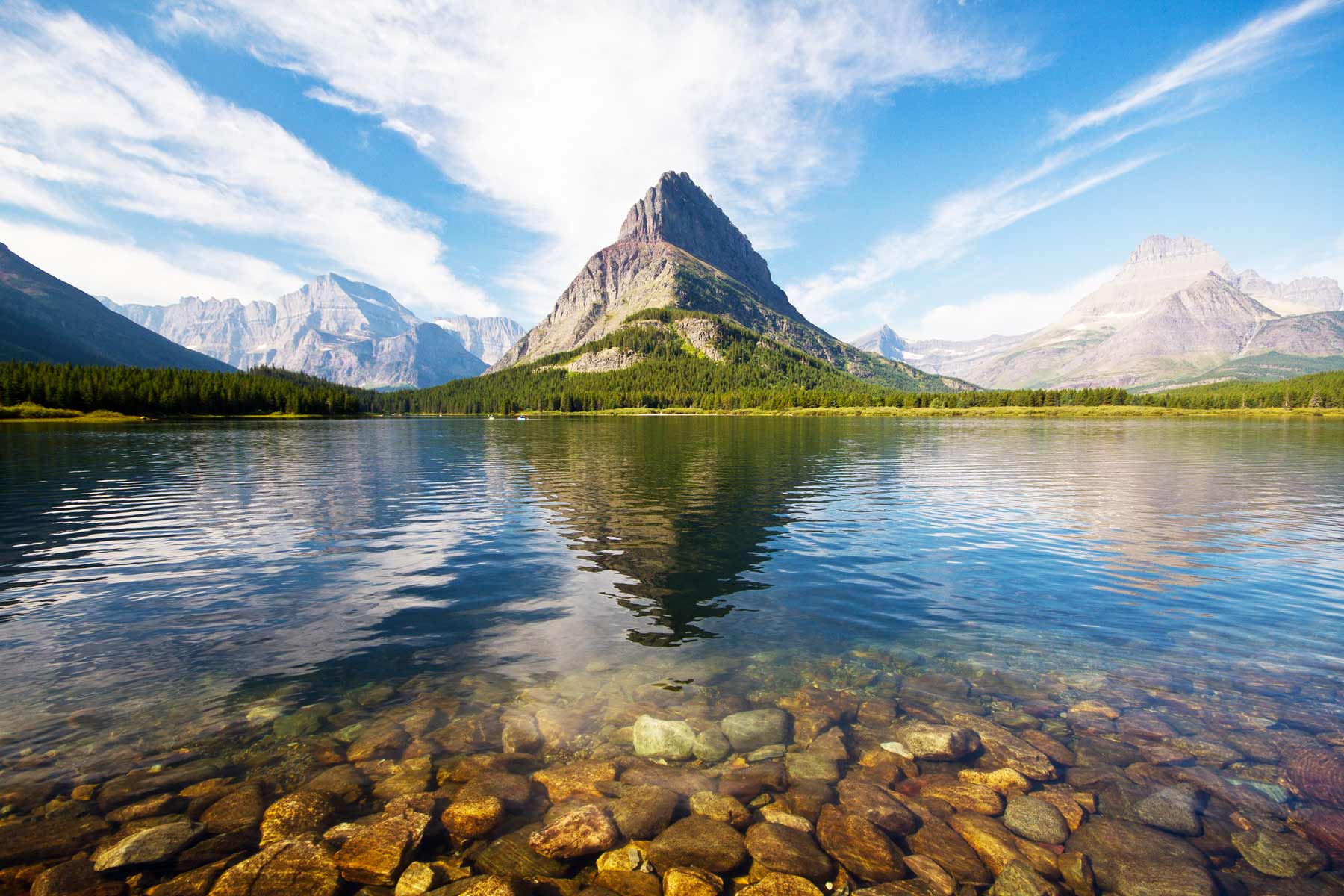
8. Swiftcurrent Lake and Many Glacier Valley
Distance Variable (valley exploration) Time Half day-full day Difficulty Easy-Strenuous (depending on hikes) Vehicle Any car Drive from St. Mary 35 min

Swiftcurrent Lake is one of the most visually striking parts of the park with dramatic mountain peaks reflecting in crystal clear water. If you’re into hiking, you’re in luck. The best trails in the park originate here: Grinnell Glacier, Grinnell Lake, Cracker Lake, Swiftcurrent Pass, and the Continental Divide Trail.
Boat tours: $35/adult, $17/child on Swiftcurrent Lake. Kayak, canoe, and rowboat rentals around $20/hr.
Camping: Many Glacier Campground has 110 sites. 22 reservable, rest first come first served. These are some of the most coveted campsites in the park.
Interested in hiking at Glacier? Check out our article: 15 Incredible Hikes at Glacier National Park

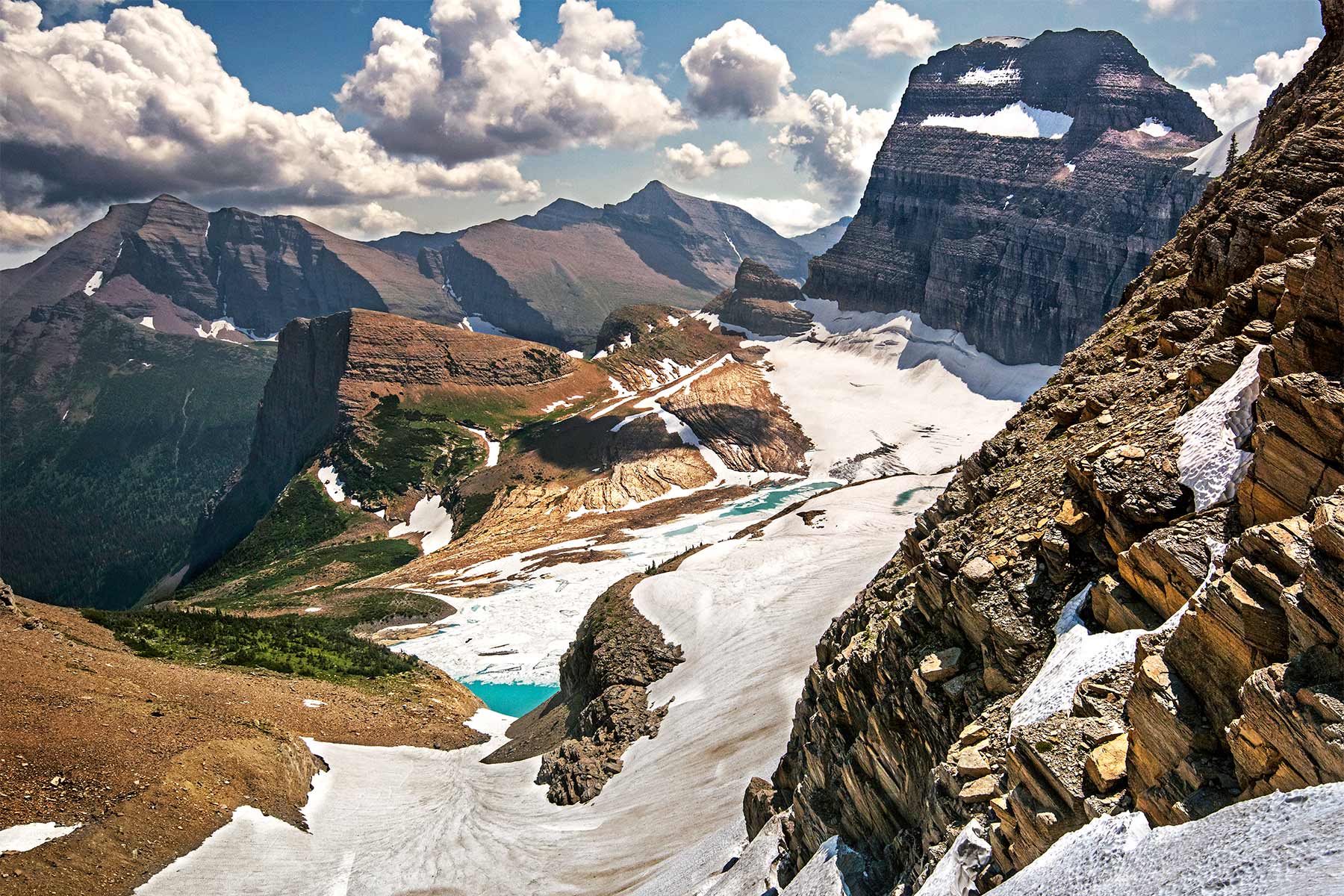
9. Hike to Grinnell Glacier
Distance 11.2 mi RT Time 6-7 hrs Difficulty Strenuous Elevation Gain 2,200 ft Trailhead Many Glacier Ranger Station
For many folks this is the number one thing to do in Glacier. The trail is a butt-kicker but the reward at the top feels worthwhile. Waterfalls, wildflower meadows, turquoise waters, and if you’re unlucky some aggressive mosquitoes. Finally you’ll reach the Grinnell Glacier viewpoint with incredible views of what’s left of this once mighty, and now greatly reduced, ice flow.
Shortcut: Take the boat on Swiftcurrent Lake to Lake Josephine, then a second boat to the far side. Cuts 3.5 miles round trip off the hike. At the very least, book a one-way ticket for the return when your legs will be ready for a break.
Save This Tip: If you can only do one hike in Glacier, make it Grinnell Glacier. The glaciers are retreating fast and scientists estimate they could be gone entirely within the next decade. This is a now-or-never experience.
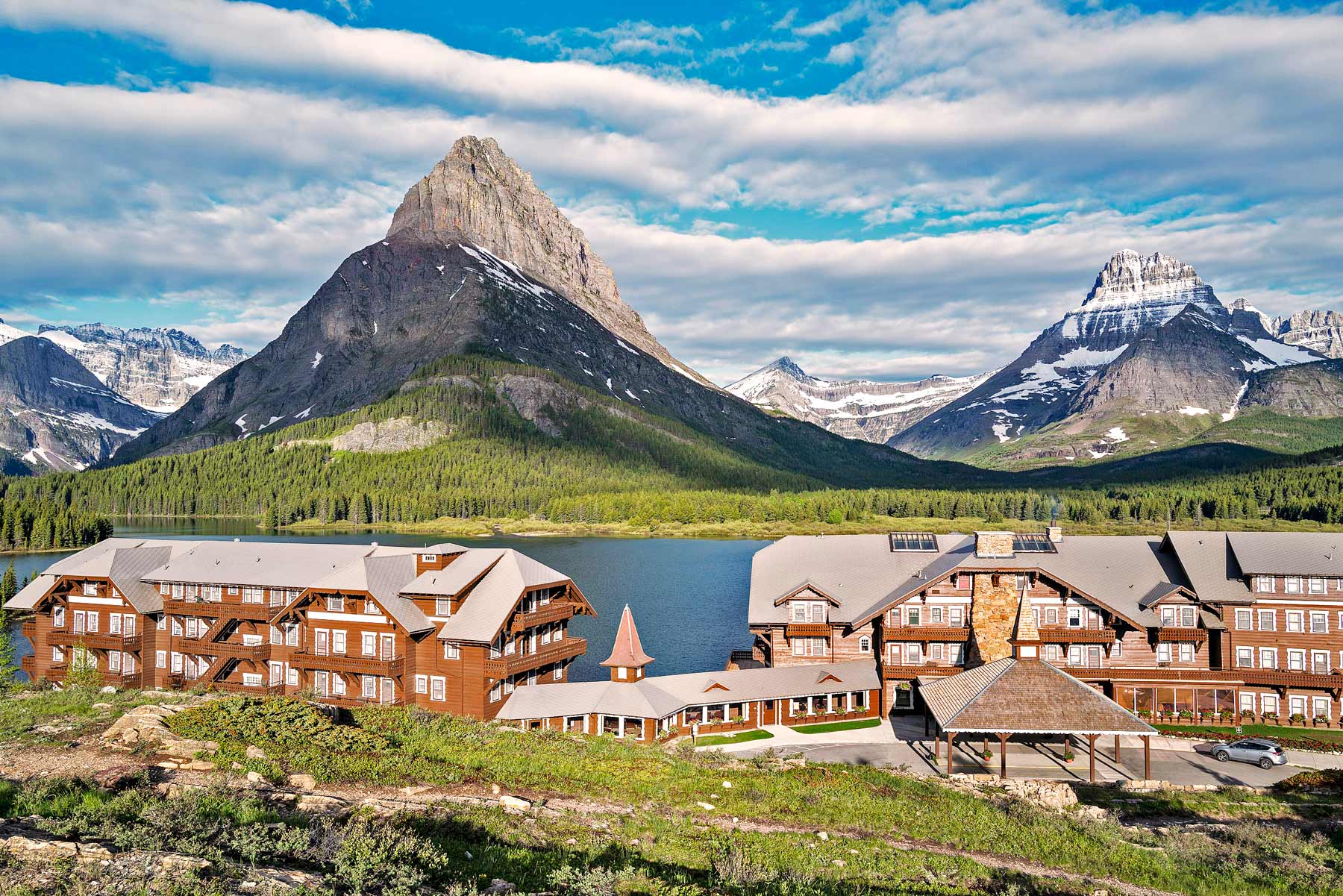
10. Visit Many Glacier Hotel
Rooms $155-$350/night Style Swiss Chalet, built 1915 Open to Public Lobby and dining room
Once known as the “Gem of the West,” the historic Many Glacier Hotel sits on the shores of Swiftcurrent Lake. Modeled in the Swiss Chalet style, it was part of a Great Northern Railway strategy to market this area as the “American Alps.”
The lobby and dining room are open to the general public. Pop in for a bite and soak in the views from the lakeside windows. You don’t need to be a guest to enjoy this place.
Two Medicine
The least visited of the main regions and that’s exactly what makes it one of the best. Located in the southeastern corner, it requires a 90-minute drive from Apgar or an hour from St. Mary. The tradeoff is fewer crowds and some of the most stunning scenery in the park.


11. Spend a Day at Two Medicine
Scenic Point 6.2 mi RT, 2,300 ft gain, Strenuous Running Eagle Falls 0.6 mi RT, Easy Boat Tour $23/adult, $8/child Drive from St. Mary 1 hr
Two Medicine escapes the crowds because of how distant it is from the more popular parts of the park. That’s the whole appeal. Hike to Scenic Point, Pitamakan Pass, or Running Eagle Falls for epic views.
Boating: Kayaks, canoes, rowboats, and motorboats available for rent ($19-30/hr).
Camping: Two Medicine Campground has 100 sites, all first come first served.
Vehicles over 21 feet long or 8 feet wide cannot drive the middle section of Going-to-the-Sun Road between Avalanche Creek and Sun Point. If you have a large RV or trailer, you will need to unhitch or use the shuttle.
North Fork
The most remote and wild section of the park. Dirt roads, no services, and genuine backcountry solitude. This is where Glacier starts to feel like it did before the crowds arrived.

12. Bowman Lake
Distance Drive + lakeshore access Time Half day minimum Difficulty Easy (at the lake) Vehicle High-clearance recommended Drive from West Glacier 90 min (dirt road)

At 7 miles long and a half mile across, Bowman Lake is the third largest in the park and far less visited than Lake McDonald or St. Mary. Similar colored rocks blanketing the bottom, similar grandeur, but a fraction of the people.
No boat tours or rentals. Bring your own canoe or kayak if you have one. Fishing is allowed.
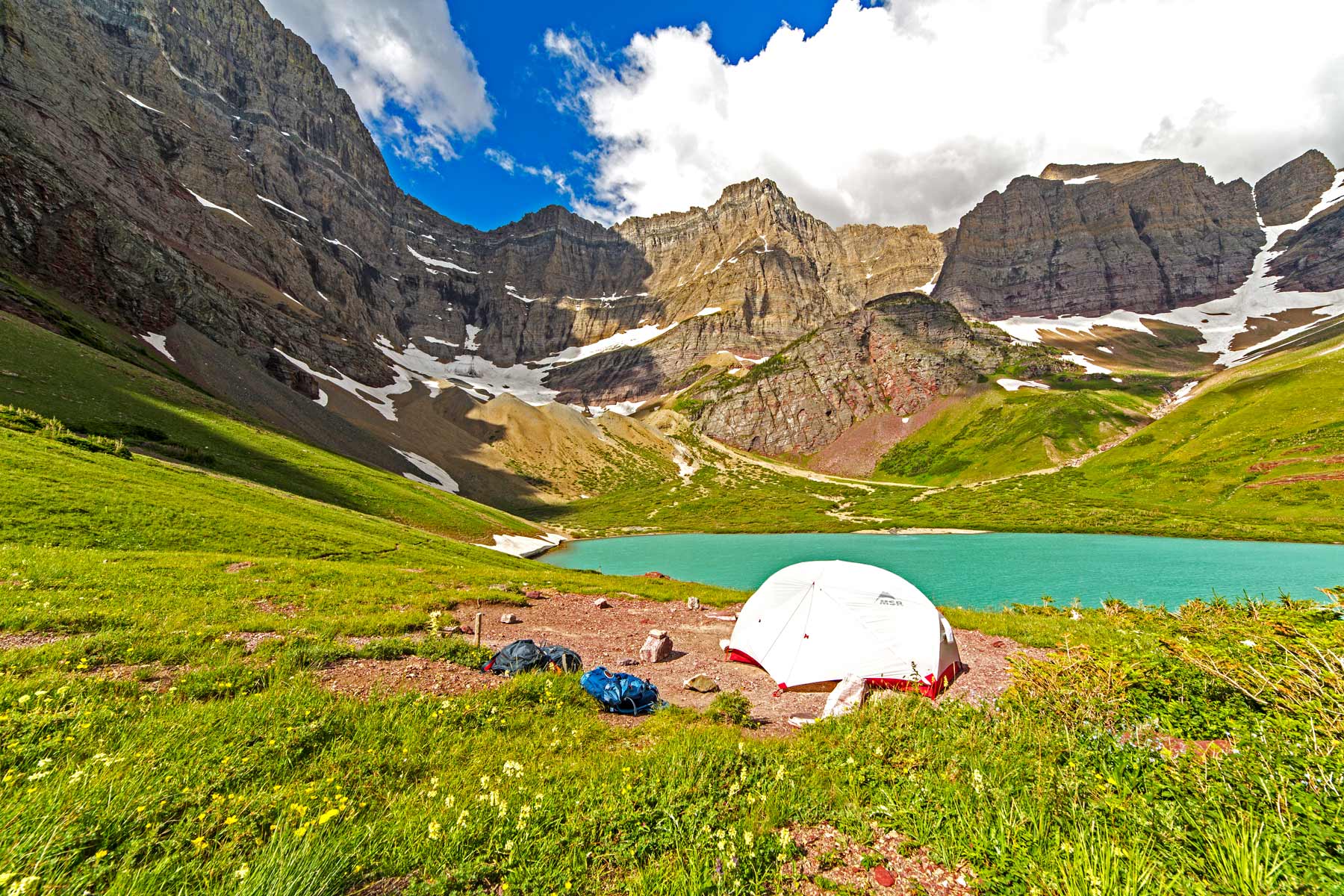
Camping: 46 sites, all first come first served.
13. Go Backpacking in the Backcountry
Trails 700+ miles Permits Required (backcountry permit office at Lake McDonald) Top Routes Hole-in-the-Wall, Ptarmigan Tunnel, Stoney Indian Pass
Backpacking into the backcountry is one of the most authentic experiences in the park and one of the few surefire ways to escape the crowds. Over 700 miles of trails to explore.
Visit the Glacier National Park backcountry page for permit info and route planning.
Things You’ll See
Glacier is home to mountain goats, grizzly bears, black bears, moose, bighorn sheep, wolverines, lynx, and elk. The mountain goats are the park’s signature animal and you’ll often see them near Logan Pass and along the Highline Trail.

14. Spot Mountain Goats and Grizzlies

Best spots for mountain goats: Logan Pass, Hidden Lake Trail, Highline Trail
Best spots for grizzlies: Many Glacier area, Highline Trail, Two Medicine
Safety: Carry bear spray. Maintain 100 yards from bears and wolves, 25 yards from all other wildlife.
15. Camping at Glacier
Glacier has 13 front-country campgrounds with 1,012 campsites. Sounds like a lot. It’s not nearly enough for the demand. Sites fill up fast.
Six campgrounds are first come first served (Avalanche, Bowman Lake, Cut Bank, Kintla Lake, Logging Creek, Quartz Creek, Rising Sun, Two Medicine). The rest require reservations through recreation.gov. Book as early as possible.
Fees: $15-23/night, $20 average
Pets: Allowed in front-country campgrounds on leash. Not allowed on trails.
Ranger programs: Nightly in summer at Apgar, Fish Creek, Rising Sun, St. Mary, Two Medicine, and Many Glacier.
Getting to Glacier National Park
Closest airport: Glacier Park International Airport (FCA) in Kalispell, MT. About 30 minutes to the West Glacier entrance. If flights to Kalispell are pricey, try Missoula (2.5 hrs), Spokane (4 hrs), Helena, or Bozeman.
Rent a car. You’ll need one. There’s no practical way to see Glacier without your own vehicle.
Check out the Flathead National Forest
Want Glacier without the crowds? The Flathead National Forest sits right next to the park and sees a tiny fraction of the visitation. 2.4 million acres, over 1 million acres of wilderness, 2,600 miles of hiking trails, lynx, grizzlies, timber wolves, and 22 species of fish. We made an award-winning film about it (above).
Map of Things to Do in Glacier National Park
FAQ
No. As of 2026, no vehicle reservations or timed-entry permits are required for any area of Glacier National Park. This is a change from previous years. You still need to pay the $35 entrance fee (cash not accepted).
The road typically opens fully by mid-June and closes in mid-October, depending on snow. The lower sections near Lake McDonald and St. Mary are accessible year-round. Check the NPS road status page before your trip.
By 8am in summer or the parking lot will be full. Ideally, arrive at sunrise. The free park shuttle is a good alternative if you don’t want to deal with parking.
Absolutely. Many Glacier is the best part of the park. The most dramatic peaks, the best hikes (Grinnell Glacier, Cracker Lake), and stunning lakes. Budget a full day here minimum. It’s accessed from Babb, MT, not connected to Going-to-the-Sun Road.
Yes. Glacier has one of the highest concentrations of grizzly bears in the lower 48. Carry bear spray, keep it accessible (not in your backpack), and make noise on the trail. You can rent canisters in West Glacier and St. Mary if you don’t want to buy one.
Helpful Related Articles
- Glacier National Park Hikes: 15 Best Hikes in Glacier National Park
- Glacier National Park Itinerary: Ultimate 3 Day Glacier National Park Itinerary
- Things to Do Grand Teton: 17 EPIC Things to Do Grand Teton National Park
- Things to Do Yellowstone: 15 BEST Things to Do Yellowstone National Park


I visited glacier national park 22 years ago highway 2 when I got there I never wanted to leave it’s the most beautiful place I’ve seen in America and I’ve visited more than half the states all in car trips. So peaceful clean and clear truly a piece of Heaven on earth. Though I was moving to the west coast I never wanted to leave this breathtaking mountainous area and I have wanted to return a million times since. I recommend it to all who truly love the beauty of this great land. Please visit and please pack out everything you pack in with respect to this beautiful land. My most sincere heartfelt feelings of overwhelming joy came from visiting this awesome land and I’m certain you’ll feel it too. Vickie little dear of the Mohican and Ottawa tribes and among others Canadian tribes I’ve not yet finished trying to locate in my families histories. Thank You for allowing me to share. Granddaughter of Mariah
Thanks so much for sharing! What an amazing story. Glacier is truly a special place and we are all lucky to have it preserved 🙂
Best,
Will