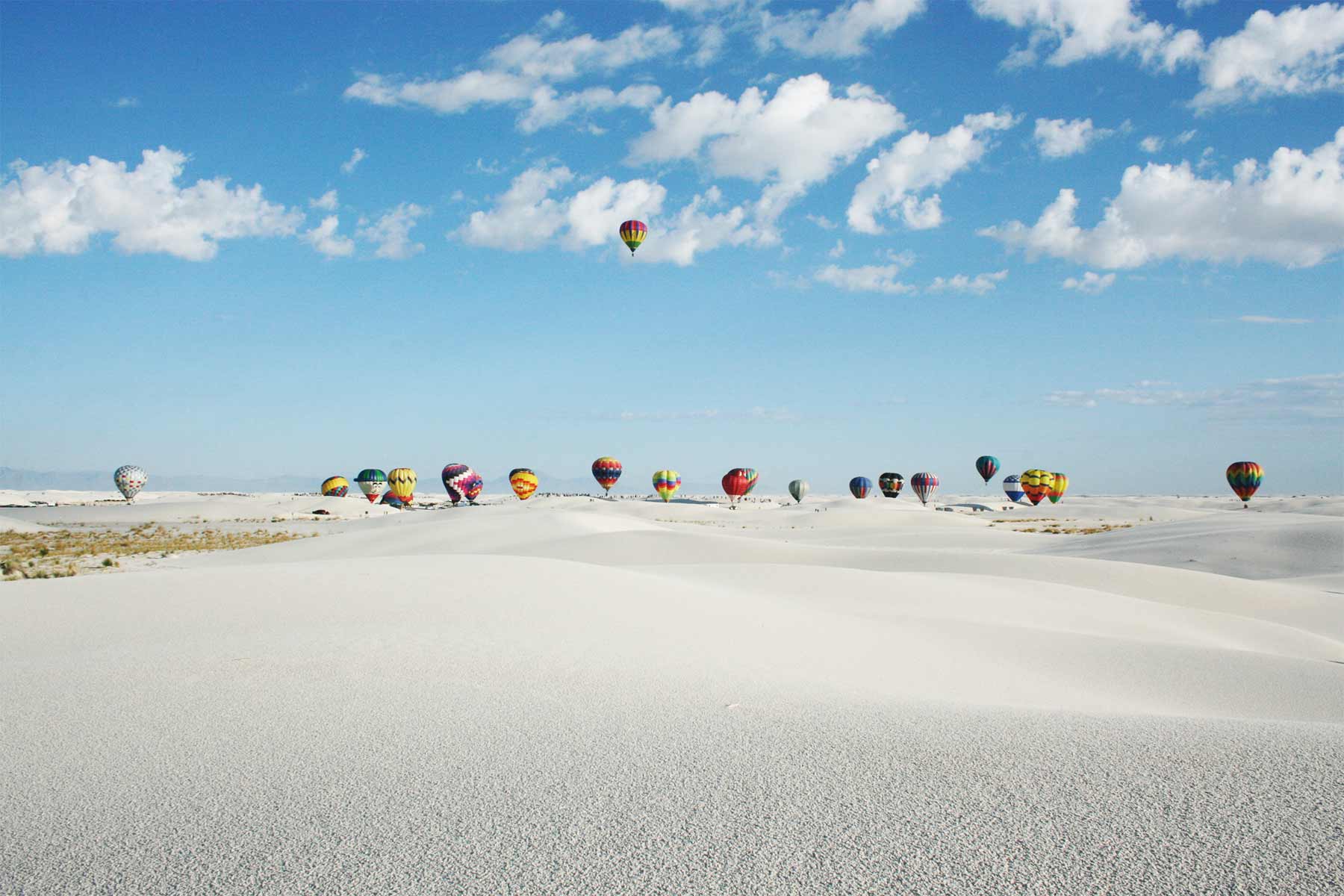

White Sands National Park Facts! In this article, we provide you with 10 surprising facts about one of America’s most magnificent national parks.
More Than Just Parks is your one-stop-shop for learning everything you’ll need to know about America’s national parks. We’ve got expert guides, beautiful photos, helpful tips, breathtaking films and so much more.
More Than Just Parks takes a deeper dive with its national park facts. We’ve done our homework so that you’ll get more than you bargained for.

Table Of Contents
White Sands National Park Facts
- Facts About White Sands National Park
- White Sands National Park Facts
- Top 5 White Sands National Park Facts
- 1. The First People Came To The Park Over 10,000 Years Ago
- 2. Hearth Mounds Represent The Most Amazing Evidence Of Human Occupation At White Sands
- 3. A Beautiful Spanish Maiden Is Reported To Haunt The Dunes At White Sands
- 4. The Park Was Part Of A “Salt War”
- 5. The History Of White Sands National Park Is Closely Tied To The History Of The American Frontier
- Top 10 White Sands National Park Facts
- 6. White Sands Has The Largest Gypsum Dune Field In The World
- 7. Many Species Make Their Home At The Park
- 8. The Sand Remains Cool Despite The Weather
- 9. White Sands Sits On One Of The Largest Military Bases In The U.S.
- 10. White Sands Is A Popular Locations For Photographers & Filmmakers
- Why Trust Us About White Sands National Park?
- Meet The Parks Brothers
- Map Of White Sands National Park
- We Hope You’ll Follow Our Journey
- Top 5 White Sands National Park Facts
White Sands National Park is located in southern New Mexico and is known for its vast expanse of white gypsum sand dunes. The park was established in 1933 and covers over 275 square miles. The white sands are the result of gypsum deposits that were formed when an ancient sea evaporated.
Over time, the gypsum deposits were covered by sand and then exposed again by natural forces, creating the unique landscape of the park.
- Location: New Mexico
- Acreage: 145,800 acres
- Visitation: White Sands National Park is the most visited NPS site in New Mexico, visited by 782,469 people in 2021.
- Elevation: The elevation at White Sands is 4,235 feet.
- Climate: June through August, daytime temperatures average 95ºF (35ºC), with some days reaching as high as 110ºF (38º). Evenings are much cooler, ranging from 50-65ºF (10-18ºC).
- When Did It Become A National Park? White Sands was established as a national monument in 1933 and re-desginated as a national park in 2019.

White Sands National Park Facts

Top 5 White Sands National Park Facts
1. The First People Came To The Park Over 10,000 Years Ago
As a retired history teacher and lifelong history buff, I have always been fascinated with origin stories. Who were the earliest peoples and where did they come from?
For me, one of the more interesting White Sands National Park Facts is that over 10,000 years ago the first people came in search of food, water, and shelter.
According to the National Park Service, little is known about these first people because so much of their culture was not preserved in the archaeological record. However, we do know that the first groups to enter the Tularosa Basin were exceptional stone tool makers and hunters.
They used stone from the nearby mountains craft intricate spear, projectile points, known as the Folsom and Plano traditions. Evidence of Paleoindian occupation in the form of projectile points and other stone tools have been found in the Tularosa Basin associated with ancient shorelines, streams, and hill top rises above playas where they could track the movements of game animals drinking from watering holes below.

2. Hearth Mounds Represent The Most Amazing Evidence Of Human Occupation At White Sands
Another of the fascinating White Sands National Park Facts has to do with the story of the hearth mounds.
The hearth mounds found in the First State National Historical Park are unique archaeological sites that provide valuable insights into the lives of the people who lived in the area thousands of years ago.
The hearth mounds are the remains of fires that were built by prehistoric peoples, and they contain charcoal and ash that have been preserved over time. These mounds are surrounded by other artifacts, such as tools and pottery, that were used by these ancient people.
The dune hearth mounds in the park are particularly significant because they are the result of a chemical reaction between gypsum, heat, and moisture. When gypsum is heated to a certain temperature, it turns into plaster of Paris, which hardens when moisture is added. This process cements the hearth features in place, preserving them for thousands of years.
Radiocarbon dating methods have been used to date the charcoal found in these hearth mounds, and they have been found to range from the middle of the Archaic period to recent history. This means that the hearth mounds provide a chronological record of human occupation in the area over a period of several thousand years.
These hearth mounds are an important part of the archaeological heritage of the park, and they offer a unique opportunity to learn about the lives of ancient people and how they interacted with their environment.

3. A Beautiful Spanish Maiden Is Reported To Haunt The Dunes At White Sands
The most intriguing White Sands National Park Fact which I came across in my research has to do with the legend of a Spanish maiden who is said to haunt the glistening dunes.
The Legend of Pavla Blanca is a fictional story that is said to be based on a real event, but it has been passed down through time as a tale and is not historically accurate.
The story is about a Spanish conquistador named Hernando de Luna, who is ambushed and killed by Apaches, and his betrothed, Mañuela, who sets out to find him but is never seen again. The legend says that Mañuela’s ghost haunts the Great White Sands and can be seen in the form of a ghostly figure, dressed in a flowing white wedding gown, appearing in the dunes after sunset.
The legend is popular among people with imagination who strolling in the silent shimmering dunes after a fiery sunset, may be fortunate enough to witness for themselves the unusual sight. But it is important to note that the story is a legend and not a true historical event. Some people believe in the legend and find it fascinating, while others view it as a fanciful tale.

4. The Park Was Part Of A “Salt War”
Another of the fascinating White Sands National Park Facts has to do with the story of a “Salt War.”
The “Salt War” which took place in the late 1800s. At that time, the area around the park was a vast desert and the only source of salt for the region was a salt lake located within the park. The salt lake was a vital resource for the local population, and it was used for both human consumption and as a preservative for food.
However, the salt lake soon became the center of a dispute between the local population and the federal government, which claimed ownership of the land and the salt. The local population, consisting of ranchers, farmers, and Native Americans, refused to relinquish control of the salt lake and began to extract salt illegally.
This led to a series of confrontations, known as the “Salt War” between the local population and the federal government, which lasted for several years.
The conflict eventually came to an end when the government agreed to lease the salt lake to the local population for a nominal fee. The Salt War of White Sands National Park is a reminder of the importance of natural resources to human society and the potential for conflict when those resources are scarce.
5. The History Of White Sands National Park Is Closely Tied To The History Of The American Frontier
White Sands National Park has a history that is closely tied to the American frontier. In the 1800s, the area became part of the American Frontier, famously romanticized as the Wild West.
However, the story of the Tularosa Basin, where the park is located, is better told by the lives of the people who settled the land and raised their families.
In the 1880s, a brief period of heavy rainfall supported the return of lush grasslands in the Tularosa Basin, which attracted the attention of goat, sheep, and cattle grazers, predominately from Texas, seeking to make their fortune in livestock.
Large cattle drives pushed into the Tularosa Basin, and family homesteaders were establishing ranches throughout the basin. For sixty years, ranching was the dominant economy of the Tularosa Basin.

The Most Prominent Ranchers In The Area
Several ranches were homesteaded on White Sands National Park before it was established, including Walters Ranch, Watson Ritch Ranch and the Lucero family ranches on the Lake Lucero shoreline.
The Lucero family, which were among the most prominent ranchers in the area, had several ranches on the south shore of the lake that would eventually come to bear their name.
In 1940, the National Park Service took over ownership of the Lucero family properties with the appropriation of Lake Lucero and Alkali Flat.
Today, the remnants of the Lucero family legacy are still evident on the landscape, such as stock pens, watering trough, a water well, and a fallen windmill, which visitors can experience on a ranger-led tour to Lake Lucero during the year’s cooler months.

Top 10 White Sands National Park Facts
6. White Sands Has The Largest Gypsum Dune Field In The World
Another of the fascinating White Sands National Park Facts has to do with the white sands.
White Sands National Park is home to the largest gypsum dune field in the world. The gypsum sand forms as a result of rainwater and snowmelt that dissolve the gypsum from nearby mountains and flow into the Tularosa Basin.
Evaporation causes selenite crystals to form and strong winds break these crystals into small grains that form the gypsum sand dunes. The gypsum is naturally clear but appears white due to the reflection of sunlight on the crystals’ scratches.

7. Many Species Make Their Home At The Park
Another amazing Whites Sands National Park Fact has to do with the park’s wildlife. You wouldn’t expect there to be a lot given the prevalence of the white sands. But you would be wrong.
Many species of mammals make their home in White Sands National Park, including foxes, rodents, coyotes, bobcats, badgers, rabbits, and porcupines.
There are seven species of amphibians and one species salamander at White Sands National Park.
White Sands National Park has recorded over 220 recorded species of birds, including wrens, mockingbirds, larks and ravens, as well as larger species like roadrunners and raptors. Learn more about the most commonly seen birds in the park.
There are even fish! The White Sands pupfish is the only species of fish endemic to the Tularosa Basin, and it is the only fish found in White Sands National Park. It has dark eyes, silver scales, and grows from 1.75 inches to 2.5 inches in length. (Source: NPS)

8. The Sand Remains Cool Despite The Weather
If you have spent any time on a beach in the summer then you’re likely to reminder to bring your sandals. The hot sand can scorch one’s feet, but not at White Sands National Park.
The White Sands National Park’s gypsum sand is known for being pleasant to the feet. It is unique because it does not absorb heat from the sun as silica sand does, making it a cool surface to walk on even on hot days. This makes it a perfect place to visit during summer.

9. White Sands Sits On One Of The Largest Military Bases In The U.S.
Just when you thought that we couldn’t come up with more fascinating White Sands National Park Facts we do.
White Sands National Park sits on one of the largest military bases in the United States, the White Sands Missile Range.
The park shares its land with the missile range and the U.S. government uses most of the 275 square miles as a missile testing site. As a result, only a small section of the park is available for visitors to enjoy.
It’s important to check the schedule of the missile test range before planning a visit to the park.

10. White Sands Is A Popular Locations For Photographers & Filmmakers
White Sands National Park is a popular location for photographers and cinematographers due to its unique and striking white dunes.
The park has been used as a filming location for over 40 movies, documentaries, music videos, and TV commercials. Due to its distinctive appearance and remote location, it has been a sought after location for many film and video productions.
Visitors to the park may recognize some of the iconic locations from films and TV shows that have been shot here.
Among the films that have had scenes shot at the park are the following:
- Transformers (2007)
- Independence Day (1996)
- Hang ‘Em High (1968)
- The Mule (2018)
- Young Guns II (1990)
- The Man Who Fell to Earth (1976)
- Tank Girl (1995)