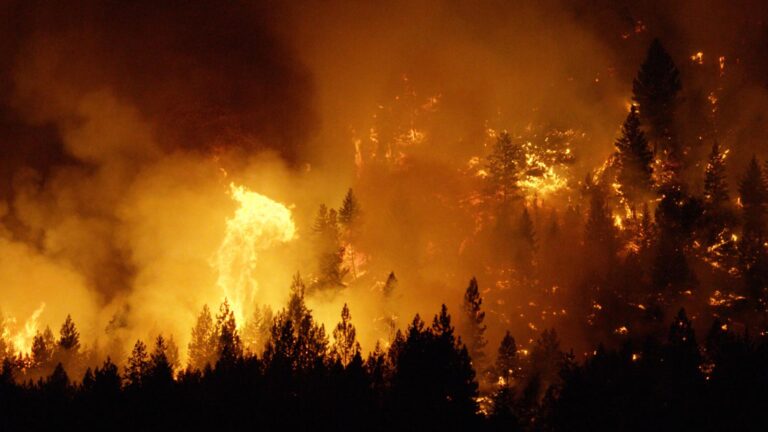
Let’s clear up the count first, because it confuses almost everyone. Colorado has four national parks: Rocky Mountain, Great Sand Dunes, Mesa Verde, and Black Canyon of the Gunnison. The state also holds eight National Park Service and BLM national monuments, several of which rival the parks for scenery. They are not “national parks” by designation, but they belong in any honest guide to Colorado’s protected lands, so we cover all twelve places here, clearly labeled.
After filming and exploring each one, I can tell you the park most visitors skip, Black Canyon of the Gunnison, is the most dramatic of the four. From the high tundra of the Rockies to the cliff dwellings of Mesa Verde to one of the deepest, sheerest canyons in North America, here is the full picture.
Colorado’s Four National Parks

1. Rocky Mountain National Park
Location: Central Colorado, about 1.5 hours from Denver | Entrance Fee: $30/vehicle (timed-entry reservation required in summer)
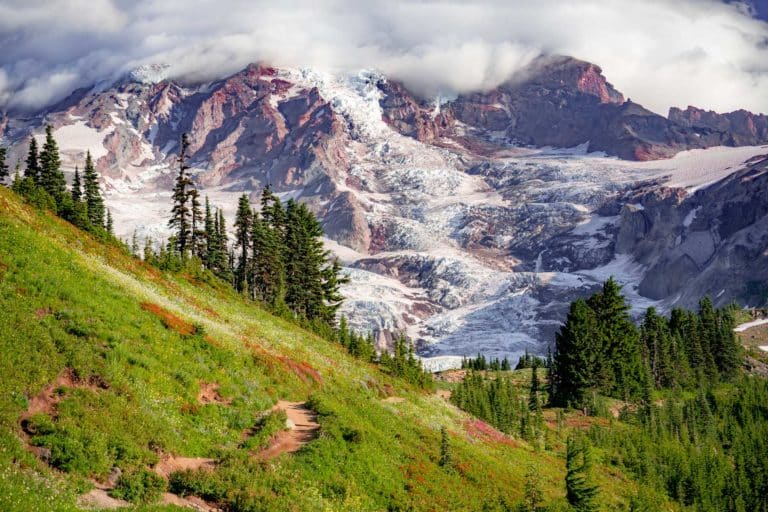
Tucked into Colorado’s Front Range, Rocky Mountain National Park spans more than 400 square miles of high country. Many consider it the high point of the American Rockies, and it is hard to argue. The park is rich with wildlife: elk, moose, bighorn sheep, black bear, marmots, and the occasional mountain lion.
109 public lands destinations are under threat. Get the free weekly briefing that 25,000+ people use to stay informed and take action.

It is the closest national park to Denver, which is both its blessing and its curse. Visitation has surged in recent years, and the Park Service now runs a timed-entry reservation system in the busy months to manage the crowds, especially around the Bear Lake corridor and the Estes Park entrance. Book your timed entry on recreation.gov before you go.
Watch Our Award-Winning Rocky Mountain Film
Best Time to Visit
Fall is our pick. Crowds thin out, color spreads across the hillsides, and the elk rut fills the valleys with bugling each evening as the bulls compete for the herds. Nights turn cold and early snowstorms happen, so pack for winter even in September. Summer opens the high country on Trail Ridge Road but brings the heaviest traffic.

Things to Do
Bear Lake is the busiest trailhead in the park and the launch point for many of the best interior hikes, including Sky Pond. Trail Ridge Road is the highest continuous paved road in the park system, topping 12,000 feet with views in every direction. Sprague Lake is a short, level loop with mirror reflections of the peaks and good odds of spotting moose at dawn or dusk.


2. Great Sand Dunes National Park
Location: South-central Colorado | Entrance Fee: $25/vehicle
Picture a sea of sand with the snowcapped Sangre de Cristo Mountains rising behind it, and you have one of the most underrated parks in the country. Great Sand Dunes protects the tallest dunes in North America, topped by Star Dune at around 750 feet. Officially it is a National Park and Preserve, a single unit with two designations.
The park is remote and not near much else, but it earns the trip. That isolation keeps the crowds down. Spring can be buggy, and summer storms occasionally wash out access roads, so check conditions before you commit.

Best Time to Visit and Things to Do
Late summer brings fewer bugs and cooler sand for hiking and camping. Hiking the dunes is the main event, and you will not be able to resist climbing the nearest ridge once you arrive. Medano Creek flows along the base of the dunes in spring and early summer, a perfect place to cool off. And the stargazing is exceptional; the park earned International Dark Sky designation in 2019, and walking the dunes under a full moon, no flashlight needed, is an experience you will not forget.

3. Mesa Verde National Park
Location: Southwestern Colorado | Entrance Fee: $20 to $30/vehicle depending on season (tour tickets extra)
Mesa Verde protects the cliff dwellings of the Ancestral Puebloan people, beautifully preserved in alcoves throughout this high desert park. Many of these dwellings are roughly 700 to 800 years old. Walking among them and imagining the lives lived here is reason enough to make the long drive to the southwest corner of the state. Sunsets over the sagebrush expanse are remarkable.

Highlights
Cliff Palace is the showpiece, the largest cliff dwelling in North America, and a ranger-guided tour is required to enter it. Balcony House is the more adventurous tour, with ladders and a crawl tunnel. Cedar Tree Tower is a self-guided stop on a short walk, good for taking your time. Book tours through recreation.gov, as they sell out in peak season.
Plan your visit with our things to do at Mesa Verde guide.

4. Black Canyon of the Gunnison National Park
Location: Western Colorado | Entrance Fee: $30/vehicle
Of all the underrated parks in the country, this one sits near the top of the list, and it is my pick for the most dramatic in Colorado. As a relatively young park it still flies under the radar of most travelers. At its deepest the canyon plunges 2,722 feet, with walls so steep and narrow that parts of the gorge see only minutes of sunlight a day. The scenery warrants the same long, slack-jawed gazes you give the Grand Canyon or Yosemite.
The catch is the remoteness. Services are well away from the entrance, so bring everything you need. It is worth the effort.
Highlights
The South Rim is the developed side, with a paved scenic drive, a visitor center, and a string of overlooks straight down into the gorge. The North Rim is quieter and more rugged, reached by a 7-mile gravel road with a different set of viewpoints. East Portal drops to the river at the canyon floor via a steep paved road, the best way to feel the scale from the bottom up. See more in our Black Canyon things to do guide.
Colorado’s National Monuments (Not National Parks)
These eight sites are national monuments, not national parks. Some are run by the National Park Service, others by the BLM or Forest Service. A few would hold their own against any park in the country, which is exactly why they belong in this guide, properly labeled.
5. Dinosaur National Monument
Location: Colorado and Utah | Managed by: NPS | Established: 1915
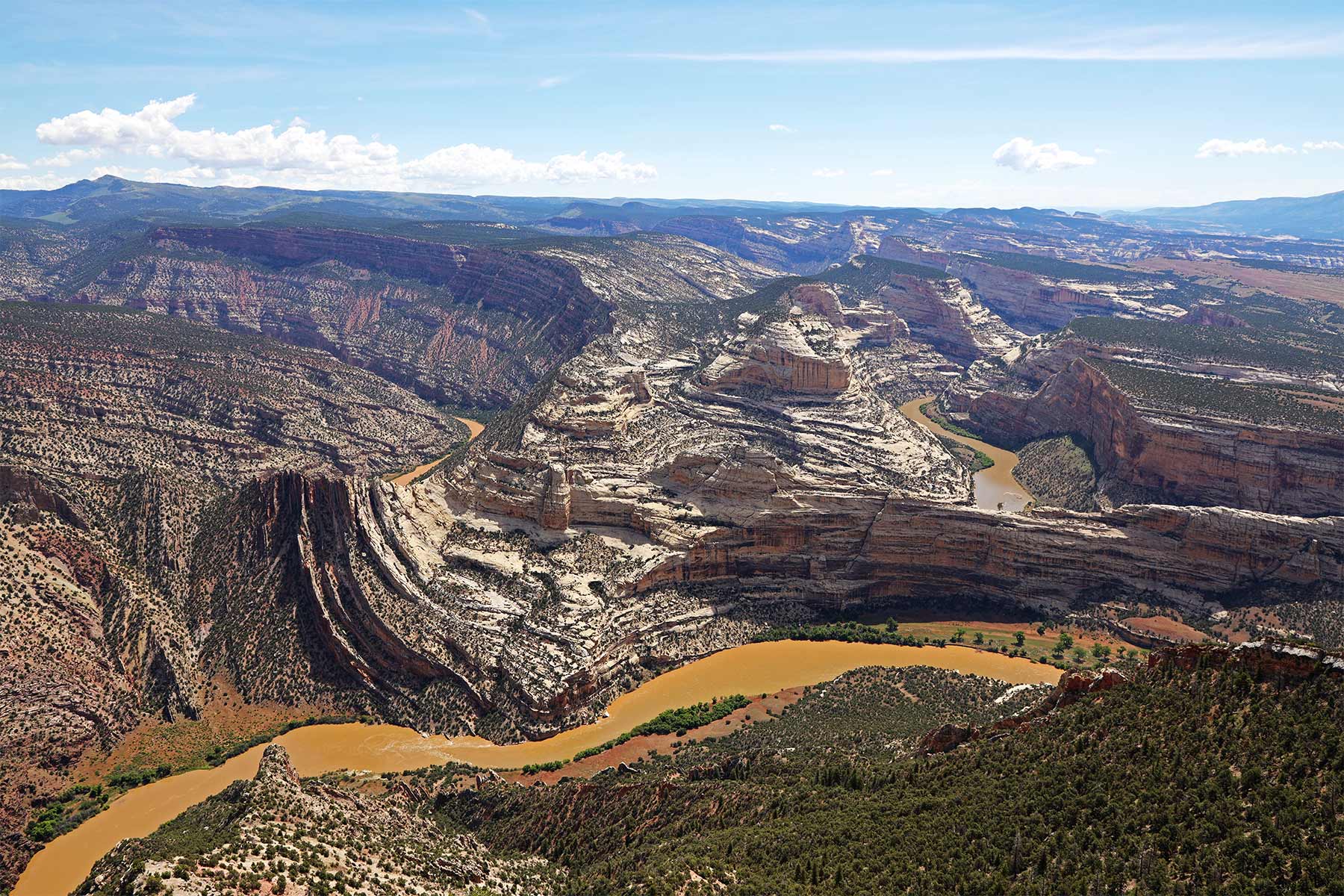
This lesser-known monument straddles the remote northern corners of two states. The dinosaur reputation undersells it. Beyond the famous quarry wall, with its bones still embedded in rock, the monument protects more than 200,000 acres of red-rock canyons, the world-class whitewater of the Green and Yampa rivers, historic cabins, ancient petroglyphs, and dark night skies.

6. Colorado National Monument
Location: Western Colorado | Managed by: NPS | Established: 1911
Here is a monument so good it could pass for a national park. Overlooking Grand Junction, it protects red-rock formations and canyons that recall Monument Valley. Sunrise and sunset over the rim are the draw, and with campsites and amenities on hand you have no excuse to miss them. Rock climbing, cycling the Rim Rock Drive, and hiking are the main activities.

7. Browns Canyon National Monument
Location: Central Colorado | Managed by: USFS and BLM | Established: 2015
Carved by the Arkansas River and lined with granite cliffs, Browns Canyon is one of the newer monuments and one of the more underrated. If you love rivers, few stretches beat the Arkansas through this canyon. The recreation is excellent and varied: whitewater rafting, world-class fishing, hiking, climbing, camping, and horseback riding.

8. Florissant Fossil Beds National Monument
Location: Near Colorado Springs, about 2 hours from Denver | Managed by: NPS | Established: 1969
California is not the only place redwoods once thrived. Florissant holds fossilized redwood stumps, some up to 14 feet across, alongside one of the richest fossil insect and plant deposits in the world. Hike the Petrified Forest Loop to the Big Stump, among the largest petrified stumps anywhere.
9. Hovenweep National Monument
Location: Colorado and Utah | Managed by: NPS | Established: 1923
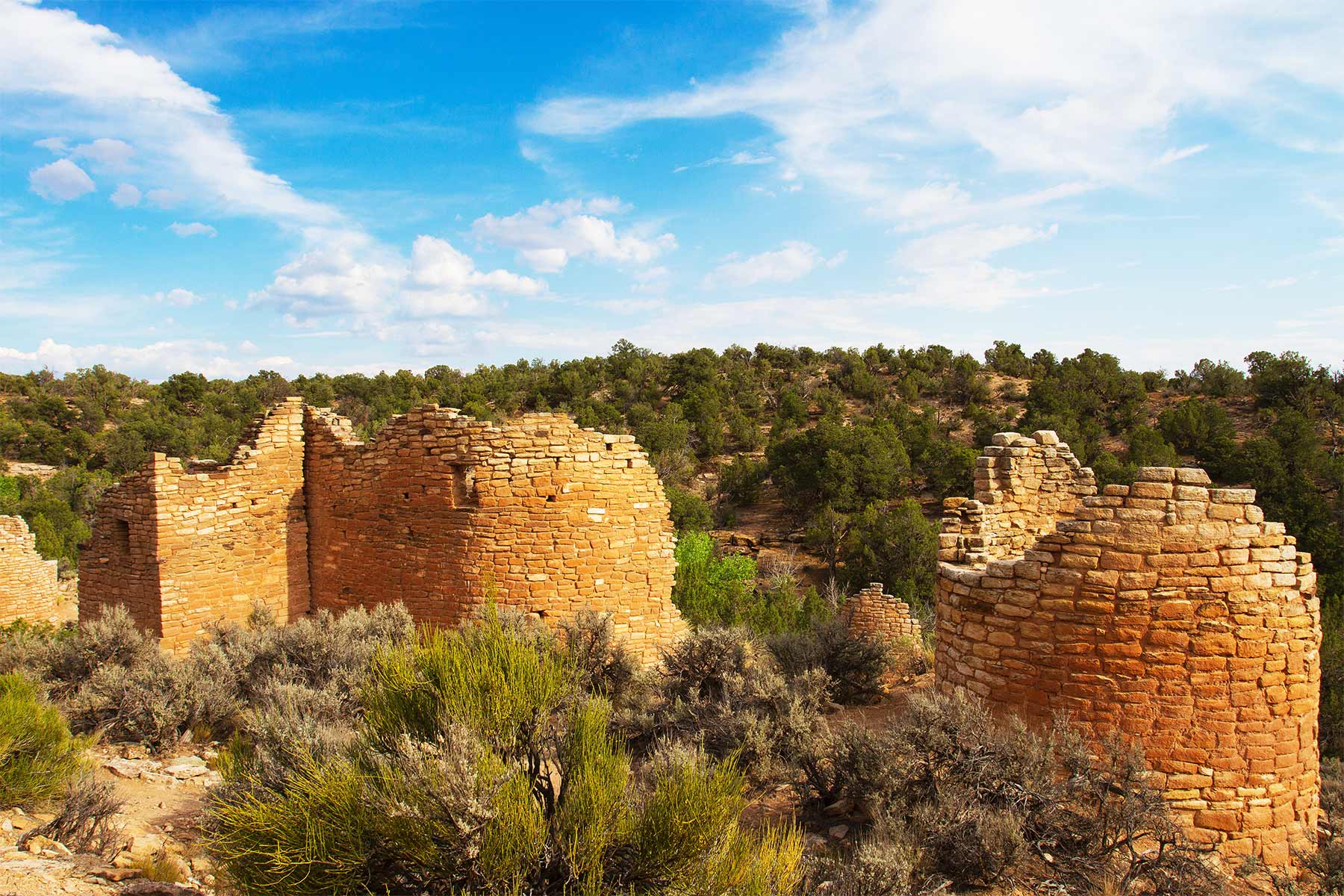
Hovenweep protects a cluster of Ancestral Puebloan villages, including towers built more than 700 years ago that still stand on the rim of a quiet canyon, which speaks to the skill of their builders. The monument is split into five separate units, though the driving distance between the farthest points is only about 25 minutes. The Square Tower Group is the most striking. It sits in the remote Four Corners region; the nearest sizable town is Durango, just under two hours away.
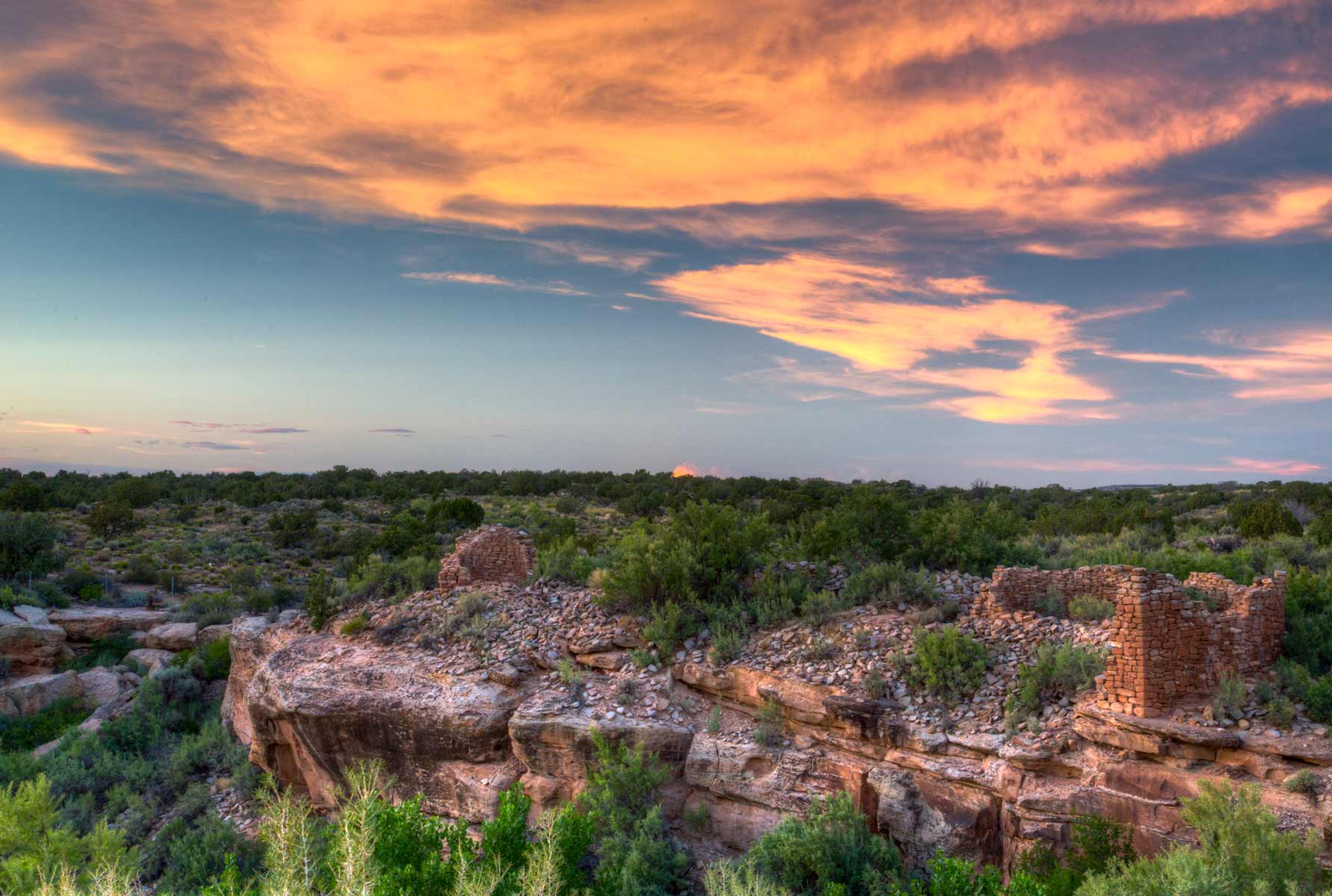
10. Canyons of the Ancients National Monument
Location: Southwestern Colorado | Managed by: BLM | Established: 2000
This sprawling monument protects one of the highest densities of archaeological sites in the country, with thousands of recorded sites across the landscape. It is wide open and off the beaten path, with room to find real solitude among the canyons. Hiking, biking, horseback riding, and camping are all on offer for the self-reliant traveler.

11. Chimney Rock National Monument
Location: Southwestern Colorado | Managed by: USFS | Established: 2012
Beyond the namesake spires rising from the San Juan National Forest, Chimney Rock protects the ruins of a sophisticated Ancestral Puebloan community on a high mesa. Visitors can see the stone kivas and great houses, and learn about the astronomical alignments the site was built around. Developed recreation is limited, but the ancient site at sunset, with its commanding valley view, is well worth the trip.

12. Yucca House National Monument
Location: Southwestern Colorado, near Cortez | Managed by: NPS | Established: 1919
Yucca House is a small, seldom-visited monument just west of Mesa Verde, preserving the site of a large unexcavated Ancestral Puebloan settlement. Expect almost no signs of Park Service development: no trails, maps, or facilities, and rough access roads that turn back many would-be visitors. We rank it last for that reason, though a planned expansion could add visitor opportunities in the years ahead.
Colorado’s National Parks and Monuments at a Glance
The four national parks:
- Rocky Mountain National Park
- Great Sand Dunes National Park and Preserve
- Mesa Verde National Park
- Black Canyon of the Gunnison National Park
The eight national monuments:
- Dinosaur National Monument
- Colorado National Monument
- Browns Canyon National Monument
- Florissant Fossil Beds National Monument
- Hovenweep National Monument
- Canyons of the Ancients National Monument
- Chimney Rock National Monument
- Yucca House National Monument
Why Listen to Us About Colorado’s Parks
We have spent our adult lives exploring and filming America’s national parks and public lands, and we have worked with the National Park Service, the Department of the Interior, and the U.S. Forest Service on films about these places. The rankings here are ours, built on repeat visits rather than a single drive-through.

Which Colorado park caught you off guard? I think Black Canyon of the Gunnison is criminally underrated next to Rocky Mountain, but I would love to hear your take. Save this guide for your trip planning and drop your favorite in the comments.
More Helpful Articles
- Black Canyon: Things to Do at Black Canyon of the Gunnison
- Rocky Mountain: Rocky Mountain National Park Guide and Facts
- Great Sand Dunes: Things to Do at Great Sand Dunes
- Utah’s Mighty 5: Guide to Utah’s National Parks
- National Rankings: All 63 US National Parks Ranked
- Visitation: Most Visited and Least Visited National Parks