


Kobuk Valley National Park Facts! In this article, More Than Just Parks provides you with 10 amazing facts about one of America’s most magnificent national parks.
Kobuk Valley National Park Map
Interactive park map — click a pin to learn more
Kobuk Valley National Park at a Glance
More Than Just Parks is your one-stop-shop for learning everything you’ll need to know about America’s national parks. We’ve got expert guides, beautiful photos, helpful tips, breathtaking films and so much more.
I’ve been to so many of these amazing places since retiring from teaching in 2018. Did I mention that I taught history? I spent a lifetime teaching about the history behind some of these natural wonders. Then I got to see them firsthand. And now I’m sharing some of the incredible stories about these beautiful places with you. It doesn’t get any better than that!
More Than Just Parks takes a deeper dive with its national park facts. We’ve done our homework so that you’ll get more than you bargained for.
let’s get started.

Table Of Contents
Kobuk Valley National Park covers an area of approximately 1.8 million acres, making it one of the largest national parks in the United States.
The park is located in northwest Alaska, near the Arctic Circle, and is characterized by its rugged and remote landscape. It is home to a diverse array of wildlife, including caribou, wolves, bears, and many species of birds.
The park is named for the Kobuk River, which flows through the center of the park and is home to a variety of fish, including salmon and arctic char.
The park is also home to the Great Kobuk Sand Dunes, which are some of the largest dunes in the Arctic. These dunes were formed over thousands of years as wind blew sand from the riverbanks and deposited it in the valley.
The park is popular with hikers and backpackers, who come to experience the park’s rugged beauty and abundant wildlife. There are several trails that lead through the park, including the Kobuk Valley Overland Trail, which offers a challenging backcountry route through the park’s wilderness. The park is also popular with hunters, who come to hunt caribou, moose, and other game.
In addition to its natural beauty and abundant wildlife, Kobuk Valley National Park also has a rich cultural history. The park is home to several Native American communities, including the Inupiat and Koyukon, who have lived in the region for thousands of years.
The park’s cultural resources include ancient hunting camps, burial grounds, and other sites of historical and cultural significance.

- Location: Alaska
- Acreage: Kobuk Valley National Park covers 1.75 million acres of boreal forest and mountains in northwestern Alaska and includes the Great Kobuk Sand Dunes, the largest active, high-latitude, dune field on Earth.
- Visitation: In previous years Kobuk Valley has ranked as the least visited national park in America but such was not the case for 2022. Last year Kobuk Valley saw a whopping 16,925 visitor making it the third least visited national park.
- Elevation: Kobuk Valley National Park is just slightly larger than the state of Delaware and is home to four named mountains, the highest and most prominent of which is Mount Angayukaqsraq at 4,629 feet.
- Climate and Average Weather Year Round: In Kobuk Valley National Park, the summers are cool and mostly cloudy and the winters are long, frigid, snowy, windy, and partly cloudy. Over the course of the year, the temperature typically varies from -11°F to 70°F and is rarely below -41°F or above 80°F.
- When Did It Become A National Park? The park was designated in 1980 by the Alaska National Interest Lands Conservation Act to preserve the 100 feet high Great Kobuk Sand Dunes and the surrounding area which includes caribou migration routes.

CHECK OUT: Alaska National Parks – Helpful Guide For Visiting
As a retired history teacher and lifelong history buff, I am fascinated by stories which deal with the earliest peoples to inhabit these special places. In the case of this park, one of the more fascinating Kobuk Valley National Parks Facts pertains to its earliest inhabitants.
What’s so fascinating is that there have been humans in the area which is today Kobuk Valley National Park for as long as there have been people on the North American continent. Now that’s a long time folks!
During the last Ice Age, the valley remained free of ice and teamed with big game, including the woolly mammoth. Some of America’s very first inhabitants called Kobuk Valley their home.
At a wide bend in the Kobuk River called Onion Portage, archeologists have found evidence that for at least 9,000 years, the caribou herd has been crossing the river there during their annual migrations.
For just as long, humans have been gathering there to hunt them. (Source: NPS)

Facts About Acadia National Park
2. An Arctic Archaeologist Discovered Our Knowledge Of Northwest Alaska
Another of the truly amazing Kobuk Valley National Park Facts has to do with the work of a legendary arctic archaeologist.
According to the National Park Service, the story of Arctic archeology is dominated by one towering figure, His name was J. Louis Giddings.
During his 25 years of fieldwork in Northwest Alaska, Giddings worked on five major excavations.
He was instrumental in the identification of several previously unexplored cultures and the discovery of many of the most important sites in Arctic archeology.

His work at the Cape Krusenstern beach ridges and Onion Portage formed the basis of our modern understanding of the human history in Arctic Alaska.
Although he arrived in Northwest Alaska thousands of years after its first inhabitants, Giddings played an instrumental part in the telling of their story.

Giddings Search For Old Trees Led Him To Kobuk Valley
Dendrochronology is a scientific method that uses tree rings to date wood and objects made from wood. This is done by studying the growth rings of a tree, which are influenced by the weather conditions in a given year.
When a tree is freshly cut, its growth rings can be matched to an exact year on the modern calendar. By matching the pattern of growth rings in an old piece of wood, such as a piece of timber used in an old building, to a known pattern, archeologists can determine when the wood was cut and the building was constructed.
In the case of Giddings, by collecting wood cores from trees along the Kobuk River, it allowed archeologists to date when people first arrived in North America and the development of the local Inupiaq culture.

Giddings Most Significant Discovery
Giddings’ most significant discovery came in the early 1960s at Onion Portage on the Kobuk River, where evidence of humans dates back 12,000 years.
To learn more about this extraordinary man’s achievements, I recommend two books: (1) Kobuk River People and (2) Ancient Men of the Arctic both by J. Louis Giddings.

Facts About Biscayne National Park
3. The Great Kobuk Sand Dunes Are The Largest Active, High-Latitude, Dune Field On Earth
While I taught history, I was also fascinated by geology. One of my favorite Kobuk Valley National Park Facts pertains to the amazing geology of this area.
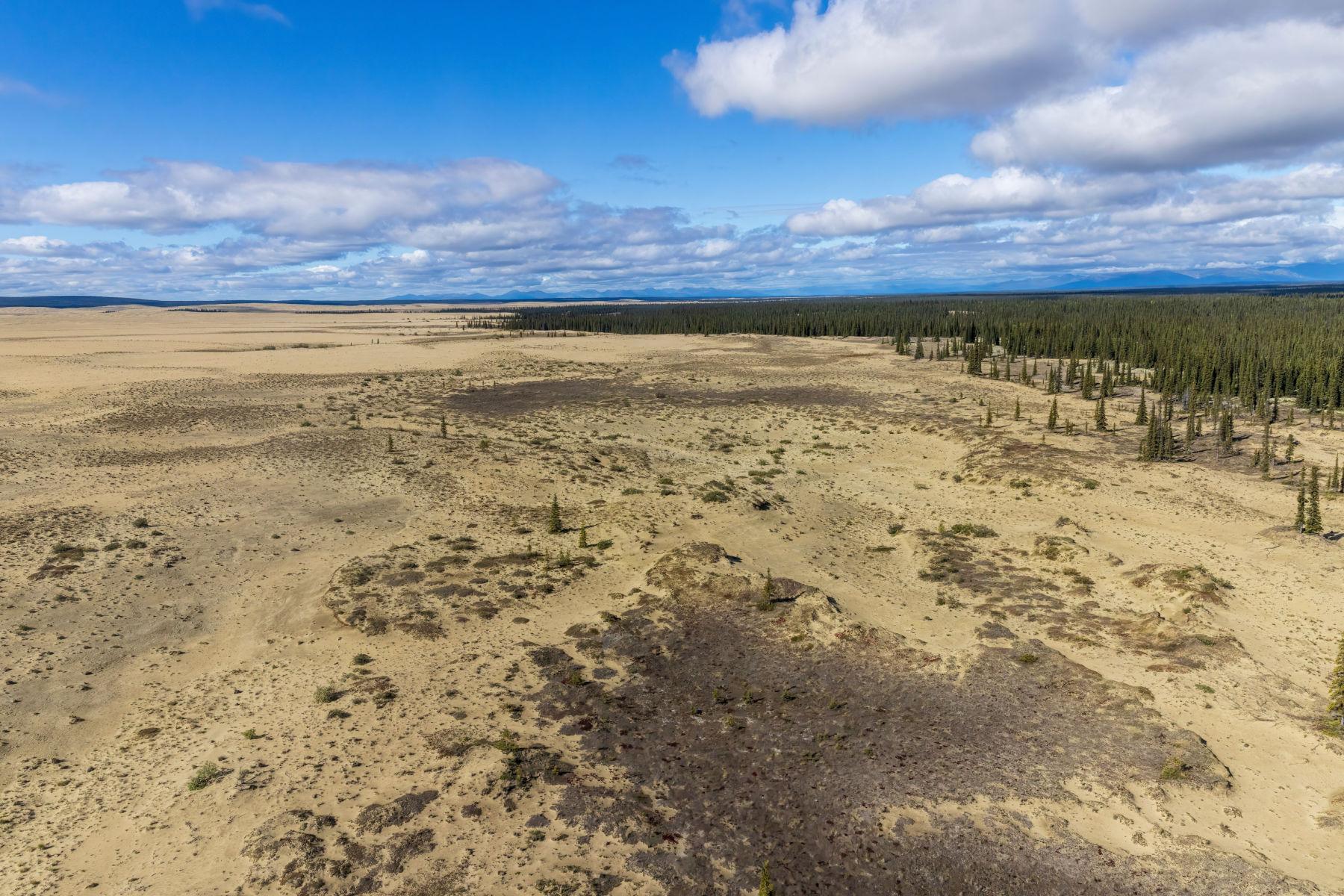
If you’re planning to visit then you should know that one of Kobuk Valley National Park’s most iconic sights is the Great Kobuk Sand Dunes.
The Great Kobuk Sand Dunes is the largest active, high-latitude, dune field on Earth.
You will see them rising unexpectedly out of the tundra and trees.
These dunes, along with the smaller Little Kobuk Sand Dunes and Hunt River Sand Dunes, create 30 square miles of towering sand that would look more at home in the Sahara than 35 miles above the Arctic Circle.

The Dunes Are A Relic Of The Ice Age
We don’t normally think of sand dunes when we think of the Ice Age. And yet Kobuk Valley’s sand dunes are a relic of the last Ice Age.
Around 28,000 years ago, the Earth cooled and glaciers formed in the mountains surrounding the Kobuk Valley.
The slow movement of the glaciers caused the rocks beneath them to be ground into fine sand, which was then blown by the wind into the valley.
When the glaciers began to retreat 14,000 years ago, they left behind 200,000 acres of sand dunes along the banks of the Kobuk River.
Over time, vegetation has reclaimed all but 16,000 acres of the sand dunes, and continues to slowly encroach on the remaining dunes.
The dunes are now home to sparse grasses, sedges, wild rye, and occasional wildflowers, including the Kobuk locoweed, which is only found on the slopes of the Kobuk Valley’s sand dunes.
These plants stabilize the sand and pave the way for a succession of mosses, algae, lichen, shrubs, and eventually aspen, birch, and spruce trees to take root.
Facts About Canyonlands National Park
4. Some Amazing Wildlife Live On The Dunes
While we typically associate sand dunes with desert conditions and sparse vegetation, in fact, life is quite abundant on the fringe of Kobuk Valley’s dunes.
Black and grizzly bears, wolves, foxes, porcupines and moose call the surrounding woods and tundra their home. It’s common to see tracks and other signs of their passage in the sand along the edges of the dunes.
Most dramatically, the mighty Western Arctic Caribou Herd passes through Kobuk Valley twice a year on their annual migration to and from their calving grounds north of the Brooks Range.
During the spring and fall, the Great Kobuk Sand Dunes are marked with their hoof prints.

Facts About Denali National Park
5. The Onion Portage Is One Of The Most Important Landmarks In The Park
If you’re planning a visit then our next Kobuk Valley National Park Fact is one that you should pay particular attention to as you’ll definitely want to see this important landmark.
Near the eastern boundary of Kobuk Valley National Park, the Kobuk River makes a wide bend, creating a long, narrow peninsula that juts out into the water.
Local residents call it Paatitaaq, or Onion Portage, for the wild onions that grow along the banks of the river.
For most of the summer, the gravel shore is picturesque and calm. A blue river drifts pass under a blue sky with the peaks of the Jade Mountains rising up in the background.

The only sound is the wind rustling in the birch trees that line the steep banks and the occasional commotion from a flock of ducks landing on the river or a bear splashing into the water in search of a salmon.
Twice a year, however, the caribou arrive, pouring across the tundra and down the steep slopes before plunging into the Kobuk River on their biannual migration across the Brooks Range.
The caribou are followed by hunters. On land, even a newborn caribou is far faster than a person, but a swimming caribou can easily be taken down by a single hunter.
Buoyed by air trapped in their fur, the dead animals then float downstream and wash ashore at Onion Portage’s gravel beach. It’s an incredible sight to behold!

One Of The Oldest & Best Dated Sites In The Artic
Onion Portage is a significant archaeological site that was extensively excavated between 1964 and 1967.
The excavations revealed evidence of nine different cultures dating back at least 8,000 years, possibly earlier.
The site is one of the oldest and best-dated sites in the Arctic, with stratigraphy over twenty feet deep in some places.
The team of archeologists found evidence of coastal people who primarily hunted whales and seals on the Arctic Ocean as well as nomadic hunters who lived among the trees and tundra of Alaska’s interior.
The earliest ancestors of the modern Inupiat People, who still live in the Kobuk River Valley, hunted at Onion Portage, and other groups only visited the site briefly before moving on.
At Onion Portage, all of Northwest Alaska’s long history is on display and it’s a significant source of information about the ancient cultures of the Arctic region.

Facts About Dry Tortugas National Park
6. Kobuk Valley Is One Of Only Two National Parks That Is North Of The Arctic Circle
One the lesser known of the Kobuk Valley National Park Facts has to do with its unique location.
Kobuk Valley National Park lies 25 miles north of the Arctic Circle, joining Gates of the Arctic National Park as the only two U.S. national parks north of that line.
As a matter of fact, Kobuk Valley is an extremely remote area of northwestern Alaska.
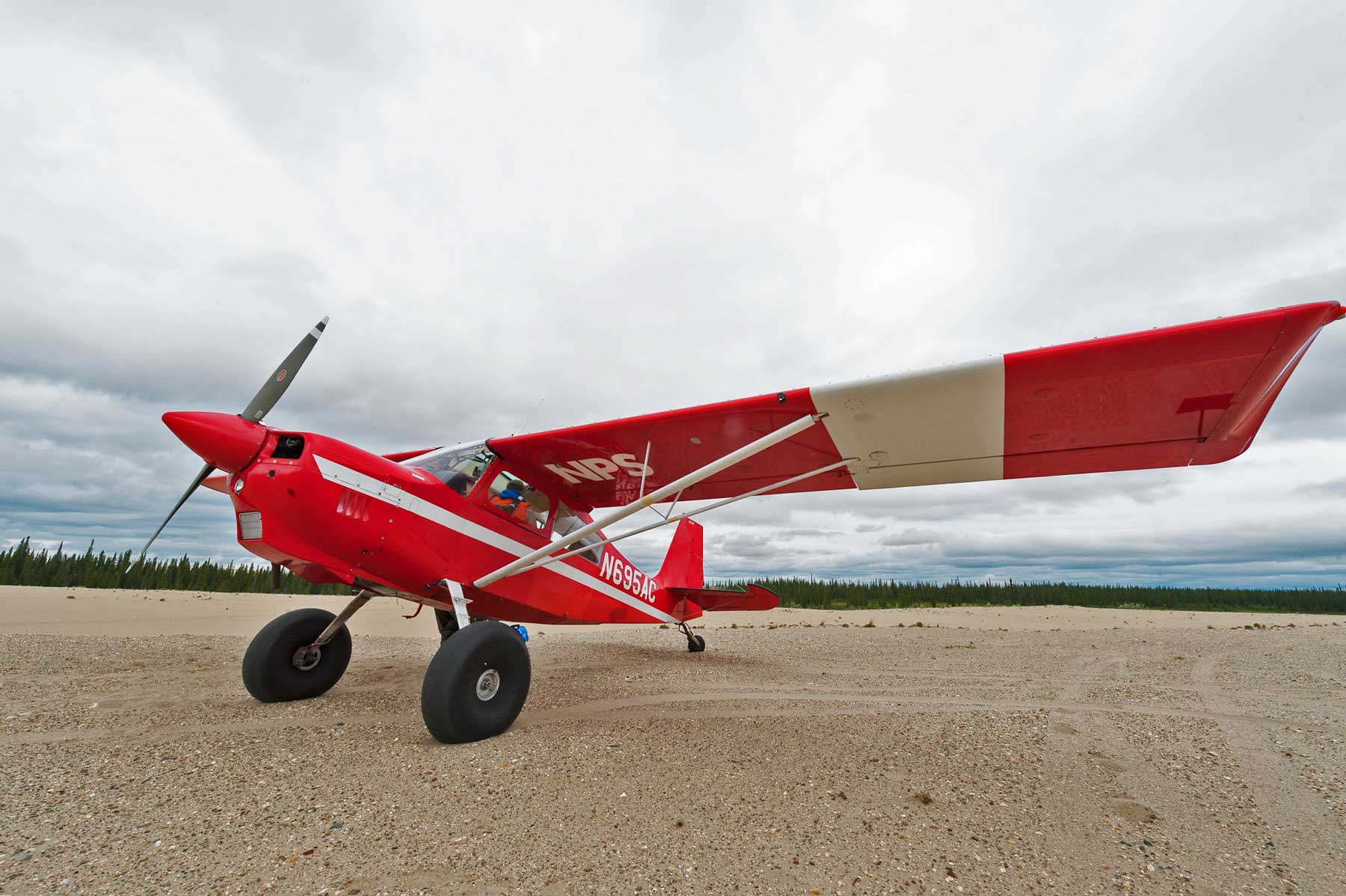
Getting into the park requires multiple flights, a guide (to do it safely), and thousands of dollars.
To get there, one must first fly (1 hour 45 minutes from Anchorage) to the extremely isolated town of Kotzebue. From there you can pick up a flight (and guide) into the park.
Visitors should be well prepared for wilderness survival and/or travel with an experienced outfitter.
16+ Fascinating Grand Canyon Facts
8. Kobuk Valley Is A Great Place To Go Fishing
Kobuk Valley is a great destination for fishing enthusiasts, offering a wide variety of fish species such as sheefish, salmon, grayling, pike and Dolly Varden in the rivers.
These fish are not only good to catch but also good to eat. Visitors should be aware that local subsistence users may be fishing with set nets, so it’s important to give them a wide berth to allow them to complete their important harvest activities.
Visitors should come prepared as most things are on their own, this is often why boaters come to this area. Generally, sheefish are more plentiful in the fall while grayling and pike are available year-round.
There should be a substantial chum salmon and a small pink salmon run in the river in the fall. Salmon spawn more in the tributaries north of the Kobuk River and sheefish and other whitefish spawn more in southern tributaries.
The Pah, Black and Pick rivers are known to be good spots for sheefish.
Anglers are required to have a fishing license and follow Alaska state fishing regulations.

Facts About Grand Teton National Park
8. No Amphibians Or Reptiles Can Be Found In Kobuk Valley
Another of the fascinating Kobuk Valley National Park Facts concerns its wildlife. Or, more specifically, what you won’t see if you journey to this park.
Due to the temperatures in Kobuk Valley there are almost no amphibians and reptiles found in the park.
If you’re planning a visit then be advised that weather is a central concern to those planning to visit Kobuk Valley National Park at any time of year.
Summer temperatures are usually in the mid 60°s F, with 70s to 80° for highs. Some days in July may reach 85° F. Average January lows are -8°F with possible lows of -50°F.
Annual averages are not always good guidelines, however. In summer, visitors can see snow, near-freezing temperatures, and long periods of clouds, wind, and rain.

Facts About Great Basin National Park
9. The Sun Does Not Set Between June 3rd & July 9th
Now here’s one of the strangest Kobuk Valley National Park Facts. The sun does not set between June 3rd and July 9th.
Now the reason for this has to do with the earth’s axial tilt.
The axial tilt is responsible for our seasons and the reason as to when parts of Alaska are exposed to the sun.

25 Bucket List Famous Landmarks In America (MUST-SEE)
10. The Park Was Designated By Jimmy Carter As Part Of The Largest Single Act Of Conservation In U.S. History
If I had to select which of the Kobuk Valley National Park Facts were my favorite it would be this one.
The park was created as a part of the largest single act of conservation in U.S. history
That act and the man responsible for it is a fitting way to conclude our list of surprising facts.

Jimmy Carter Was The Greatest Conservation President
The Alaska Lands Act
During the presidency of Jimmy Carter, America’s most trusted newsman was legendary CBS News Anchor, Walter Cronkite.
After the historic passage of one of Carter’s most important environmental actions, called the Alaska Lands National Interest Conservation Act (ANILCA), Cronkite had this to say:
“President Carter today more than doubled the size of the National Park System by invoking his executive authority to protect 56 millions acres of Alaskan Wilderness. Environmental groups said Carter has now replaced Teddy Roosevelt as the greatest conservation president of all time.”

The Alaska National Interest Lands Conservation Act (ANILCA) designated more than 100 million acres of federal land in Alaska as new or expanded conservation system units.
13 Reasons Why Jimmy Carter Is America’s Greenest President
We’re Jim Pattiz and Will Pattiz, collectively known as the Pattiz Brothers (and sometimes the Parks Brothers) and we absolutely LOVE the national parks.
You should probably know that we don’t just make this stuff up out of thin air. We’ve spent our entire adult lives exploring and filming America’s national parks and public lands.
We’ve worked with the National Park Service, the Department of Interior, USDA, and the U.S. Forest Service for years creating films on important places and issues. Our work has been featured in leading publications all over the world and even some people outside of our immediate family call us experts on the national parks.
Meet The Parks Brothers

- Kobuk Valley National Park Has Been Home To Humans For As Long As There Have Been People On This Continent
- An Arctic Archaeologist Discovered Our Knowledge Of Northwest Alaska
- The Great Kobuk Sand Dunes Are The Largest Active, High-Latitude, Dune Field On Earth
- Some Amazing Wildlife Live On The Dunes
- The Onion Portage Is One Of The Most Important Landmarks In The Park
- Kobuk Valley Is One Of Only Two National Parks That Is North Of The Arctic Circle
- Kobuk Valley Is A Great Place To Go Fishing
- No Amphibians Or Reptiles Can Be Found In Kobuk Valley
- The Sun Does Not Set Between June 3rd & July 9th
- The Park Was Designated By Jimmy Carter As Part Of The Largest Single Act Of Conservation In U.S. History
We Hope You’ll Follow Our Journey

Our goal here at More Than Just Parks is to share the beauty of America’s national parks and public lands through stunning short films in an effort to get Americans and the world to see the true value in land conservation.
We hope you’ll follow our journey through the parks and help us to keep them the incredible places that they are. If you’re interested joining the adventure, sign up below!
Helpful Articles
Alaska National Parks: 8 Amazing Alaska National Parks (Tips for Visiting)
Glacier Bay National Park Facts: Glacier Bay National Park Facts
Denali National Park Facts: Facts About Denali National Park
List Of National Parks: All 63 Best US National Parks Ranked from Best to Worst
National Parks List: Official List of US National Parks (Alphabetical & by State)
Map of National Parks: Printable Maps of the National Parks


Deprecated: File Theme without comments.php is deprecated since version 3.0.0 with no alternative available. Please include a comments.php template in your theme. in /mnt/BLOCKSTORAGE/home/1160750.cloudwaysapps.com/xdtcxtpktv/public_html/wp-includes/functions.php on line 6121