


Arkansas holds 9 National Park Service sites, and the headliner is Hot Springs National Park, the smallest national park in the country. I taught history for 25 years before I visited these amazing places, and Arkansas is one of those states people drive through on the way to somewhere else. That is a mistake.
The thing to understand about Arkansas is that it is not a big-scenery state in the way Utah or Wyoming is. What it has instead is history packed tight and a couple of genuine natural wonders. Hot Springs is one of the oldest federally protected pieces of ground in America, set aside as a federal reservation back in 1832, decades before Yellowstone. The Buffalo became the first national river in the country. And Little Rock Central High is one of the most important Civil Rights sites you can walk into anywhere.
Here is my honest take. Most of these sites are free, most take half a day, and you can string the major ones together on a single loop through the state. Nobody is going to spend a week here. But the day or two you do spend will stick with you.
A note on the count, because roster errors are the most common mistake in posts like this. Arkansas has 9 NPS units. Seven of them are standalone places you can actually visit: one national park, one national river, one national military park, two national historic sites, one national memorial, and one presidential birthplace historic site. The other two are long-distance national historic trails (the Trail of Tears and the Butterfield Overland route) that pass through Arkansas but run across several states, so I have grouped them together at the end. Older guides that say “7 national parks” are leaving out the trails.
117 public lands destinations are under threat. Get the free briefing that 27,000+ people use to stay informed and take action.
Arkansas National Park Sites Compared
| Site | Designation | The Draw | 2026 Fee |
|---|---|---|---|
| Hot Springs | National Park | Thermal springs and historic Bathhouse Row, inside the city | Free |
| Buffalo National River | National River | 135 free-flowing miles, towering bluffs, paddling and elk | Free |
| Pea Ridge | National Military Park | 1862 Civil War battle that held Missouri for the Union | Free |
| Fort Smith | National Historic Site | Frontier fort and the “Hanging Judge” Isaac Parker’s court | Free / low fee |
| Little Rock Central High | National Historic Site | 1957 desegregation crisis and the Little Rock Nine | Free |
| Arkansas Post | National Memorial | First European settlement in the lower Mississippi Valley (1686) | Free |
| Clinton Birthplace | National Historic Site | Boyhood home of the 42nd president, in Hope | Free |
| Trail of Tears & Butterfield Overland | National Historic Trails | Multi-state routes that cross Arkansas | Free |
The fee picture in Arkansas is about as simple as it gets. Hot Springs National Park charges no entrance fee, which makes it the rare national park where your America the Beautiful pass (the $80 annual federal lands pass) is not even needed at the gate. The historic sites, the military park, the memorial, and the Buffalo are all free too. You may pay a small amount for a guided bathhouse experience or a campsite, but walking in costs nothing across the board.
1. Hot Springs National Park

The best site in the state, and it is not close. Hot Springs is the smallest national park in the country and one of the oldest protected places in America, set aside as a federal reservation in 1832, a full 40 years before Yellowstone became a park.
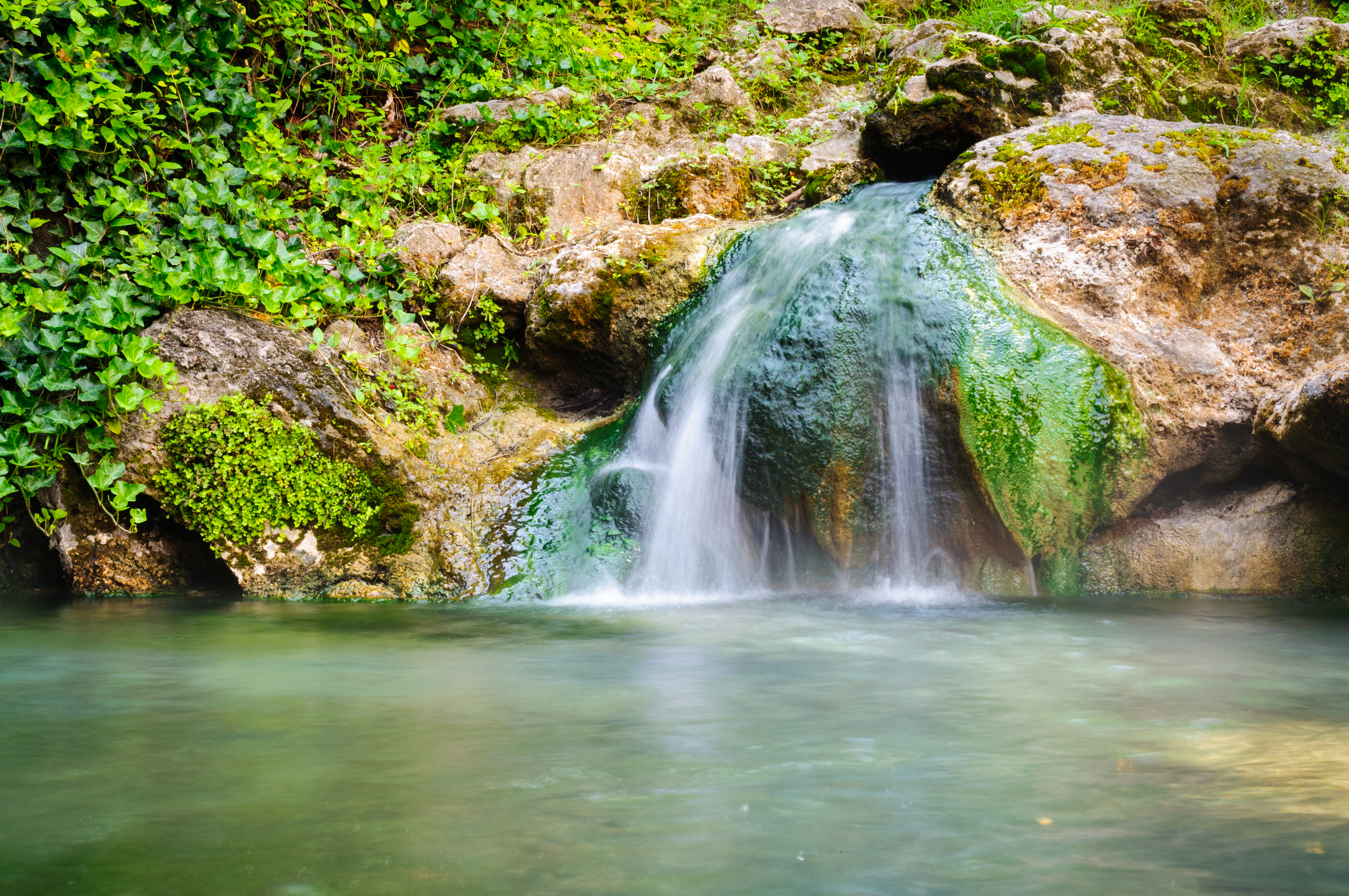
What makes it strange and wonderful is that the park is wrapped around a working downtown. The centerpiece is Bathhouse Row, a line of grand early-1900s bathhouses built over thermal springs that pour out of the ground at about 143 degrees. People have come here for the water for a very long time, first Native Americans, then the spa crowd, then a fair number of gangsters. Al Capone and “Lucky” Luciano both spent time here, and Luciano got himself arrested for the trouble.
Tour the Fordyce Bathhouse, which the Park Service runs as a free museum, then hike the shaded Grand Promenade above the row. If you want a real soak, the Buckstaff and Quapaw still operate as working bathhouses. For nature, the Sunset Trail climbs to the park’s high ground and good birding. Plan on a full day. As of 2026, the park is open year round with no entrance fee.
2. Buffalo National River

The natural wonder of Arkansas, and a piece of conservation history. In 1972, Congress made the Buffalo the first national river in the United States. The practical meaning of that designation was simple and huge: no dams. The river runs free for about 135 miles through the Ozarks, past limestone bluffs that climb hundreds of feet straight up from the water.
This is the one site in the state where you should plan to spend time outdoors and slow down. The classic way to see it is from a canoe or kayak. You can bring your own or rent from outfitters near the put-ins, and the upper river runs faster water in spring while the lower stretches stay calmer through summer.
The Buffalo is also home to Arkansas’s elk herd, reintroduced decades ago and now a reliable sight in the Boxley Valley at dawn and dusk. Add hiking, fishing, and some of the darkest night skies in the region, and this is an easy place to lose a day or two. Free to visit in 2026.
3. Little Rock Central High School National Historic Site

The most important place in the state, full stop. In September 1957, nine Black students tried to enroll at Central High and were blocked at the door by the Arkansas National Guard on the governor’s orders. President Eisenhower answered by sending the 101st Airborne to escort them in. I taught that standoff in a classroom for years before I ever stood in front of the building. Standing there changes how you carry it.
Central High is still a working public school, the only functioning high school inside a national historic site. You cannot wander the halls, but the Park Service visitor center across the street tells the whole story through photographs, news clips, and the voices of the Little Rock Nine themselves. Reserve a ranger tour ahead if you can.
Give it a couple of hours and read every panel. Free, open year round in 2026.

4. Pea Ridge National Military Park

One of the best-preserved Civil War battlefields in the country. Over two days in March 1862, Union forces beat back a larger Confederate army at Pea Ridge and effectively held Missouri for the Union. It does not get the attention of Gettysburg, but it was one of the most consequential battles west of the Mississippi.
The park covers about 4,300 acres, and because it has never been developed over, the ground looks much as it did in 1862. Start with the film and the museum at the visitor center, then drive the seven-mile self-guided auto tour. Stop at Elkhorn Tavern, which served as a field hospital and command post during the fighting.
Plan on two to three hours. Free in 2026.

5. Fort Smith National Historic Site

Frontier law and order, with all the grit that implies. The first Fort Smith went up on the Arkansas River in 1817 to keep the peace between the Osage and the arriving Cherokee. But the site is best known for what came later: the federal court of Judge Isaac Parker, the “Hanging Judge,” who sentenced dozens of men to death over 21 years on the bench.
You can walk through the restored courtroom and jail, see the reconstructed gallows, and follow exhibits on the deputy marshals who rode into Indian Territory to bring men back for trial. The site sits right on the Oklahoma line and tells a story that belongs to both states.
Budget a couple of hours. Entry is free or a small fee depending on the season in 2026.
6. Arkansas Post National Memorial

Where European Arkansas began. French explorers established a trading post here in 1686, the first European settlement in the lower Mississippi Valley. Over the next two centuries the place changed hands again and again. It served as the capital of the Arkansas Territory, then the Confederacy turned it into Fort Hindman, which a Union gunboat fleet pounded into submission in January 1863.
There is not much standing today. Erosion and the river took most of it, and the appeal here is the quiet ground and the long sweep of history rather than dramatic ruins. The visitor center near Gillett lays out the story, and the trails through the grounds are flat, easy, and good for spotting birds and alligators.
An hour or two is plenty. Free in 2026.
7. President William Jefferson Clinton Birthplace Home National Historic Site

A small house with an outsized backstory. Bill Clinton spent his first years in this two-story home in Hope, raised by his grandparents after his father died before he was born. The future president later turned the town’s name into a campaign line, and the Park Service preserves the house much as it looked in the 1940s.
This is the most niche stop on the list. If you have an interest in modern presidential history it is worth the detour to the southwest corner of the state. If you do not, you can skip it without guilt. The guided house tour and the small visitor center take under an hour.
Free in 2026.
The National Historic Trails Through Arkansas
Two of Arkansas’s nine NPS units are long-distance national historic trails. They are not places with a single gate and a visitor center the way the others are. They are routes that cross several states, marked by sites and waysides along the way. Both are worth knowing about, and both intersect with the standalone parks above.
- Trail of Tears National Historic Trail. The forced removal of the Cherokee and other southeastern nations in the 1830s crossed Arkansas on both water and land routes. You can pick up the story at Fort Smith and at certified sites along the way.
- Butterfield Overland National Historic Trail. One of the newest additions to the system, this route traces the 1850s overland mail and stagecoach line that ran from Missouri to California, passing through northwest Arkansas near Fort Smith.
How to See Arkansas’s Parks
The sites are spread across the state, so geography drives the plan. Group the northwest together: Pea Ridge and Fort Smith sit within easy reach of each other up by the Missouri and Oklahoma lines, and the Buffalo National River is a reasonable add for anyone who wants a day on the water. The center of the state gives you Little Rock Central High. The south and southeast hold Hot Springs, Arkansas Post, and the Clinton birthplace in Hope.
A realistic long weekend looks like this. Day one, Little Rock Central High in the morning, then drive an hour to Hot Springs and spend the afternoon and evening on Bathhouse Row. Day two, head northwest to Pea Ridge and Fort Smith. Day three, the Buffalo National River, the natural high point of the whole trip.
If you have one trip and one trip only, go to Hot Springs National Park and the Buffalo National River. One is the smallest national park in the country with a history nobody expects, and the other is the cleanest, wildest water in the Ozarks. Together they show you the two best things Arkansas has.

More National Parks Guides
- Oklahoma National Parks
- Missouri National Parks
- Tennessee National Parks
- Mississippi National Parks
- Most Visited National Parks
- Least Visited National Parks
Frequently Asked Questions
Arkansas holds 9 National Park Service sites, and the headliner is Hot Springs National Park. Hot Springs is one of the oldest federally protected pieces of ground in America, set aside as a federal reservation back in 1832, decades before Yellowstone.
The Buffalo became the first national river in the country, and it is a reasonable add for anyone who wants a day on the water.
Group the northwest together. Pea Ridge and Fort Smith sit within easy reach of each other up by the Missouri and Oklahoma lines, and the Buffalo National River is a reasonable add for anyone who wants a day on the water.


