As a lifelong educator I love sharing interesting facts & tidbits which is why writing about the myriad fascinating the park facts has me excited. Let’s start with a few basics before getting into the good stuff.
Yosemite National Park Map
Interactive park map — click a pin to learn more
Yosemite National Park at a Glance
1 alertIn 2024, Yosemite had over 4 million visitors. Yosemite is not America’s oldest national park though it was first protected eight years before the creation of Yellowstone–America’s oldest national park.
The park is best known for its waterfalls, but you can also find deep valleys, grand meadows, ancient giant sequoias, a vast wilderness area, and much more.
In 1849, Yosemite Valley, located in California’s Sierra Nevada Mountains, began to receive many tourists to the region.
They came because of the California Gold Rush. As a consequence, conservationists appealed to President Abraham Lincoln to make Yosemite Valley a public trust of California.
And now for the good stuff…

Table Of Contents
Some Basic Facts About Yosemite National Park
Yosemite National Park is a breathtakingly beautiful place with spectacular wonders that defy belief. But alas, it’s the 21st century and John Muir’s “grandest of all temples of nature” is bursting at the seams with tourists in search of their latest social media trophy.
But it’s still Yosemite National Park. Once there you’ll realize just why the park is one of the most popular in the US.
Despite the summer crowds, the valley and the park is truly one of the natural wonders of the world.
The immense beauty found here is overwhelming and has a tendency to make one feel small in the most humbling way. We recommend visiting in the off-season for the best experience.

It is by far the grandest of all the special temples of Nature I was ever permitted to enter.
-John Muir

Now Here Are Some Basic Facts
- Location: California
- Acreage: Yosemite National Park covers an area of 747,956 acres along the central western slopes of the Sierra Nevada mountain range in east-central California.
- Visitation: Yosemite had over 4 million visitors in 2024.
- Highest Elevation: Mount Lyell is the highest point in the park, at 13,114 feet (3,997 m). It is located at the southeast end of the Cathedral Range, 11⁄4 miles (2 kilometers) northwest of Rodgers Peak. The peak as well as nearby Lyell Canyon is named after Charles Lyell, a well-known 19th century geologist.
- Lowest Elevation: The lowest elevations in Yosemite are found on the western boundary of the park at the El Portal Administrative Site, which is at approximately 1,800 feet (549 m). This is the foothill-woodland zone, an area that is hot and dry in the summer with very little or no snow in the winter.
- Climate: Weather tends to be quite variable. It can be hot, cold, dry, rainy, or snowy. Winter generally lasts from December until March. Weather is usually snowy and cold, but sunny and mild days do occur.
- When Did It Become A National Park? On October 1, 1890, Yosemite became a national park.

The 20 BEST California National Parks You Need To Visit
Top 5 Yosemite National Park Facts
1. Yosemite’s First Peoples Called Themselves The Ahwahneechee
In doing the research and writing of these wonderful articles for More Than Just Parks, I continue to be fascinated by the origin stories of the earliest peoples to have inhabited America’s National Parks.
One of the fascinating Yosemite National Park Facts pertains to its first peoples. According to the National Park Service, people have been living in the Yosemite area for as long as 8,000 years.
Archeological evidence suggests that the earliest people ground seeds on small flat stones and hunted using spears and atlatls.
The lifeways of the early inhabitants changed over time as one culture replaced another and as oral histories and traditions were passed down through generations.
Yosemite Valley came to be called Ahwahnee, meaning gaping mouth-like place. The people called themselves Ahwahneechee.

25 Bucket List Famous Landmarks In America (MUST-SEE)
They Were Not The Only Tribe To Occupy The Area
The Ahwahneechee were not the only inhabitants of Yosemite. The Mono Lake Paiute lived on the eastern slope of the Sierra while the Central Sierra Miowk lived along Stanislaus and Tuolumne Rivers to the north and the Yokut occupied the territory to the west.
These tribes actually interacted with each other, made war on each other, traded with each other and intermarried with each other.
Miwok legends tell of the creation of people here, and of events that took place long before the coming of non-Indians. By the late 18th century, it appears that most of Yosemite was populated by Southern Miwok people, with Central Miwok people utilizing the northern quarter of the park.

2. The Indian War Of 1850-51 Produced The First Expedition Of Non-Native Americans To Visit Yosemite
Another of the amazing Yosemite National Park Facts has to do with the story of the first whites to enter the valley.
While there is some historic evidence to suggest that the Joseph R. Walker Expedition of 1833 descended the western slope of the Sierra Nevada Mountains along the ridge between the Merced and the Tuolumne Rivers and looked down into the Yosemite Valley from its northern wall, it is unlikely that they actually entered the area which today constitutes the park.
Rather that honor goes to a different group who were motivated by a different reason. In the beginning of 1850 James D. Savage had a trading post and mining camp on the Merced River some 20 miles below the Yosemite Valley, which was at that time unknown to the whites.
During the spring of that year Indians supposed to belong to the tribe known as the Yosemites made an attack on this post.
On the 17th of December, 1850, Savage’s Indians deserted the Mariposa camp and on the same or the following day his post on the Fresno was attacked and two of the three men there present killed. (Source: NPS)

The Mariposa Battalion
The Mariposa Battalion’s actions marked the beginning of the end for the Yosemite Indians, as well as for other tribes in California.
The forced removal of the Yosemite Indians from their land and the destruction of their homes and food sources had a devastating impact on their way of life.
Many died from starvation and disease as a result of the forced displacement.
This tragic chapter in Yosemite’s history reminds us of the devastating effects of colonialism and the forced removal of indigenous peoples from their ancestral lands.

3. John Muir’s Time In Yosemite Changed Him Forever
John Muir was a Scottish naturalist, writer, and conservationist who was instrumental in the creation of Yosemite National Park.
Muir’s love for the wilderness and his deep understanding of the natural world led him to become one of the most influential naturalists and conservationists of his time.
He went on to become a founding member of the Sierra Club and a vocal advocate for the preservation of natural areas such as Yosemite.
His writing and activism helped to establish Yosemite as a National Park in 1890 and his legacy continues to inspire people to protect and appreciate wild places today.
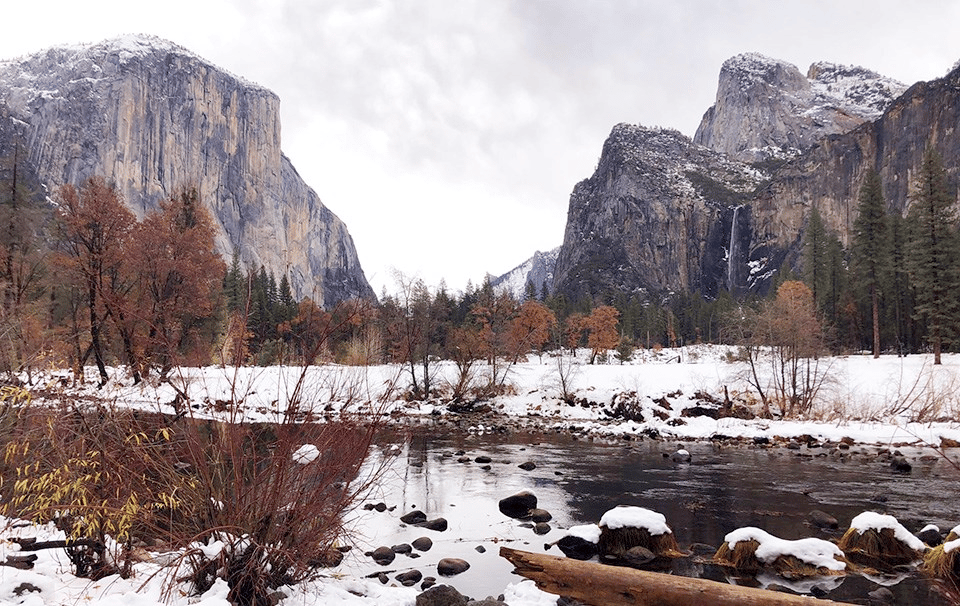
Muir Wrote About His Experiences In Yosemite
John Muir first visited Yosemite in 1868. He was so impressed with his visit that he returned the following year Muir was a free spirit who found work as a ranch hand to support his “nature” habit .
The following year, he gained employment as a shepherd for $30 per month.
While Muir guided his flock of sheep to the Tuolumne Meadows in the High Sierra, he studied the flora and fauna and sketched the mountain scenery.
He later wrote about these experiences in: My First Summer in the Sierra.

CHECK OUT: 10+ AMAZING John Muir Facts | America’s Greatest Conservationist
4. The U.S. Army Were The Earliest Protectors Of Yosemite National Park
Another amazing Yosemite National Park Fact has to do with its earliest protectors.
Before the creation of the National Park Service in 1916, Yosemite, along with America’s other early national parks, was in danger of being decimated by tourists who were unwilling to respect the natural beauty of the area.
In response to this threat, the U.S. Army served as the official administrator of Yosemite and Sequoia national parks between 1891 and 1913.
In that capacity, it helped create a model for park management as we know it today.

“The officers and enlisted men have cheerfully endured many hardships and privations, and in the midst of great dangers steadfastly maintained a most gallant and zealous devotion to duty, and they may well be proud of the record made, and rest assured that the hard work undergone in the accomplishment of such important and valuable service to their country cannot fail, sooner or later, to meet with recognition and reward.”
-Benjamin H. Grierson, Colonel 10th U.s. cavalry
Buffalo Soldiers At The National Parks
Among the men who protected these parks, as National Park Ranger Shelton Johnson notes in his essay titled, “Invisible Men: Buffalo Soldiers of the Sierra Nevada,” were the 9th Cavalry or 24th Infantry.
These units were comprised of the men who became known as the Buffalo Soldiers.
The Buffalo Soldiers were African-American infantry and cavalry regiments formed in 1866 after the Civil War.

In their infancy, their primary purpose was to fight Indians on the western frontier, and it is from these engagements with cultures like the Sioux, Cheyenne, and Apache that the unofficial sobriquet of buffalo soldier was bestowed upon them.
Johnson writes, “Although their story has been celebrated for years, and there are histories, novels, and a few films that address their lives, the history of the Buffalo Soldiers of the Sierra Nevada has only recently been illuminated by the light of day.” (Source: Shelton Johnson, “Invisible Men: Buffalo Soldiers of the Sierra Nevada”)
20 BEST Black History Sites In America For You To Visit
5. Horace Greeley Went West And “Discovered” Yosemite
The man who immortalized the saying, “Go west, young man,” would himself go west to find the beauty of Yosemite National Park.
Horace Greeley, editor of the New York Tribune, visited Yosemite Valley in 1859 during a trip out west. Before John Muir sang the praises of this incredible land, Greeley did.
He sent an account of his travels to his newspaper writing that Yosemite was “the greatest marvel of the continent,” that the “grandeur and sublimity” of the wondrous chasm were “overwhelming,” and that it was to be hoped that California would immediately provide for the perpetual safety of the Mariposa Grove of Big Trees. (Source: The National Parks, Freeman Tilden)
Top 10 Yosemite National Park Facts
6. Yosemite Is Our Nation’s Third National Park, But It Shaped The Idea Of The National Parks
Just when you thought we couldn’t come up with any more amazing Yosemite National Park Facts, we do. Yosemite was the first park actually protected by the federal government.
President Abraham Lincoln signed the Yosemite Valley Grant Act, Senate Bill 203, on June 30, 1864.
The legislation gave California the Yosemite Valley and the nearby Mariposa Big Tree Grove “upon the express conditions that the premises shall be held for public use, resort, and recreation.”
This action extended protection to the Mariposa Grove and Yosemite Valley.

Every blade of grass is a study; and to produce two, where there was but one, is both a profit and a pleasure.
-Abraham Lincoln
Setting An Important Precedent
This was the first time the federal government acted to protect land because of its natural beauty. It established an important precedent that the government could do this.
Future presidents, beginning with Ulysses S. Grant eight years later, used Lincoln’s action to justify further moves to protect additional public lands.
So, while Yosemite was America’s third national park, the important precedent which it established formed the pattern for future park acquisitions.
America’s First National Park? Not So Fast…
Some would argue that Lincoln’s action made Yosemite the nation’s first national park, but, in fact, he made the lands a public trust of the state of California not the United States of America.
The first time public lands were set aside as a “national” park would be in 1872 when President Ulysses S. Grant signed legislation creating Yellowstone National Park.

CHECK OUT: 18 (Fascinating) Yellowstone National Park Facts You Probably Didn’t Realize
7. The Nation’s First “Park Ranger” Served As the “Guardian” Of Yosemite National Park
One of my favorite Yosemite National Park Facts has to do with the man who became the “guardian” of the park.
Born in Shipton, Canada East (now Quebec) in 1814, Galen Clark developed a passion for Yosemite when he first visited the area as part of a 17-member pioneer tourist party.
After suffering a lung hemorrhage and quitting his job as a packer at the Mariposa Ditch Company, he decided to either find a cure or end his days in the mountain air.
In 1855, 41-year-old Clark first saw the Mariposa Grove of Big Trees and Yosemite Valley.
Though not the first to see the Mariposa Grove, he is believed to be the first known to count and measure the trees there.
Guardian Of Yosemite
On May 21, 1866, Yosemite pioneer Galen Clark was officially named as the “Guardian of Yosemite.” Clark was duly authorized to protect these beautiful areas.
Galen Clark was America’s first park ranger. He was the first private protection officer ever designated to safeguard America’s public lands.
Throughout the next 24 years Clark was retained as the Guardian of Yosemite.
Clark Made His First Arrest
In 1870, Clark made an arrest, which was a first within a park. It was for a felled giant pine tree. The men were found guilty and each fined $20 each by a local judge.
Clark was even made a special sheriff’s deputy in 1875 to help evict a nearby and longtime associate from his home in the valley. (Source: Charles R. “Butch” Farabee, Jr., National Park Ranger: An American Icon)
As later rangers would do, Clark also fought fires and protected the precious resources of the region. He shared his knowledge of the area through his efforts as a guide and an educator.
Galen Clark & John Muir
John Muir, who many consider to be the “Father of the National Parks,” referred to Clark as “the best mountaineer I ever met and one of the most sincere tree-lovers I ever knew.”
Muir met Clark at his Wawona ranch during the legendary botanist’s first visit to Yosemite.
Over the years, the two outdoorsmen made many wilderness sojourns together in which Clark scrambled through thick chaparral brush in the easiest way.

8. America’s First Female Ranger Came From Yosemite
Yosemite may not have been America’s first national park, but it is a park which produced other firsts. Galen Clark was America’s First Park Ranger.
Yosemite National Park would also produce America’s first female park ranger.
Clare Marie Hodges was the first woman ranger in Yosemite National Park and is generally considered to be the first fully commissioned female ranger in the National Park Service.
Hodges first visited Yosemite at the age of fourteen, arriving after a four-day horseback ride. Falling in love with Yosemite Valley, Hodges returned to the valley in 1916 to teach at the Yosemite School.
Two years later, during World War I, Hodges applied to Park Superintendent Washington B. Lewis for a job as a park ranger. During the war, due to shortages of available male applicants, women were often selected to serve in non-traditional roles, such as police officers and factory workers.
Much to Clare’s surprise, Lewis hired her as a ranger in spring 1918. Though it would not become standard operating procedure for female rangers until the 1970s, Hodges wore the same uniform, Stetson hat and badge, as the men.
She had the same duties and responsibilities as her male counterparts. The only exception was her refusal to carry a gun. (Source: Sierra College)

9. A Controversy At Yosemite Helped Give Birth To Both The National Park Service & Environmental Movement
We’re not finished with firsts just yet. The most important first, and most important Yosemite National Park Fact, has to do with a controversy which helped to give birth to both the National Park Service and the Environmental Movement.
The history of California’s growth is inextricably linked to the search for water. The sprawling metropolis of Los Angeles could not have become the city it did without the water which flowed from the Owens Valley hundreds of miles away.
California needed secure, reliable access to drinking water for their burgeoning populations. Not to be outdone by Los Angeles, San Francisco had a greater feat in mind: dam the Hetch Hetchy Valley in the park and pipe the water into San Francisco.

The Hetch Hetchy Controversy
John Muir knew that without public support, the Hetch Hetchy Valley would be lost. In an effort to build this support, he published his book The Yosemite in 1912.
Muir famously said, “Dam Hetch Hetchy! As well dam for water-tanks the people’s cathedrals and churches, for no holier temple has ever been consecrated by the heart of man . .” For John Muir, it was about preserving a natural wonder which could be enjoyed by generations to come.
The Raker Bill & Hetch Hetchy
Congress would decide the fate of the Hetchy Hetchy Valley. California Rep. John E. Raker submitted a bill to Congress granting the city of San Francisco the right to dam the Hetchy Hetchy Valley as a reservoir and also provide the city the right of municipalized electricity as well.
The San Francisco Bulletin printed a Dec. 1, 1913, story calling the bill’s opponents “a crowd of
nature lovers and fakers, who are waging a sentimental campaign to preserve the Hetch Hetchy Valley as a public playground, a purpose for which it has never been used.”
On December 19, 1913, Congress passed and President Wilson signed the Raker Act which permitted the building of the O’Shaughnessy Dam and the flooding of the Hetch Hethcy Valley in Yosemite National Park.

The Legacy Of Hetch Hetchy
Environmentalists lost what was the opening battle in a fight to preserve America’s natural wonders. Hetch Hetchy ushered in a new era for the national parks.
It forced elected representatives to consider what a national park designation truly meant and whether or not the land within these parks deserved protection.

The Organic Act
Public disapproval nationwide with the Raker Act helped to bring about the creation of the National Park Service. Within three years, Congress had passed the Organic Act, formally defining the parks and creating a new federal agency, the National Park Service, with a mission:
“…to conserve the scenery and the natural and historic objects and the wild life therein and to provide for the enjoyment of the same in such manner and by such means as will leave them unimpaired for the enjoyment of future generations.”
The grassroots organization of environmental activism, established by John Muir and his supporters, became a model for future environmentalists.
Subsequent proposals for development in our national parks have been defeated by citizen activists inspired by calls to remember Hetch Hetchy.
10. Yosemite Is Famous For Its Giant Sequoia Trees
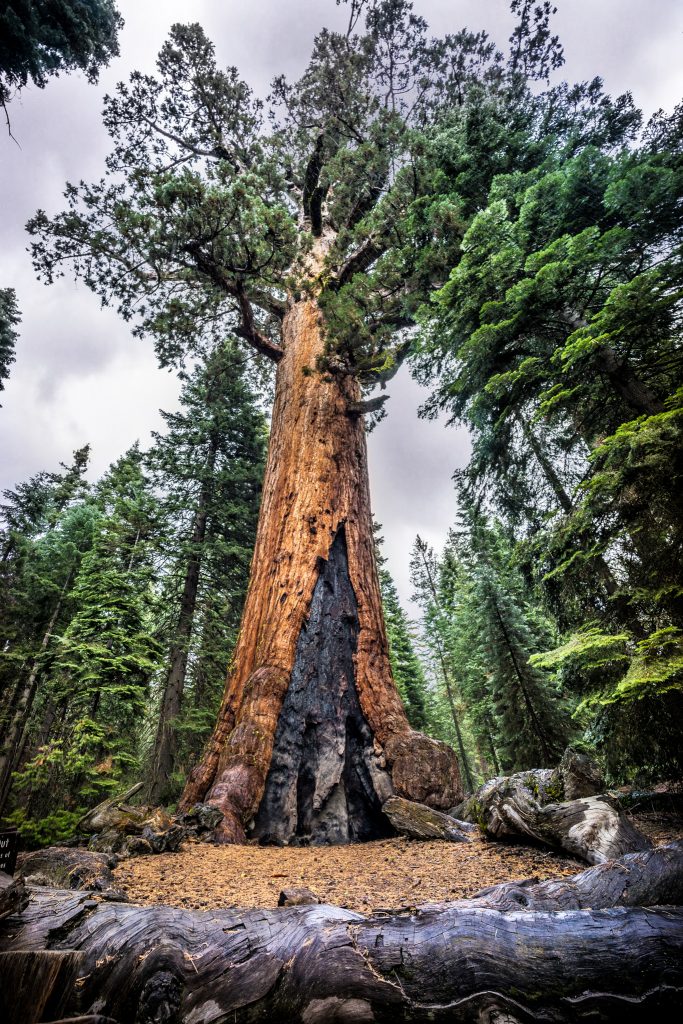
Yosemite National Park is perhaps best known for its giant sequoia trees which are believed to be approximately 3,000 years old.
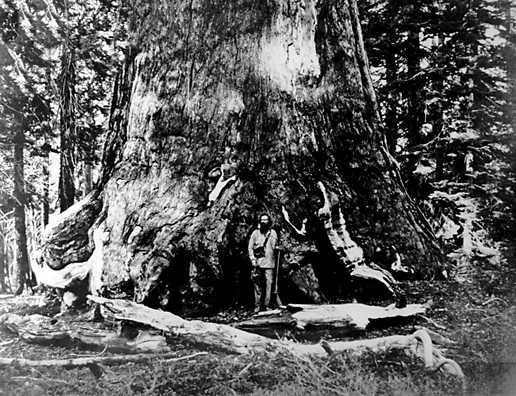
These magnificent trees can grow to be about 30 feet wide and more than 250 feet tall. Yosemite’s giant sequoias are the third longest-lived tree species, with the oldest tree in the park being the Grizzly Giant, located in the Mariposa Grove.
The park features approximately 500 mature giant sequoias in Mariposa Grove. If you’re looking to see these wonders then these are the easiest to access.
You can also find sequoias in the Tuolumne and Merced Groves near Crane Flat, but you will need to do some hiking to see them.
Top 16 Yosemite National Park Facts
11. Yosemite Valley Was Formed By Glaciers
Approximately one million years ago, glaciers reached a thickness of 4,000 feet. These glaciers were formed at high elevations.
From there, they began to move down the river valleys. It was the downwards movement of these large pieces of ice cut which formed the U-shaped Yosemite Valley.
Lyell Glacier was climbed by John Muir in 1871. It is on the north facing slopes of Mount Lyell, the highest peak in the national park at 13,114 feet.
Lyell is the second largest glacier in the Sierra Nevada and the largest in Yosemite.
Maclure is the second largest glacier in the Yosemite. It has an ice cave that allows hikers to actually look underneath the glacier.

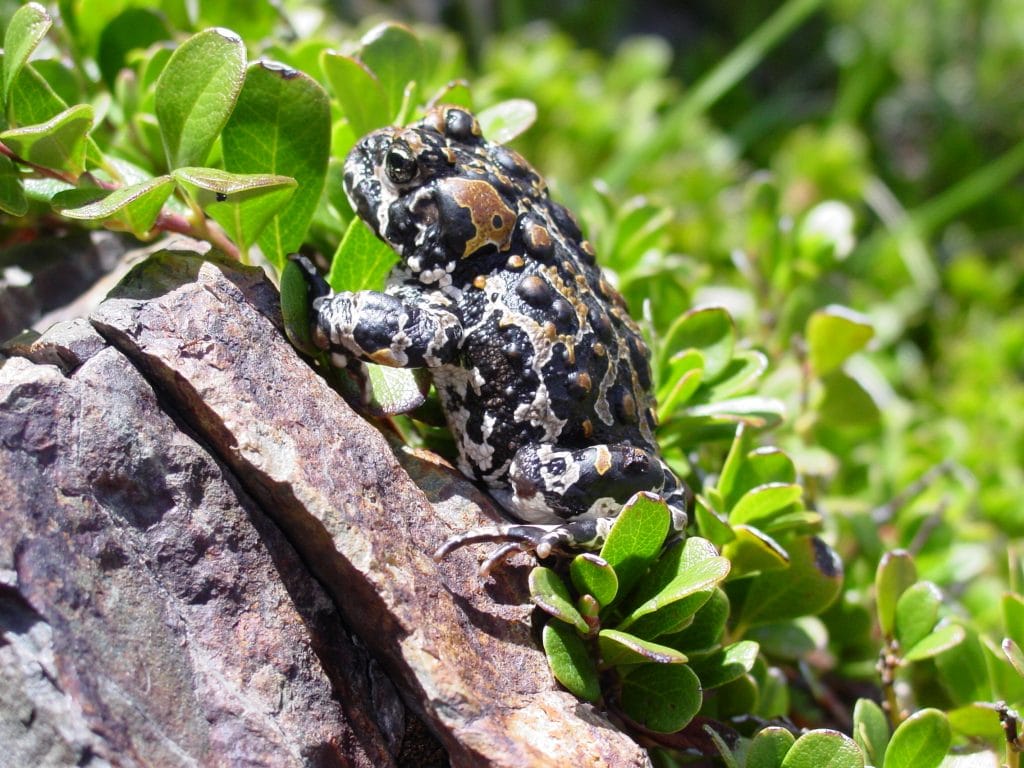
12. Yosemite’s Diverse Landscape Supports More Than 400 Species
If you enjoy watching wildlife then Yosemite is definitely worth a visit.
The park supports more than 400 species including fish, amphibians, reptiles, birds, and mammals. The high diversity is a consequence of diverse habitats that are largely intact.
These range from thick foothill chaparral to conifer forests to expanses of alpine rock. Animals feel at home in each location.
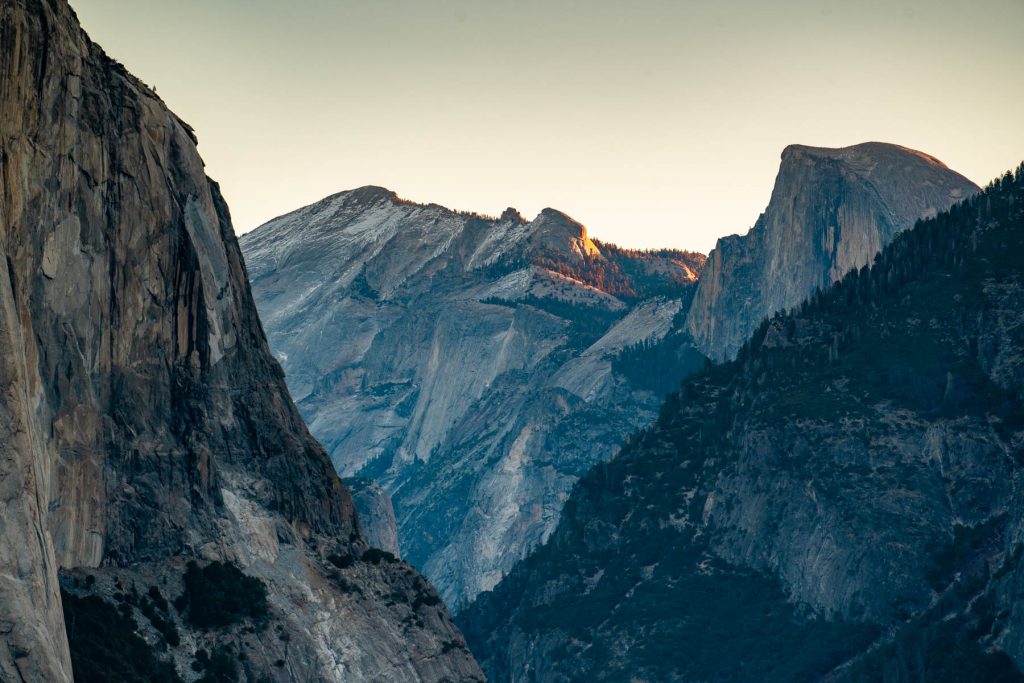
13. Yosemite Is Home To Some Of The Tallest Waterfalls In North America
Another fascinating Yosemite National Park Fact is that the park is home to some of the most magnificent waterfalls on the planet. Of course, the best time of year to see these waterfalls is in the spring when the snowpack has melted. By August, the waterfalls turn to a trickle before they are restored by the fall rains.
Among the waterfalls you should check out are Sentinel Fall, which flows an impressive 2,000 feet, Bridalveil Fall across from El Capitan, which is simply stunning, Ribbon Fall, which is the highest single drop waterfall in North America at over 1,600 feet and Tueeulala Falls in the beautiful Hetch Hetchy Valley.
14. Theodore Roosevelt’s Camping Trip With John Muir Forever Changed Yosemite
Another of my favorite Yosemite National Park Facts, which I briefly referred to earlier, needs further elaboration.
It would become known as the camping trip that changed the nation.
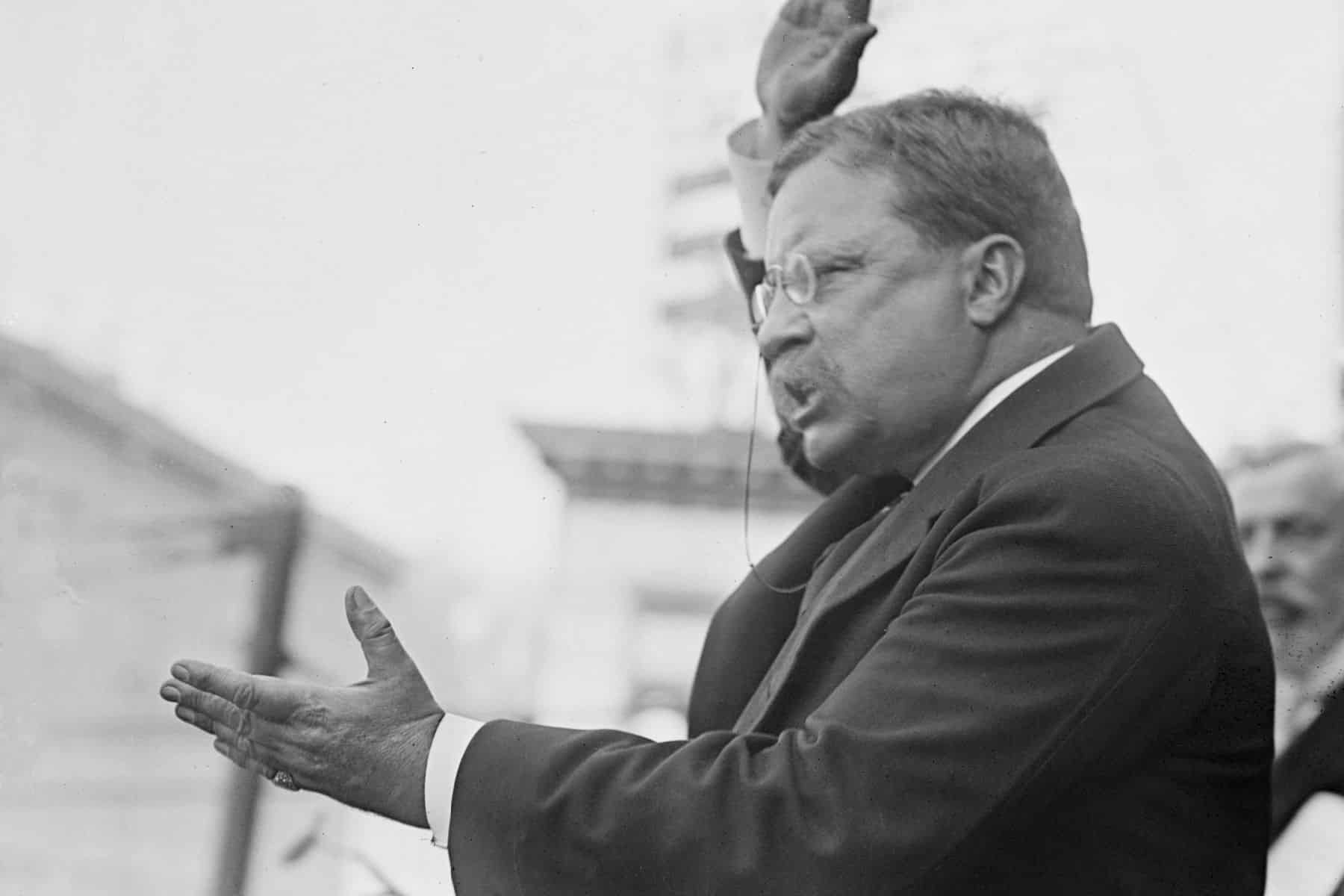
In 1903, President Theodore Roosevelt, who was on a swing of western states. He left his official party to go camping with Conservationist John Muir.
Muir had fallen in love with Yosemite. He used his time with the President to argue that it would be an incalculable loss if these “temples of nature” were to be hunted, logged and mined into oblivion.
John Muir was preaching to the choir as Roosevelt was already a dedicated conservationist himself.

Roosevelt Expanded Yosemite National Park
Muir wanted Roosevelt’s promise that he would protect Yosemite. He got that and much more. At the end of the trip, Roosevelt signed a law bringing the Yosemite Valley and Mariposa Grove under the jurisdiction of the federal government, thus expanding the national park.
Roosevelt then went on to sign into existence five more national parks, 18 national monuments, 55 national bird sanctuaries and wildlife refuges and 150 national forests.
To learn more, I recommend: The Camping Trip that Changed America: Theodore Roosevelt, John Muir, and Our National Parks by Barb Rosenstock.
As long as I live, I’ll hear waterfalls and birds and winds sing. I’ll interpret the rocks, learn the language of flood, storm, and the avalanche. I’ll acquaint myself with the glaciers and wild gardens, and get as near the heart of the world as I can.
-John Muir
15. Yosemite Is Prominently Featured In A Star Trek Film
In Star Trek V: The Final Frontier, Captain Kirk (portrayed by the one and only William Shatner) boldly went where no Starfleet Captain had gone before.
He spent his shore leave climbing on El Capitan and Inspiration Point at Yosemite National Park in California.
And, what made this cinematic experience so unique is that the filmmakers made no bones (did you trekkies get that not-so-subtle reference to Doctor McCoy?) about it.
They didn’t try to pretend that he was anywhere else. Why should they given the natural beauty of Yosemite. El Capitan is one of its favorite destinations for visitors.
You Can Make This “Trek” Too
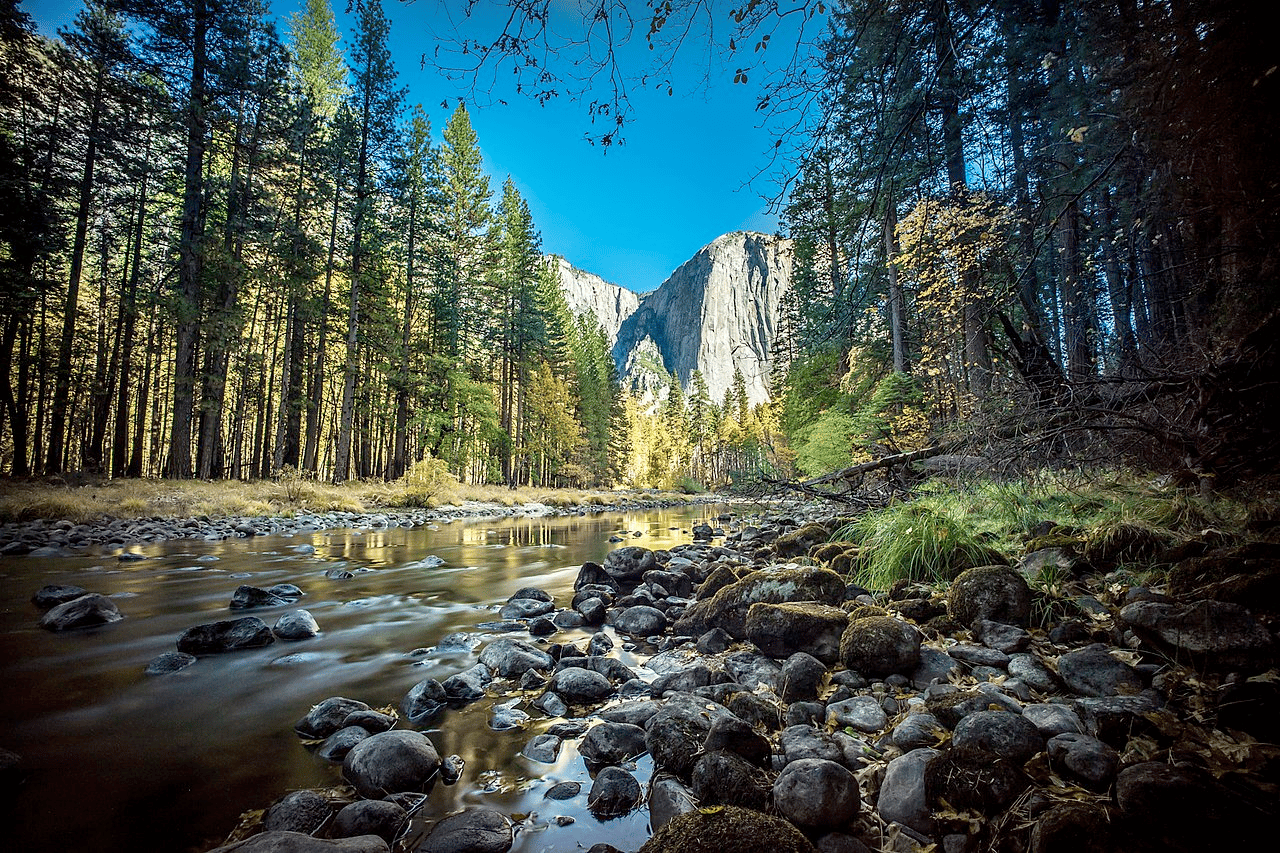
If you’re thinking of making this trek then consider the fact that it offers you a breathtaking view.
Where else can you see the El Capitan / Half Dome bookend view of the majestic Yosemite Valley.

(Courtesy of Wikimedia)
16. Yosemite Is One Of The Best Places For Climbers & Hikers
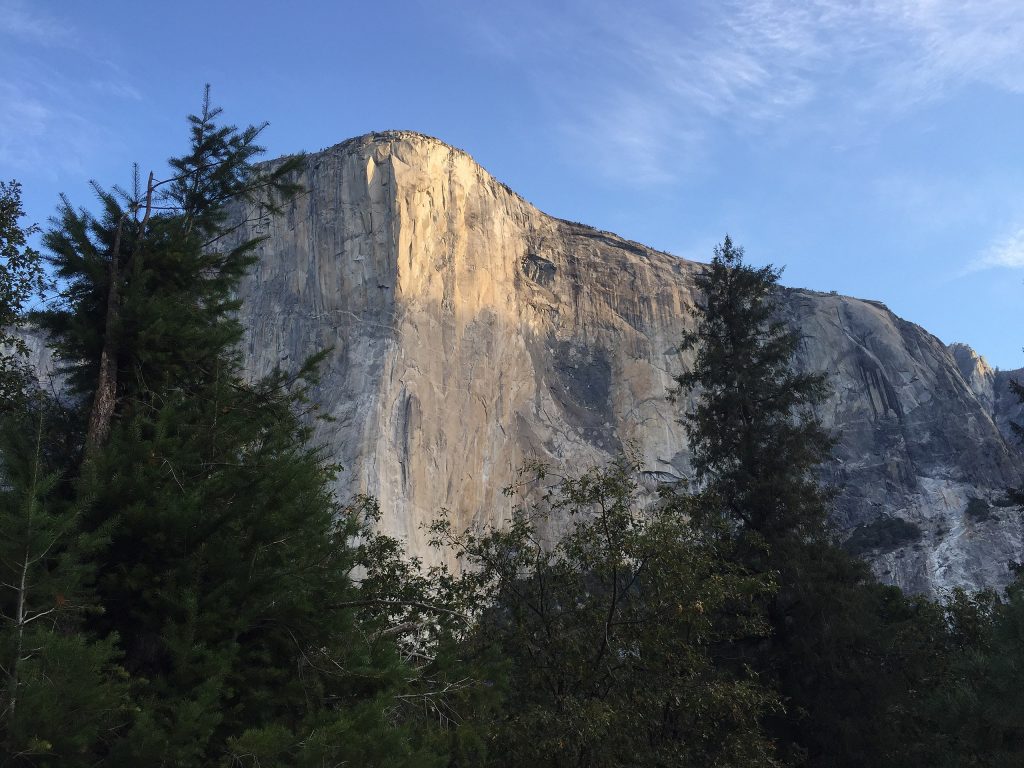
Yosemite National Park has some incredible rock formations which makes it a magnet for climbers. Since John Muir scaled the summit of Cathedral Peak in 1869, climbers have found challenges ranging from easy to difficult.
In January of 2015, climbers Tommy Caldwell and Kevin Jorgeson completed the first free climb of the Dawn Wall of El Capitan in Yosemite National Park.
This was after six years of planning and preparation. Their 19-day ascent of the Dawn Wall was considered by some as the hardest successful rock climb in history.
A Great Park For Hikers
If climbing is a bit too extreme for your tastes then why not hike instead. It’s one of the best ways to see Yosemite and there are hiking trails for beginners, intermediate and advanced hikers.
Yosemite Valley is open all year for hiking, and trails within the valley are usually very busy. One of the most popular hikes is the Half Dome Hike. It’s a 12-hour, 14-mile roundtrip hike with huge elevation gain, cables, and exposed terrain.
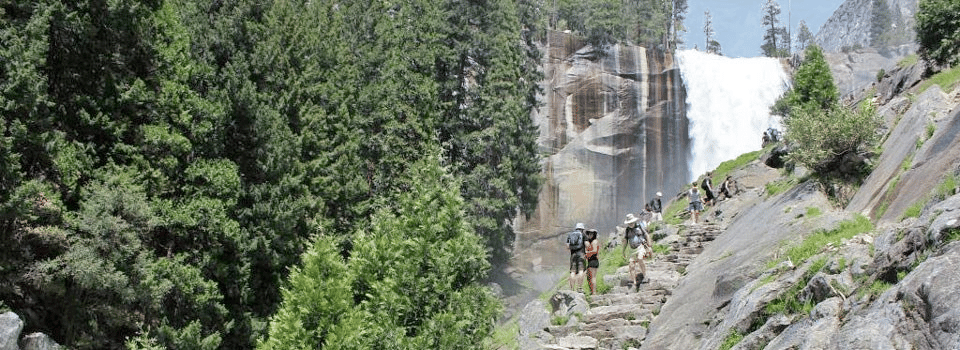
The hike starts on the Mist Trail, then to Vernal Fall, beyond Nevada Fall, and finishes on the backside of Half Dome.
If you’re looking for a less strenuous hike, there’s Yosemite Falls Trail. It’s 7.2 miles roundtrip and features a spectacular lookout where you can see the falls. Want to learn more? Check out our guide to Yosemite and all of the national parks.
Meet The Parks Brothers
Map Of Yosemite National Park
- Yosemite’s First Peoples Called Themselves The Ahwahneechee
- The Indian War Of 1850-51 Produced The First Expedition Of Non-Native Americans To Visit Yosemite
- John Muir’s Time In Yosemite Changed Him Forever
- The U.S. Army Were The Earliest Protectors Of Yosemite National Park
- Horace Greeley Went West And “Discovered” Yosemite
- Yosemite Is Our Nation’s Third National Park, But It Shaped The Idea Of The National Parks
- The Nation’s First “Park Ranger” Served As the “Guardian” Of the park
- America’s First Female Ranger Came From Yosemite
- A Controversy At Yosemite Helped Give Birth To Both The National Park Service & Environmental Movement
- Yosemite Is Famous For Its Giant Sequoia Trees
- Yosemite Valley Was Formed By Glaciers
- Yosemite’s Diverse Landscape Supports More Than 400 Species
- Yosemite Is Home To Some Of The Tallest Waterfalls In North America
- Theodore Roosevelt’s Camping Trip With John Muir Forever Changed Yosemite
- Yosemite Is Prominently Featured In A Star Trek Film
- Yosemite Is One Of The Best Places For Climbers & Hikers
We Hope You’ll Follow Our Journey

Our goal here at More Than Just Parks is to share the beauty of America’s national parks and public lands through stunning short films in an effort to get Americans and the world to see the true value in land conservation.
We hope you’ll follow our journey through the parks and help us to keep them the incredible places that they are. If you’re interested in joining the adventure then please sign up below!
Helpful Related Articles
Clouds Rest Hike: Hike Clouds Rest in Yosemite, NOT Half Dome (Honest Guide)
Things to Do in Yosemite: Things to Do in Yosemite National Park
Clouds Rest Hike: Hike Clouds Rest in Yosemite, NOT Half Dome (Honest Guide)
Half Dome Hike: Here’s Why You May Want to Reconsider the Half Dome Hike
Best Hikes in Yosemite: 20 Best Hikes in the park
Yosemite Facts: 10 Shocking Yosemite Facts
Hetch Hetchy: Hetch Hetchy – The Epic Enviro Battle That Changed America
Things to Do Sequoia: Things to Do in Sequoia National Park
Redwood National Park: Redwood National Park Ultimate Guide
Things to Do Redwood National Park: Things to Do in Redwood National Park
Death Valley National Park Guide: Death Valley National Park Ultimate Guide
Things to Do Death Valley: Things to Do in Death Valley National Park
Joshua Tree Guide: Joshua Tree National Park Ultimate Guide
Best Hikes Joshua Tree: Hikes in Joshua Tree National Park
Things to Do Pinnacles National Park: Things to Do in Pinnacles National Park
Redwoods Near San Francisco: 15 BEST Places to See Redwoods Near San Francisco
California: 20 BEST California National Parks Ranked
Los Angeles: National Parks Near Lost Angeles You'll Love
San Diego: National Parks Near San Diego
Redwood: Redwood National Park
San Francisco: 8 Best National Parks Near San Francisco
Death Valley: Death Valley National Park
San Jose: 7 Best National Parks Near San Jose
Pinnacles: Things To Do At Pinnacles National Park
Historic Sites: 15 Must-See Historic Sites In California
Frequently Asked Questions About Yosemite National Park
When is the best time to visit Yosemite?
The best time to visit Yosemite National Park is May through October. Conditions vary significantly by season, so plan accordingly and check current conditions before your trip.
How much does it cost to enter Yosemite National Park?
The entrance fee for Yosemite National Park is $35 per vehicle (valid for 7 days). An America the Beautiful Annual Pass ($80) covers entrance to all 63 national parks and 2,000+ federal recreation sites.
What is Yosemite known for?
Yosemite National Park is known for Half Dome, El Capitan, Yosemite Falls, and Mariposa Grove giant sequoias. The park spans 761,748 acres and was established in 1890.
What are the best things to do at Yosemite National Park?
The top activities at Yosemite include Rock climbing, Hiking, Photography, Waterfall viewing, and Backpacking. Check our Yosemite guide for detailed recommendations.
Where is Yosemite National Park located?
Yosemite National Park is located in California. Visit our complete Yosemite guide for directions, nearby airports, and getting-there tips.
What to Bring to Yosemite
Gear we recommend for Yosemite. Affiliate links support our work at no cost to you.
Affiliate disclosure: Some links on this page earn us a small commission at no extra cost to you. We only recommend gear we actually use.